Teaching & Learning During COVID-19

Teaching & Learning During COVID-19

On this episode of The Early Link Podcast, host Rafael Otto speaks with podcaster and educator Evelyn Lauer about the struggles of teaching during a global pandemic.

Guest:

Evelyn Lauer has taught high school English in the Chicago area for 20 years. She is the host of Beyond the Bell, a weekly podcast in which she interviews other educators about teaching during the pandemic. She holds an MFA in creative writing from Texas State University and an MAT in secondary English education from the University of Iowa.

Summary:

Evelyn describes some of the difficulties of teaching virtually and explains why hybrid is actually the hardest form of teaching. She also shares stories she’s heard from educators about the blurred lines between work and home and what life has been like for teachers who are also parents. Finally, she discusses the social emotional impact of distance learning on kids and how our education system will be dealing with the effects of the pandemic for years to come.

Transcript

Rafael Otto: [00:00:00] Welcome to The Early Link Podcast. I’m your host, Rafael Otto. As usual, you can catch us on the airwaves on 99.1 FM in Portland on Sundays at 4:30 PM or subscribe and listen wherever you find your podcasts. Today. I’m speaking with Evelyn Lauer, who is based in Chicago and is a writer, high school English teacher, and most recently host of the podcast called Beyond the Bell.

Just last October, she set out to talk with teachers about the struggles of teaching during a global pandemic and has heard lots of great stories about how education has been flipped on its head for better or worse. Evelyn, welcome to the podcast.

Evelyn Lauer: [00:00:34] Thank you so much for having me. It’s so nice being on the other side of this.

Rafael Otto: [00:00:39] Yeah, it’s great to be talking with a fellow interviewer. Well, I’m hoping you can share some stories about what you’ve been learning from teachers as you’ve been talking with people all over the country. And if at first, could you just tell me about your podcast and why you got started?

Evelyn Lauer: [00:00:57] Sure. So, as you mentioned, it’s called Beyond the Bell and I guess my kind of idea what the title was… we’re really, especially from the spring and fall, we were all, most of us teaching in nontraditional settings. So not really in a traditional classroom. Most of us were teaching via Zoom or Google Meets or Microsoft Teams or something like that.

And that’s so different than what most educators are used to. And one of the standards of school is the idea of the “bell,” and we’re now “beyond the bell.” It’s like everything that’s happening outside of the traditional classroom. So that was kind of the idea for it. But really I wanted to focus on how teachers are teaching during the pandemic and the effects of that, because like everything else during all of this, our lives have had to change so much and no one ever expected that you could actually teach from home.

Many of us have been doing that for so long that now we’re transitioning back into the classroom and trying to do both at the same time. And so it’s just the idea of like, how did the pandemic affect education and teaching and to see, teachers’ stories about their experiences and to sort of document that was my idea.

Rafael Otto: [00:02:17] And we’ve just passed the one-year mark for when things shut down. So, tell me, what are some of the stories that stand out when you’re talking to teachers about what this transition has been like and what they’ve had to go through to make the classrooms really come alive for their students?

Evelyn Lauer: [00:02:33] Yeah. I mean, most of the educators that I’ve talked with are secondary school educators. And I think that at the secondary level, our experiences with teaching during COVID have been perhaps different than some elementary school teachers. At the high school level, we’re dealing with an extreme lack of engagement from the perspective of… the students turn their cameras off.

So most of the day when we’re teaching on Zoom, like I teach via Zoom, students’ cameras are turned off. And so the number one thing that I’ve heard over and over again, with all of the teachers that I’ve spoken with on the podcast, is this idea of engagement. So what does engagement look like when you can’t see students’ faces. Everyone feels a real loss about that, for sure.

But also it has made us really kind of think about: even when students are in our classroom, they’re physically present, how engaged are they really? And how do you measure engagement? Because we have all had students who are physically there but really aren’t there. And so having to find new ways to engage students using different technology or  the use of the chat. So, maybe they’re engaged in writing in a chat box, but not engaged by unmuting themselves or showing their faces on camera. So I would say the engagement piece is probably the number one thing that I hear educators talk about. And then versus like, when I have spoken with primary school or middle school teachers, the engagement piece seems to be higher. Meaning that they’re more accustomed to seeing their students’ faces. And the students seem to sort of want to share their whole days, maybe overshare, like sharing what they had for lunch, can I go to the bathroom, and all that kind of management that’s probably happening. So it seems like there’s extremes based on the age of the students that teachers teach.

For the full transcript, please download the pdf below.
 

Culturally Specific Advocacy

Culturally Specific Advocacy

In this episode of The Early Link Podcast, host Rafael Otto talks with Pooja Bhatt and Anthony Castaneda about the value of culturally specific early childhood advocacy and how their organizations are approaching this important work. 

Guests: 

Pooja Bhatt is the cofounder and managing partner at SeeChange, a consultancy focused on people-centered change. She also works as a facilitator for the Early Childhood Equity Collaborative and is a participant in Oregon’s Early Childhood Coalition.

Anthony Castaneda is the policy manager at Latino Network and is a participant in Oregon’s Early Childhood Coalition.

Summary:

Pooja and Anthony provide background on the Early Childhood Equity Collaborative and how the five culturally specific organizations involved are approaching advocacy. They also discuss the passing of the Early Childhood Equity Fund in 2019 and what that fund is helping accomplish in Oregon. Finally, Pooja and Anthony share some of the advocacy challenges for their organizations, describe describe what makes partnerships and coalitions successful, and share the impact that culturally specific advocacy can have for families. 

Recommended Resources:

Our episode on Coalition Building and Advocacy

Our episode on the Student Success Act

Transcript

Rafael’s Daughter: [00:00:00] Welcome everyone. This is the Early Link Podcast. Thanks for listening!

Rafael: Big thanks to our special guest opening the show today. That’s my daughter and she’s in third grade. I’m your host, Rafael Otto. As usual, you can catch us on the airwaves on 99.1 FM in Portland on Sundays at 4:30 PM or subscribe and listen wherever you find your podcasts.

Today, I’m talking with Pooja Bhatt, who is the co-founder and managing director at SeeChange, a consultancy focused on people-centered change, and Anthony Castaneda, the policy manager at Latino Network. We’ll be talking about early childhood advocacy and what that looks like from the perspective of a number of organizations in Portland.

Pooja works as a facilitator for The Early Childhood Equity Collaborative, which we’ll learn more about, and which Latino Network is a part of. Both Pooja and Anthony are participants in Oregon’s Early Childhood Coalition. Welcome, and thank you to both of you for joining me today. It’s great to have you.

Pooja Bhatt: [00:00:58] Thank you. It’s great to be here.

Anthony Castaneda: [00:00:59] Thank you. I’m happy to be here.

Rafael: [00:01:02] Pooja, I thought we could start with you, and if you could just give us a bit of background about the collaborative that you work with and how the organizations involved are approaching advocacy.

Pooja Bhatt: [00:01:13] Sure. Great question. So, the Early Childhood Equity Collaborative actually came together in 2018, because at that time there was no systematic public support for culturally specific services in the early learning field, at a time when our state’s population of zero to five-year-olds is the most racially and ethnically diverse it’s ever been.

So on one hand, we’re growing in the diversity of our young children and families, and at the same time, we’re actually investing a lot more in early childhood. But at that time in 2018, there wasn’t a systematic support and acknowledgment of the need for culturally specific services throughout the state. So the reason that this collaborative came together was really to help advocate at the state level for legislation and investments to invest in culturally specific services.

So the Collaborative partnered with culturally specific organizations, philanthropy, and community-based organizations throughout the state to really build awareness about the need for these services, these culturally specific services, and mobilize advocacy for communities of color and immigrant and refugee communities. And the real purpose is really to shift power dynamics in our state, where communities of color are actually being able to self-determine policy and budget priorities. So that’s the real power of this collaborative, is that a lot of times you see foundations investing in direct services, which is of course very important, and at the same time there hasn’t been historic investment in the ability of culturally specific organizations to advocate on their own behalf, on their own communities’ behalf, for statewide legislation and investments in culturally specific services. So the partners around the table are Latino Network, who really helped to begin convening this conversation, with KairosPDX, Black Parent Initiative, NAYA, and IRCO. So they were the original five culturally specific partners, but many more partners, other culturally specific organizations around the state, have been engaged in the past. We’ve had the support, generous support, of our foundation partners and our fiscal agent of Social Venture Partners, and my role is really the contract facilitator for the group.

Rafael: [00:03:25] Anthony, I know Latino Network is part of the Collaborative. Can you give us just a background overview of what Latino Network does and its role in the community?

Anthony Castaneda: [00:03:33] Sure. Latino Network is a culturally specific organization serving children, youth, families in the Tri-County area: Multnomah, Clackamas, and Washington counties. We provide services to thousands of Latinos in the areas of education, mentorship, leadership development, and family stability. And one of the reasons why organizations like Latino Network exist is to address those needs in the community that are currently not filled by the systems in place. So we see families falling through the cracks and we see some of those needs of students not being met, which is why we see a lot of these disparities, which is the reason why we worked so hard to connect with these families.

Rafael: [00:04:20] So, can you talk about the experience of participating in the Collaborative and what that has been like?

Anthony Castaneda: [00:04:27] The experience has been overwhelmingly positive. I think the Collaborative provides a space for our organizations to connect on shared goals and interests. it provides a space for information sharing as well as strengthening ties between our organizations. I think one of the early experiences has been learning about the other services provided in the area by our partner organizations.

We can share expertise, share resources with one another, and really connect these families to other services that may be needed.

Rafael: [00:04:59] Talk about, and maybe you both can talk about this a little bit, but the approach to advocacy as… as you’re representing direct service organizations that have close ties to the community and families. What does that mean for advocacy and how has that shifted or changed because of the Collaborative? Anthony, did you want to start with that?

Anthony Castaneda: [00:05:17] Sure. I think one of the strengths has been bringing parents from different backgrounds and perspectives together and really leading with that parent voice and really elevating the needs of those children or the youth that we’re working with.

Rafael: [00:05:31] Pooja, do you have comments on that?

Pooja Bhatt: [00:05:32] Yeah. I mean, I think that that exactly is the power of the Collaborative, of bringing together parents from diverse communities and really showing the richness of Oregon’s community. We often say that Oregon is very white, right? That we’re known as one of the whitest big cities in the country. But what that does is that it makes invisible the communities of color that are here. And so I think that one of the great things about the Equity Collaborative is that it really elevates the power of being present and being seen and we are here and we do have policy priorities that we want to engage partners across the spectrum to uplift.

So I think that the way that this collaborative has really connected parents from diverse communities with the organizations that they are most connected to – with other partners, dominant culture partners, school districts, as well as policymakers and funders – has been really powerful.

For the full transcript, please download the pdf below.
 

Foregrounding Racial Equity in Early Childhood

Foregrounding Racial Equity in Early Childhood

In this episode of The Early Link Podcast, host Rafael Otto speaks with Elena Rivera and Soobin Oh from Children’s Institute about the importance of racial equity in early childhood spaces and how the Children’s Institute is working to center racial equity in its own work.

Guests:

Elena Rivera is the the senior health policy and program advisor at Children’s Institute. She is responsible for establishing strong linkages between health and early learning in policy and advocacy efforts, including identifying opportunities to leverage Oregon’s health system transformation to improve outcomes for young children.

Soobin Oh is Children’s Institute’s senior early education advisor. He is a committed social justice educator and is well-versed in Anti-Bias education, culturally sustaining pedagogy, and critical pedagogy.

Summary:

Elena and Soobin explain how racism impacts learning experiences for young children, share their own personal stories related to racial bias in early childhood, and provide data on the number of children of color living in poverty in Oregon. Finally, they break down the concepts of diversity, equity, and antiracism while looking at the work that Children’s Institute is doing and how the organization is holding itself accountable to these terms.

Recommended Reading:

Ibram Kendi Defines What it Means to be an Antiracist

Gloria Ladson-Billings Reframes the Racial Achievement Gap

Geneva Gay – Preparing for Culturally Responsive Teaching

Dr. Walter Gilliam on Preschool Expulsion and Bias

When a Black Baby is Born, the Race Matters

Transcript

Rafael: [00:00:00] Welcome everyone. This is The Early Link Podcast. I’m your host, Rafael Otto. I want to thank all of our listeners for tuning in and as usual you can catch us on the airwaves on 99.1 FM on Sundays at 4:30 PM, or subscribe and listen wherever you find your podcasts. Today, I’m talking with two of my colleagues at Children’s Institute.

Elena Rivera is our senior health policy and program advisor, and Soobin Oh is our senior early education advisor. We’ll talk about why a focus on racial equity is essential when thinking about the needs and hopes for kids, for all children, but particularly for young children in the early childhood space.

And we’ll talk about how Children’s Institute is working on centering racial equity in its work. Elena and Soobin, how are you both doing today?

Soobin Oh: [00:00:46] Really great, Rafael. It’s great to be with you and Elena today.

Elena Rivera: [00:00:50] Yeah, I’m doing well, too. Excited for this conversation.

Rafael: [00:00:54] Glad to have you both. I know we’ve had some opportunities to talk about this in person, of course. And I’m glad to have you both on the podcast and to get this conversation out to a broader audience. When we’re talking about racial equity, it means that we’re also talking about racism and its impact on young children.

Soobin I thought we could start with you, if you could describe some of the ways you’re thinking about how racism impacts the learning experiences for young children and then, Elena, I’ll give you an opportunity to talk about this as well.

Soobin Oh: [00:01:27] Yeah, you’re not starting with the easy questions are you Rafael?

Rafael: [00:01:32] We’re going to go right into the big picture.

Soobin Oh: [00:01:34] I love it. I love it. I mean, where do we even start in terms of how racism impacts the learning experiences of young children? I think we could think about it in different levels. What I mean by that is, on some level, we can look at data and outcomes and understand that people’s life trajectories are being impacted by racist systems or racist policy decisions or different races. Different people are having different experiences just based on the categories that they’re being put into.

And then I think you can also describe how racism impacts learning experiences for young children on a more intimate level in terms of the classroom experience of a child. For example, just receiving a lot of negative attention from a teacher, more than usual, and that could perhaps be impacted by the teacher’s uninterrogated biases.

We know that can be the case based off of new research on how implicit bias works. So, I think it could be anywhere from there to there in terms of intimate experiences all the way to broad trend data across populations. We can see a variety of ways that racism is having an impact on people.

Rafael: [00:02:51] Thanks Soobin!  Elena, What are your thoughts on that?

Elena Rivera: [00:02:53] Yeah, I really appreciate that framework Soobin offers, kind of the data approach and then the experiential approach. I just want to interject another potential setting. You know, children are in classrooms and even before they’re in classrooms, children are interacting with these other systems and services be it healthcare – starting even with the prenatal care that their mothers receive when they’re pregnant – and including family support services as well. And in these kinds of programs and settings, kids and families are experiencing everything from bias at an individual level to the kind of systemic impacts like neighborhood poverty, crime rates, poor housing conditions and so on, you know, lack of access to food as well.

These are conditions that are created by structural racism that we have built into our institutions and our policies. And so this all adds up. You can think of the kind of compounding nature of racism. Such that by the time a child enters a classroom, they already have a host of experiences that have shaped the kinds of opportunities they’ve been exposed to, how their families are doing and how those children perceive both their own skills and identity, as well as how they fit into the picture of their community.

For the full transcript, please download the pdf below.
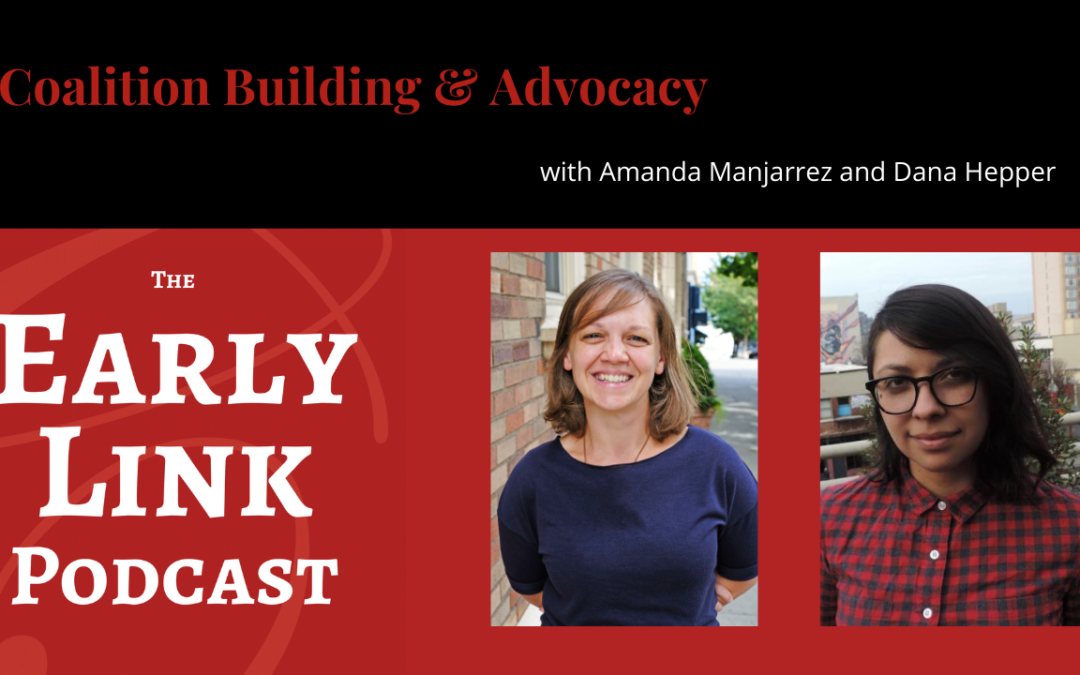
 

Coalition Building & Advocacy with Amanda Manjarrez and Dana Hepper

Coalition Building & Advocacy with Amanda Manjarrez and Dana Hepper

In this episode of The Early Link Podcast, host Rafael Otto explores the topic of advocacy and the details of two legislative agendas focused on building an inclusive, equitable, and just public education system.

Guests:

Amanda Manjarrez is the public policy & government affairs director at Foundations For A Better Oregon. Previously, Amanda served as director of advocacy at Latino Network, and as advocacy director for the Coalition of Communities of Color.

Dana Hepper is the director of policy & advocacy at Children’s Institute. She oversees the organization’s legislative advocacy and community engagement work, including Oregon’s Early Childhood Coalition.

Coalitions:

Oregon Partners for Education Justice is a cross-cultural network of community-based organizations, culturally specific service providers, and education advocates who are championing a racially just and community-centered public education system for Oregon. The coalition believes in the vision, wisdom, and leadership of impacted communities, and advocates for equitable policies and investments that eliminate disparities and empower historically underserved children. Foundations For A Better Oregon is the coalition’s coordinating member. Read their 2021 Legislative Agenda.

Oregon’s Early Childhood Coalition includes more than 40 state and national organizations that work to advocate for young children and families. The coalition asks legislators to commit to continued improvement in early care, education, and supports for all of Oregon’s young children and families and to center the voices of those most impacted by legislative actions in their decision-making processes. Children’s Institute serves as a coordinating member of the coalition and offers facilitation support. Read their 2021 Legislative Agenda.

Summary:

In this episode, Amanda Manjarrez and Dana Hepper explain the priorities of the coalitions’ respective agendas as well as where they overlap. They also share why racial equity is key to an advocacy agenda, and discuss the need to build on the historic investments established in the 2019 Student Success Act.

Relevant Resources:

The Early Link Podcast’s episode on the 2019 Student Success Act

Transcript

Rafael: [00:00:00] This is the Early Link Podcast. I’m Rafael Otto. Today, we’re exploring the topic of advocacy and the details of two legislative agendas focused on education for kids from birth all the way through high school. I’m talking with Dana Hepper from Children’s Institute. She’s the director of policy and advocacy. And Amanda Manjarrez, who’s the public policy and government affairs director at Foundations for a Better Oregon. Amanda and Dana, welcome to the podcast.

Dana Hepper: [00:00:26] Thank you.

Amanda Manjarrez: [00:00:26] Thank you for having us.

Rafael: [00:00:28] So I know you’re both involved in two coalitions that are, that have been very active in, are active right now in the advocacy space, Oregon Partners for Education Justice, and the, and Oregon’s Early Childhood Coalition. I would love it if you could talk a little bit about these two coalitions, who’s involved, how you work and what your purpose is. Amanda, would you start us off?

Amanda Manjarrez: [00:00:52] Sure.  So I work most closely with the Oregon Partners for Education Justice, which is essentially a cross-cultural network of over two dozen community-based organizations, culturally specific service providers and education advocates who are working on efforts to create a more racially just and community-centered public education system for Oregon.

In terms of how we work, I would say the coalition is a BIPOC community-driven space that’s rooted in on the ground experience and expertise. So this really drives the conversations and the design and implementation of the agendas that we advocate for. And our purpose as an organization is to ensure that impacted communities are more involved in the development and implementation of equitable and inclusive education policy that centers kids, families, and those who are directly affected by systemic inequities.

Rafael: [00:01:44] And tell me a little bit about who’s involved in that coalition. What are some of the organizations or people?

Amanda Manjarrez: [00:01:49] Sure. it’s predominantly culturally specific partners. So those include organizations like the Latino Network, Adelante Mujeres, the Native American Youth and Family Center, Kairos PDX, Euvalcree, APANO, among many others. We have folks  from across the state who are providing services to families who work in the education space.

We also have education advocates like Foundations for a Better Oregon, the organization I work for, Children’s Institute and other organizations who do more work in the policy sector space.

Rafael: [00:02:24] Okay Dana, can you talk about the Early Childhood Coalition and who’s involved? How has the coalition been functioning? Kind of bring us up to speed.

Dana Hepper: [00:02:34] Yeah of course! The Early Childhood Coalition first formed to advocate for and support early learning investments in the Student Success Act in 2019. But after that session, the coalition decided to center racial equity in developing our shared agenda for the 2021 legislative session. Really recognizing that well, all children are born full of potential, and even young children can experience barriers to opportunity that are driven by racism, classism, and other forms of discrimination. And so we wanted to tackle those issues head on with the development of our legislative agenda. Many of the partners who are on the Oregon Partners for Education Justice also participate in the Early Childhood Coalition. Some that Amanda named, the Latino Network, Adelante Mujeres,  and we also have many early learning hubs and other child advocacy organizations. FACT Oregon works with families experiencing disability, the Head Start Association, and Relief Nursery Association, and foundations, as well as others.

So, that’s a summary of who we are.

 Rafael: [00:03:49] In thinking about the language that the Early Childhood Coalition uses, I thought this was pretty powerful that children ages zero to five are the most racially, ethnically, and linguistically diverse Oregonians. And they are the group of Oregonians most likely to live in poverty.

And to me, you’re making the case for why a focus on racial equity is so important in the advocacy agenda. Can you say more about why that is and what that means in terms of the coalition’s priorities?

Dana Hepper: [00:04:17] Absolutely. I think early childhood advocacy has often focused primarily on serving low income children and closing income related opportunity gaps. But we know that not all gaps are driven by income. There’s actually an interaction between the impact of racism and the impact of economic disparity that layers.

And if we look at who are Oregon’s children, who live in low income families, children of color, especially Black children, Indigenous children and Latino children are more likely to live in families with lower incomes. And, if we really want early learning strategies to be effective, they need to be designed by and for the families that they’re intended to serve.

So we wanted to make sure as a coalition that we were doing a better job of ensuring the policies and investments that we advocated for weren’t just good for children that are low-income children generally, but that we specifically were thinking about how these policies would impact children who are Black, Indigenous, Latino, children of color and have an impact on those children specifically.

For the full transcript, please download the pdf below.
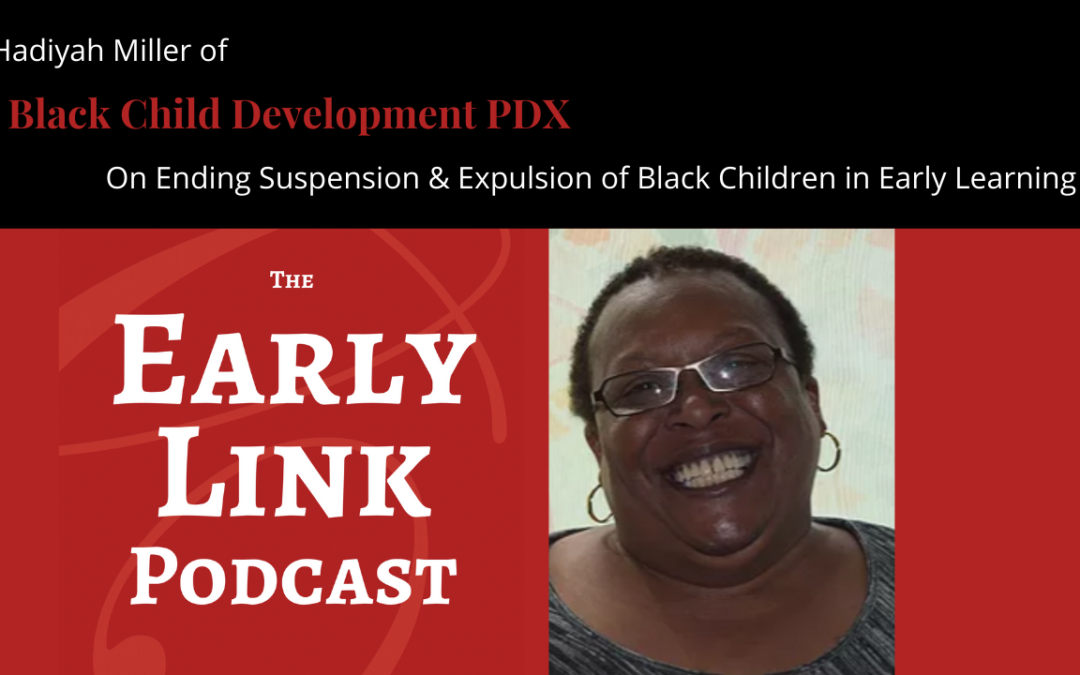
Podcast: Hadiyah Miller, Black Child Development PDX

Podcast: Hadiyah Miller, Black Child Development PDX

In this week’s episode, host Rafael Otto speaks with Hadiyah Miller, president of the Oregon Association for the Education of Young Children (ORAEYC) and chairperson of Black Child Development PDX, about combating the expulsion and suspension of Black children in early learning.

Guest

Hadiyah Miller is the current president of the ORAEYC and works as the African American Family Childcare Network Coordinator at Childcare Resource and Referral of Multnomah County. She also serves as the early childhood chair of Black Child Development PDX.  

Summary Miller shares how Black Child Development PDX connects community members, Black leaders, and allies to change outcomes for young Black children in Portland. She explains that its present focus is on preventing the expulsion and suspension of Black children in early learning. This work is being done by elevating the Black experience and Black voices in the Legislature, and by helping teachers to identify and fight implicit bias so they can begin to shift how they respond to Black children. 

Background

Research has shown that Black children make up 18 percent of preschoolers, but make up nearly half of all out-of-school suspensions. Different standards exist in schools for white children, and implicit bias plays a role in teachers responses to the actions of Black children.

Kids who are suspended or expelled from school are more likely to drop out, and those dropouts are more likely to end up with criminal records. This is known as the “school-to-prison pipeline.”

Get Involved

ORAEYC will be hosting two different communities of practices starting in December 2020. These events will be open to anyone who is interested in this relationship-based learning experience focused on equity and social justice. To learn more, visit their page here.