Echo Shaw Staff to Families: We’re Thinking of You and We Miss You

Echo Shaw Staff to Families: We’re Thinking of You and We Miss You

How is the COVID-19 pandemic affecting your corner of the early care and education world? Please email Ashley Walker at ashley@childinst.org if you or someone you know can help us to illustrate the on-the-ground reality for educators, families, small business owners, child health workers and others.
Dr. Perla Rodriguez, as told to Ashley Walker

Principal, Echo Shaw Elementary in Cornelius, OR

Echo Shaw Elementary School is an entirely dual-language program serving students from pre-k to eighth grade. In this piece, Rodriguez shares how her school and community are meeting new challenges posed by the COVID-19 pandemic.

On Technology 

As far as the transition to distance learning is going, our district as a whole has been one-to-one for a long time, with technology for every student. That’s Chromebooks for the older students, a mixture of iPads and Chromebooks for kindergarten and first grade, and iPads for pre-K. So we’ve been able to try different kinds of apps with students at different times. I can’t imagine what we’d be doing if we didn’t have that one-to-one tech availability. Some families don’t have WiFi, and the district is working on getting hot spots distributed to them.
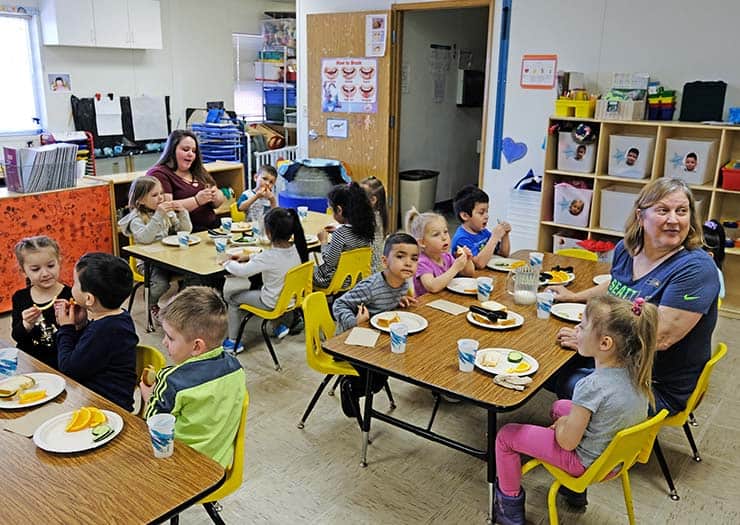
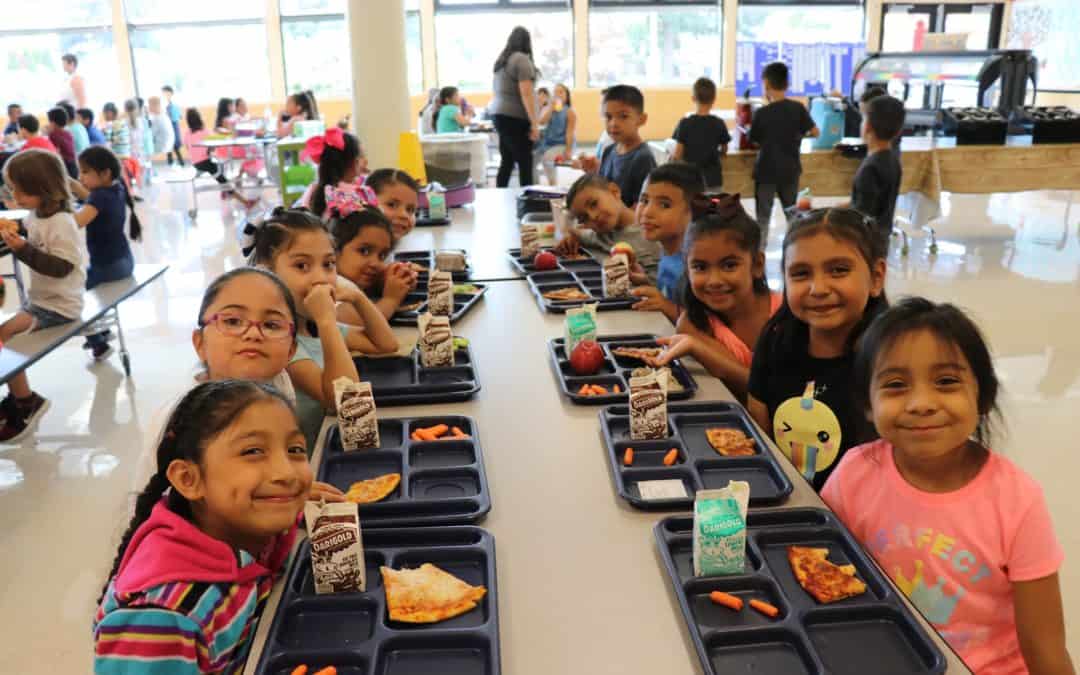
Students haven’t gathered in the cafeteria since mid-March. Photo courtesy of Echo Shaw Elementary.

Both of our pre-k teachers believe that screen time as a tool for learning can be important, but it hasn’t been a priority. But now that things have moved online, it’s becoming clear that an iPad is just a tool; you have to know how to use it. Pre-k, kindergarten, and first graders are just learning how to read and write. If you don’t know how to spell “Google Classroom,” everything is hard!

This is an opportunity for us to do some learning about appropriate doses of technology for the youngest children, and what to do with that time. Looking back, if we knew what was coming, we probably would have been doing technology as more than a center activity, more than another way to do math games, you know? I think it’s fair to say there would have been more direct instruction around how to really use the technology as a tool.

On Flexibility and the School/Home Connection 

More than ever before, we’re relying on that parent-teacher relationship, and we’re learning side-by-side with parents. We’re spending a lot of time right now walking parents through how to access all the tools online. It’s a balance between wanting to provide a lot of tools and support to parents, without making the technology feel like a requirement, or like somebody will be in trouble if kids aren’t doing it. We’re framing it as, “We want to give everybody as many learning resources as we can, and we know that you’re going to choose the ones that work for your family, and we’re okay with whatever you’re doing.”

This is going to pass, and when it does, we’ll have so much more work to do if by then, your kids hate school and hate learning and associate technology and their teachers with, you know, “My mom would yell at me because at nine o’clock I wasn’t doing my math work.” We do not want that!

We’re telling them, if nothing else, it would be great if the kids watched the lessons teachers post and joined the classroom meetings. Right now we’re organizing classroom Google Meets. Teachers are working up to 20 minutes every day, live. And then they are posting math and literacy activities. A pre-k teacher has created a website, she uploads videos on YouTube, and she has a Facebook page for the class, because it’s easiest for the parents that way.

I don’t know if we’re doing anything right. I just keep telling all the parents and all the teachers that we just have to trust our instincts and what our gut tells us, then change it if it isn’t working. We’re humbling ourselves. We don’t have to act like we have it all figured out; I don’t remember taking a class in global pandemic preparedness.

On Concerns for her Community

I’m worried about a lot of our families, especially a lot of our immigrant families who have lost their jobs, who don’t qualify for a stimulus check even though they’ve paid into the economy here. Families who, given their legal status, they’re afraid to use any community resources, even though it would be perfectly appropriate for them to do so. In this political climate, everything is scary. If you’re undocumented or even if you’re here legally, but as a resident and not a citizen.  You now see where one of the new regulations that they just started a couple of months ago is around families who are applying for citizenship. If they’ve ever taken advantage of any public help, then they wouldn’t qualify. It’s horrible. So I worry about our families, just their well-being. I worry if they’re eating, and if they’ll reach out about that.

Schools are figuring out the best ways to help families. The teachers here at Echo Shaw, we have what we call the “School Sunshine Fund,” and teachers donate at the beginning of the year, and we use those funds to celebrate different events, like staff appreciation week, or if someone has a baby, we can get them something from the whole staff. But we’ve decided to use that money this year on gift cards to Winco and Walmart, so if we hear of any needs, or if we just know our families, we can stick a card in the mail just to say, “We’re thinking of you, and we miss you.”


Laid off Educator Shares COVID-19 Impact on Life, Families

Laid off Educator Shares COVID-19 Impact on Life, Families

How is the COVID-19 pandemic affecting your corner of the early care and education world? Please email Ashley Walker at ashley@childinst.org if you or someone you know can help us to illustrate the on-the-ground reality for educators, families, small business owners, child health workers and others.

Caitlin Curtis

Early Educator and Advocate, Portland, OR

In this time of fast-paced transition and response, we spoke via email with Caitlin Curtis, a preschool teacher from Portland about the personal and professional impact of the COVID-19 pandemic.

As an early childhood educator, how is the pandemic affecting your work and your life?

Because of the pandemic, my school has closed. There was enough in reserve to pay teachers for one pay period, but we are a non-profit so we do not have the funds to stay open and continue paying employees. For the month of April, and possibly longer, we have been laid off, and the majority of us will be filing for unemployment.

As for my life, I’m social distancing in my apartment alone so it gets pretty lonely, especially going from a busy classroom to just me by myself at home. But I’ve been able to stay in contact with my friends, family and co-workers, so it’s all good.

And although we’ve been laid off, teachers at my school are  staying connected to our families. I hold virtual meetups on Zoom three times a week, we send out emails with resources and supports once or twice a week to our families. I record myself reading stories and send them to my families. We also have a google photo album the parents can upload pictures to and we are organizing a pen pal situation.

How is the pandemic affecting the families you serve?

Well, they currently have no child care, so they are tasked with caring for their children and, for most of them, working from home. We do have some families who are essential workers and one parent in particular who had to send their child to stay with family in order to keep them healthy, which I’m sure is very hard. Many parents are juggling working from home and also caring for their children full time and trying to keep them occupied and engaged, which is probably a challenge.

How have you been staying connected and informed?

I listen to the news on the radio, OPB to be exact. I receive updates from the Oregon legislature, my local representatives, and I follow media around what’s happening in Oregon. I do limit the amount of information I take in, in order to not panic. It’s a fine balance between staying informed and feeling overwhelmed.

I’ve been reaching out to my legislators to share my experience in child care during this pandemic, watching webinars on how child care is affected and what we can do, and signing petitions by different advocacy organizations to get more funding for childcare in the relief packages. I’ve been sharing ways to do this with other child care workers at my school and other centers, as well as with our families, so they can advocate as well. I think many people don’t realize their voice is so important during this time and that you can advocate while social distancing! We’ve also been sharing the information on getting emergency care with our families so they can apply if they qualify.

Thank you, Caitlin, for sharing your story with us, and for the work you continue to do for Oregon’s young children.

The Latest from Salem: May 10, 2019

The Latest from Salem: May 10, 2019

Dana Hepper, director of policy and advocacy at Children’s Institute, and James Barta, strategic director at Children First for Oregon, provide a timely policy update on the current legislative session.

Key takeaways:

  • The Senate vote on HB 3427, which has passed the House and allocates $2 billion to education, continues to be delayed.
  • Approximately $400 million in this package is dedicated to early childhood.
  • Oregon Business and Industry is neutral on the bill.
  • Many Republican senators are pushing for further negotiations.
  • If the bill secures 18 votes in the Senate it will become law; it’s likely it will then be referred to voters.
  • Your voice matters! Use the link below to contact your senator.

Visit our policy page for more information about our full policy agenda.

A Trip Down Memory Lane at Orchards Head Start

A Trip Down Memory Lane at Orchards Head Start

Bob Harding and Teri Seaton are two people who might not seem like they have much in common. Bob works as a bank executive and, with his wife Shannon, is raising three young kids on a 5-acre hobby farm in Stafford, Oregon just east of Tualatin. They have 30 chickens, 3 goats, a cat, and a dog.

Teri Seaton lives in North Portland with her husband, Greg Stevens. Not a single chicken, goat, dog or cat can be found in her house. But though she has no children of her own, she does spend a lot of time with them. Teri, you see, is a Head Start preschool teacher. And Bob, you might be surprised to learn…was once a Head Start student.

Head Start is a federal program that serves low income children and families. Both Oregon and Washington offer the program, but neither state receives enough funding to serve all children and families who are income eligible, so they supplement the federal program with state dollars.

Child advocates, education, and political leaders have called for increasing access to early learning and early childhood programs. That’s alongside a growing body of research on the long-term benefits of early care and education programs in general. With that backdrop in mind, we wanted to hear directly from those who have benefited from the program and those who work directly with children and families every day.

Two Generations of Impact: A Mother’s View on Head Start

I had been separated from your dad and he was nowhere to be seen for about six months when my in-laws came from Florida to help us move somewhere near enough so that he could visit if he chose to.

Philip was going into third grade, Ana into second, and Maria into Kindergarten. You, just turning four, were going to stay home with me for another year.

Since your dad had not been giving us any money, we qualified for free lunches and I was asked if I wanted to register you for Head Start, a program I had never heard of and which turned out to be the greatest break in our lives.

I can’t describe the joy I felt that you were in this blessed program. That fall, I was able to go door-to-door selling Avon three days a week and volunteered at Head Start two days. They appreciated my help and as I had gone to Catholic School, I could teach the kids how to use a knife and a fork, and also some good manners. 

Thanks to Head Start you started on your upward trajectory which has taken you far: successful as a family man, a friend, and a professional.

– Vera Harding, in an email to Bob Harding

A Peek Inside Orchards Head Start

A Peek Inside Orchards Head Start

Ask 3-year-old Gianna what her favorite thing about school is and she answers with her entire body.  She springs up out of her chair—cheese sandwich still in hand—and punctuates her answer with two raised arms.
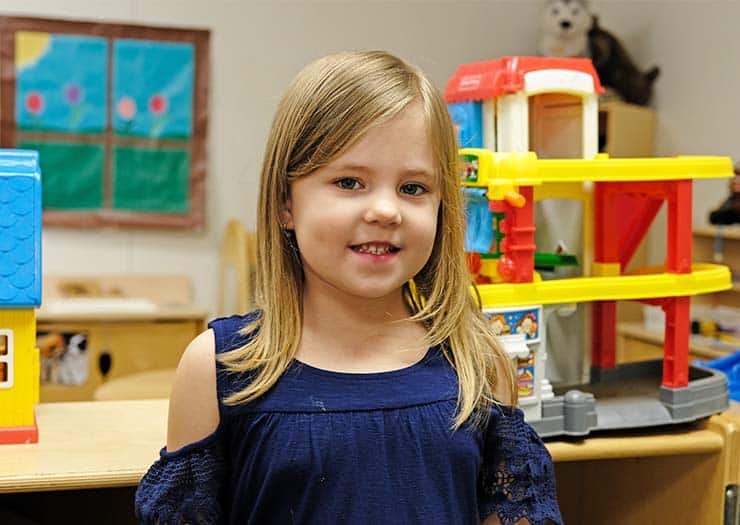
“Play!” she shouts.

What’s your second favorite?

“Clean up!” she answers with the same infectious enthusiasm.

She offers a third favorite without prompting. “Running away from monsters and big marshmallows!”

This is Gianna’s first year at Orchard’s Head Start and she is clearly having a blast.    

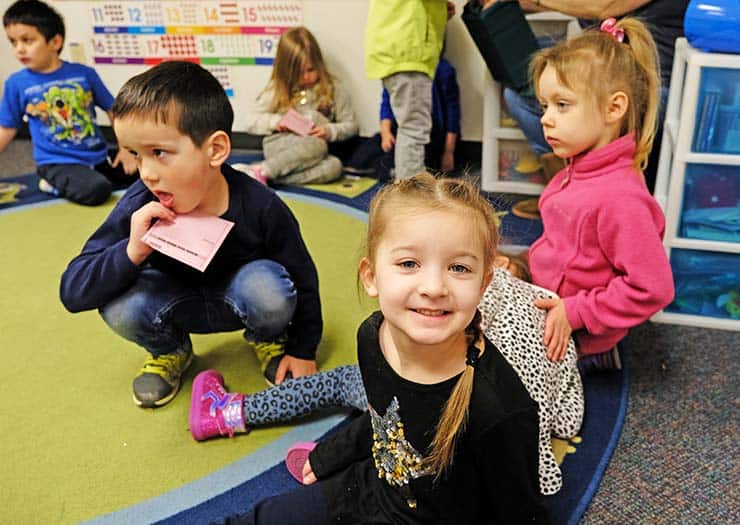
A boy named Cooper is crisscrossing the room with a serious look on his face. He carries an old school telephone message notepad in hand—the kind with the bright pink pages and the heading, “While you were out.”  Cooper scribbles purposefully on the page, tears it off and delivers the bad news:

“You got a ticket,” he says with stern authority. “For being loud!”

Gianna notices and does her best to catch Cooper’s attention as he makes his way towards her part of the room.

“I want a ticket!” she implores. “I’m being loud!”

Cooper issues two tickets to the grown up sitting beside her, ignoring Gianna’s voluntary confession. Unfazed, Gianna looks to the accused and offers to autograph the ticket.  “I know how to write my name,” she says proudly.

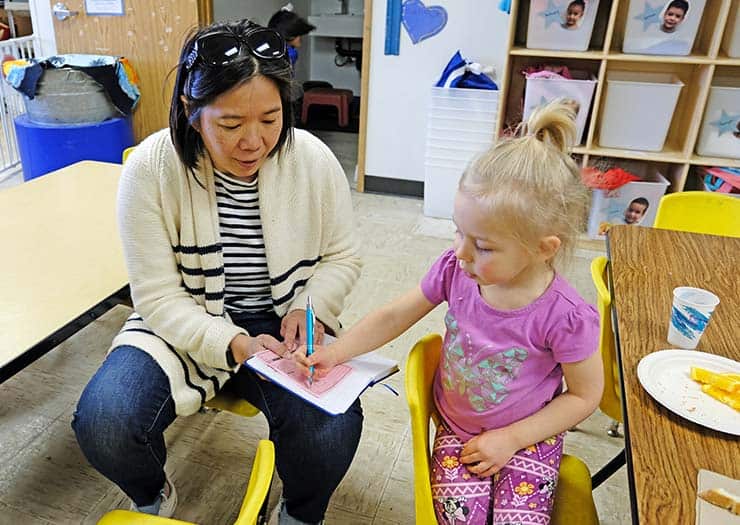
At lunch time, the children pour their own milk and show off cucumber sandwiches they have created out of the simple ingredients laid out family-style at their tables. Afterwards, they put away their own dishes.

A little girl reminds her tablemates, “If you’re done, then you have to wait.”

Those who have never stepped into a Head Start or preschool classroom might be surprised to know that nearly all of the activities Gianna, Cooper, and their classmates enjoy at Head Start are part of an intentionally planned, high-quality, early learning experience.

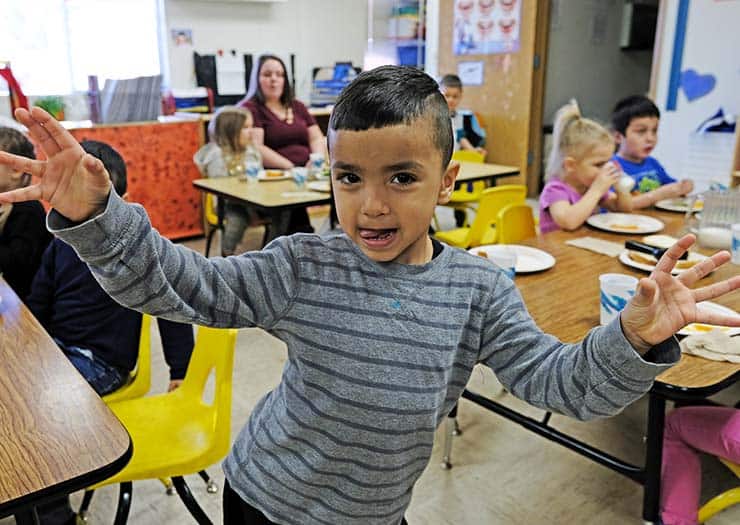
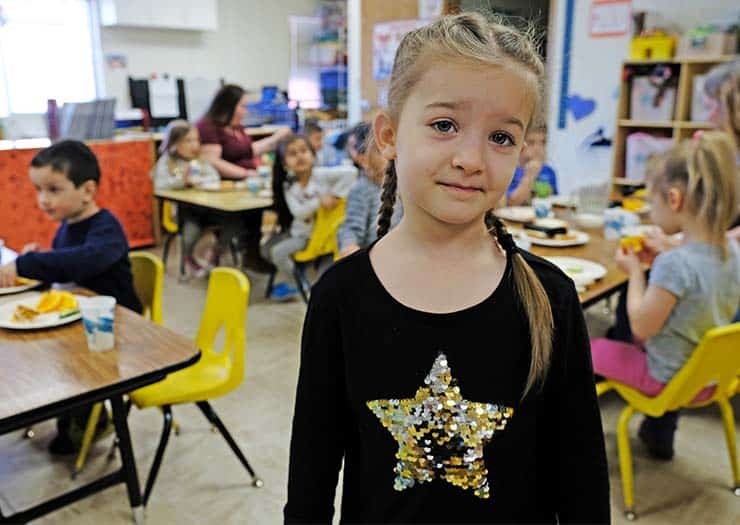
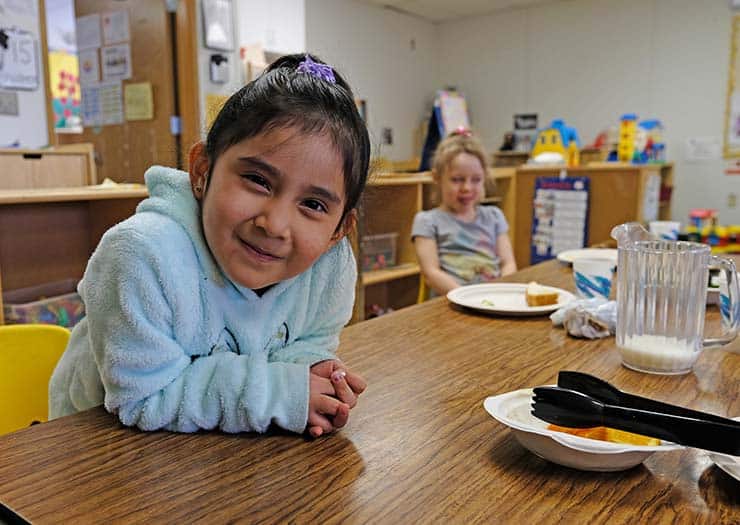
Photos From the Orchards Head Start Classroom


As Teri Seaton, a Head Start teacher with Educational Opportunities for Children based in Vancouver, explained, today’s early educators are expected to have knowledge and understanding of early brain development, to work with children who may need accommodations due to disabilities, and to address the impacts of ACEs (Adverse Childhood Experiences) among other challenging family and home environments.

“People too often associate early learning with babysitting and it’s so much more than that,” said Seaton. “It’s something that takes professional development, education, good training and intention, and planning to do well. That’s a piece that gets lost sometimes.”

At Orchards, the children have great freedom to engage in self-directed learning. They are offered many opportunities to be self-sufficient and are supported in acquiring the social and emotional skills that will help them be successful in kindergarten and beyond. Alongside early literacy and numeracy skills, children in high-quality early learning settings are also developing fine and gross motor skills, practicing patience and turn-taking, and building positive relationships with teachers and peers. 

As Gianna demonstrates with her energetic endorsement of both “play” and “clean up” there is very little distinction between work and play. The children of Orchards know how to integrate both and the result is a learning environment that is a joy to witness and be a part of. 

Many thanks to the students, parents, and dedicated staff at Orchards Head Start and Educational Opportunities for Children and Families in Vancouver, Washington for inviting us to be a part of their day.