Press Release: Public Opinion Supports Expanded Investment in Early Childhood

Press Release: Public Opinion Supports Expanded Investment in Early Childhood

FOR IMMEDIATE RELEASE

Contacts

Amaury Vogel, Associate Executive Director, Oregon Values and Belief Center

avogel@oregonvbc.org, 503.734.6748

Marina Merrill, Director of Research and Strategy, Children’s Institute

marina@childinst.org, 503.860.3833

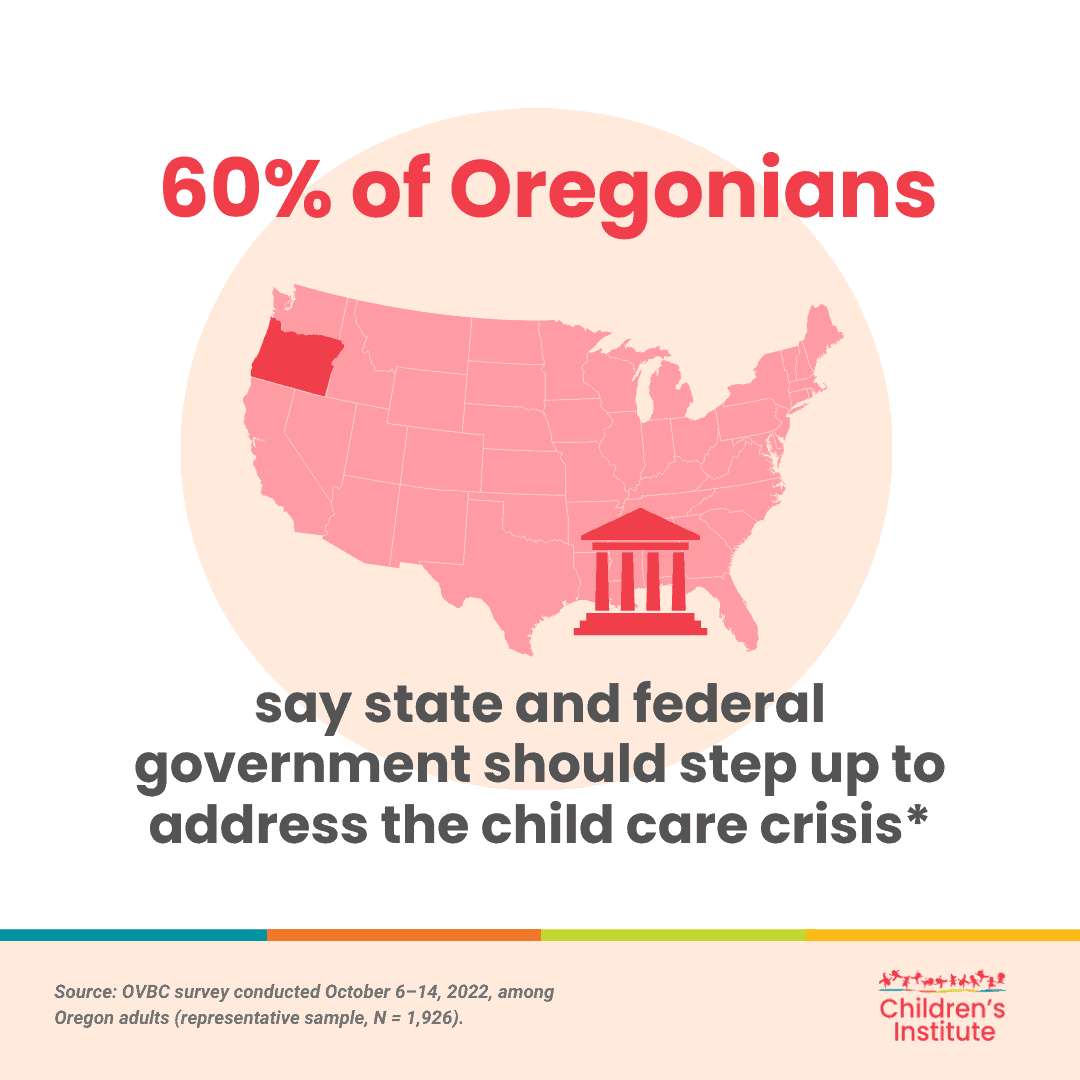
Public opinion about Oregon’s child care crisis is clear: most people across Oregon want the state and federal government to create solutions and increase investments in child care and preschool.

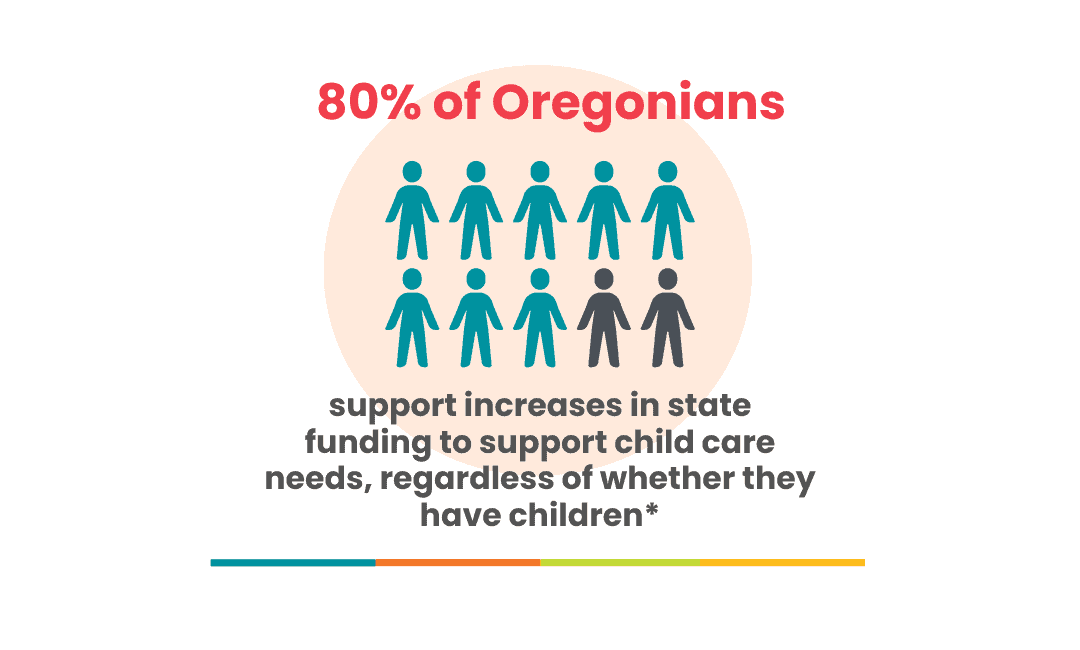
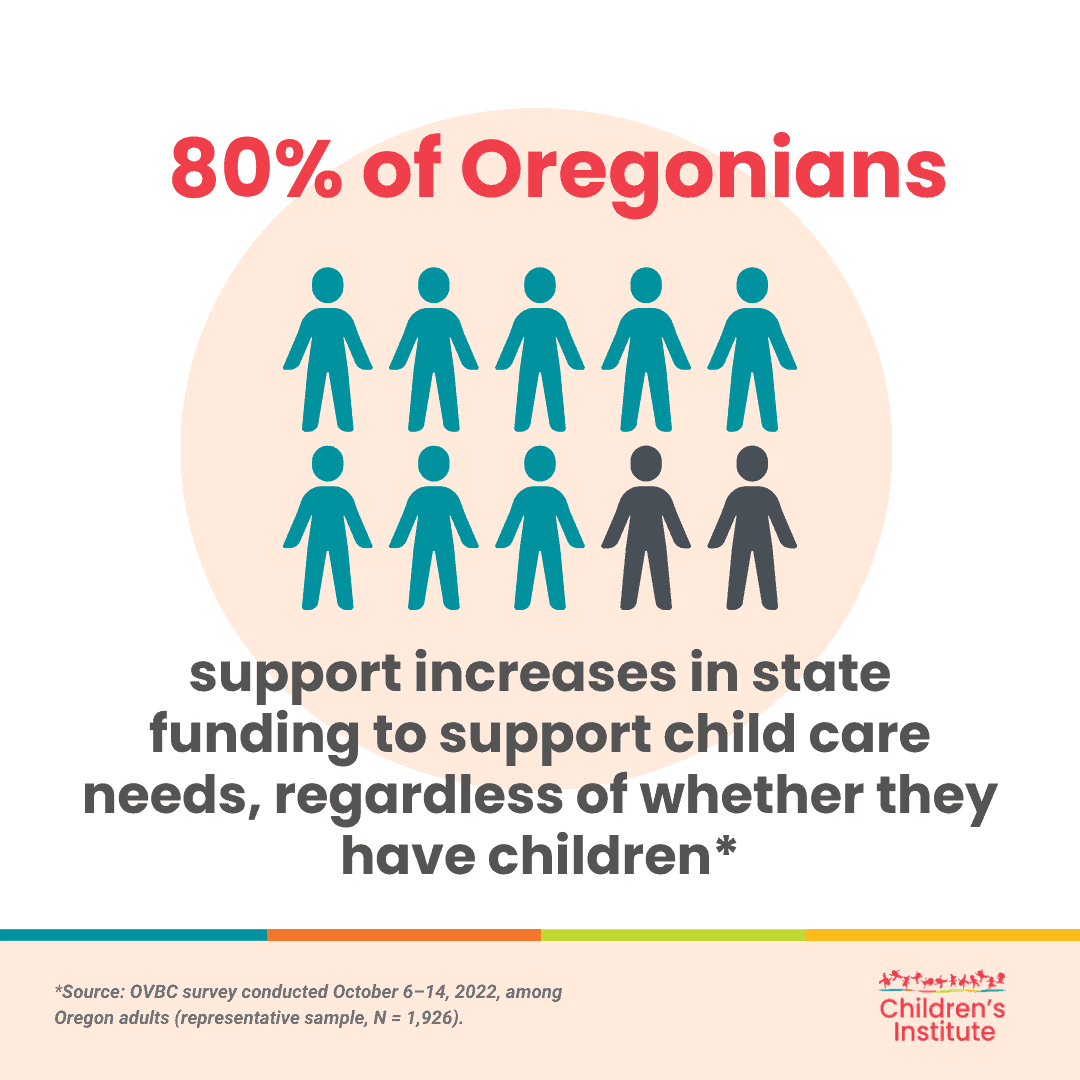
A recent representative survey of 1,926 residents conducted by the Oregon Values and Belief Center (OVBC) indicates that 80 percent of Oregonians support increases in state funding to support child care needs, regardless of whether they have children.

Amaury Vogel, associate executive director at OVBC, said the data shows strong bipartisan support for child care and early childhood investments broadly. “People can see the impact of the child care crisis in their own lives and for others in their community. And they are looking for solutions that include public investment to strengthen infrastructure, increase wages and benefits, make care more accessible, decrease the cost of care, and create more equitable early childhood opportunities.”

More Key Findings

  • 60 percent of Oregonians spend 20 percent of the monthly income on child care.
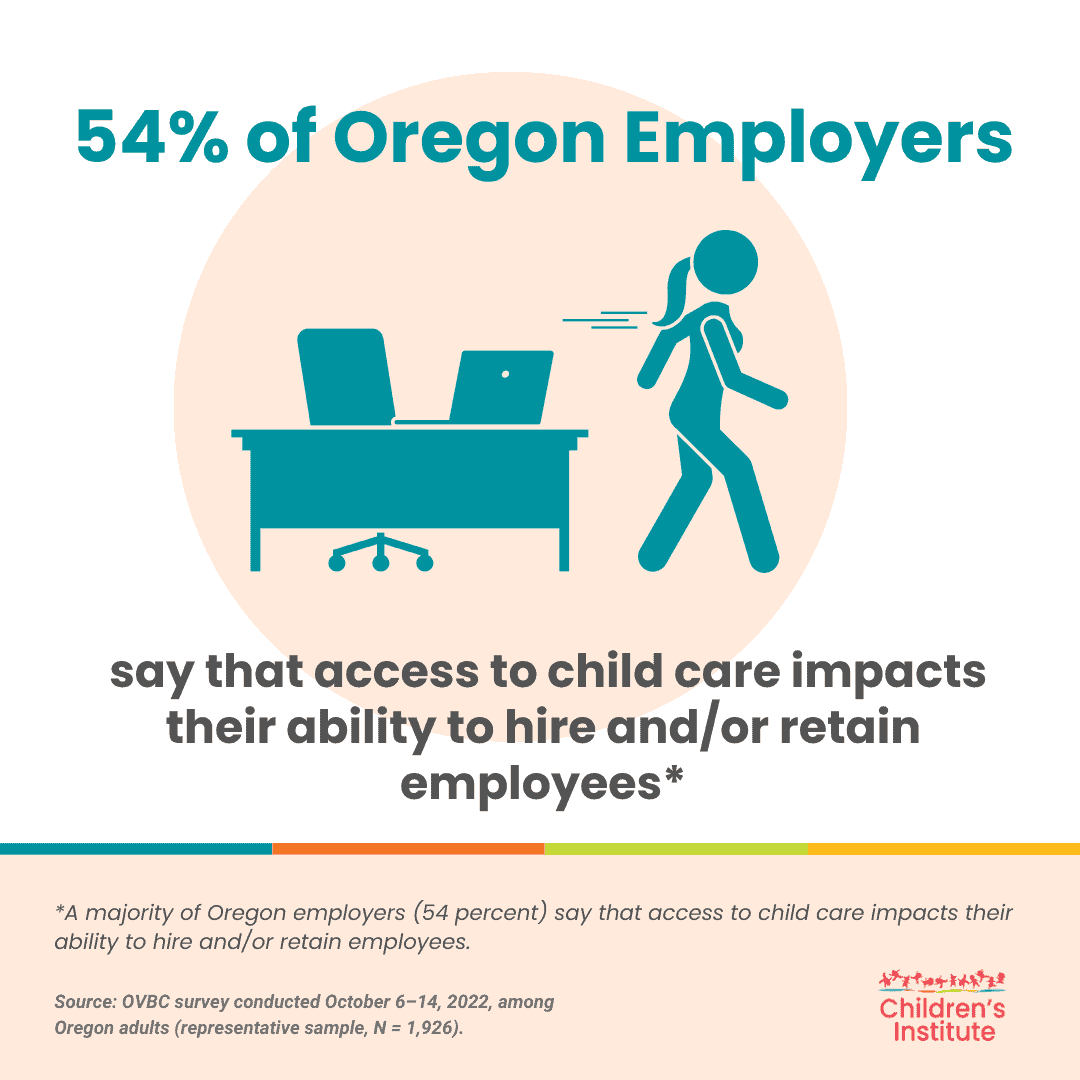
  • 54 percent of Oregon employers say that access to child care impacts their ability to hire and/or retain employees.
  • 80 percent of Oregonians think it is important to increase spending on early learning opportunities.
  • 77 percent of Oregonians think it is important to increase spending on infrastructure for more child care centers.

Today, less than one third of children age 0-5 have access to regulated child care facilities. Nearly 75 percent of communities in Oregon are child care deserts.

2023 Advocacy

“When we listen to economic updates, the re-occurring theme tends to be that we need more affordable housing, and we need child care,” said Kali Thorne Ladd, chief executive officer at Children’s Institute. “But the conversation too often ends there, and we don’t thread the two together. Thriving communities requires that we do so. This is what economic development looks like at its finest.”

Children’s Institute is currently trying to bring this to fruition by advocating for the passage of HB 3005, which would create an early learning and care facilities fund to build infrastructure for early childhood across the state. Two additional bills would strengthen the state’s facilities infrastructure from a policy perspective: SB 599 creates protections for child care providers operating in rental homes; HB 2727 initiates a review of zoning, land use, and building core requirements and makes recommendations that would facilitate and incentivize the construction of new child care facilities.


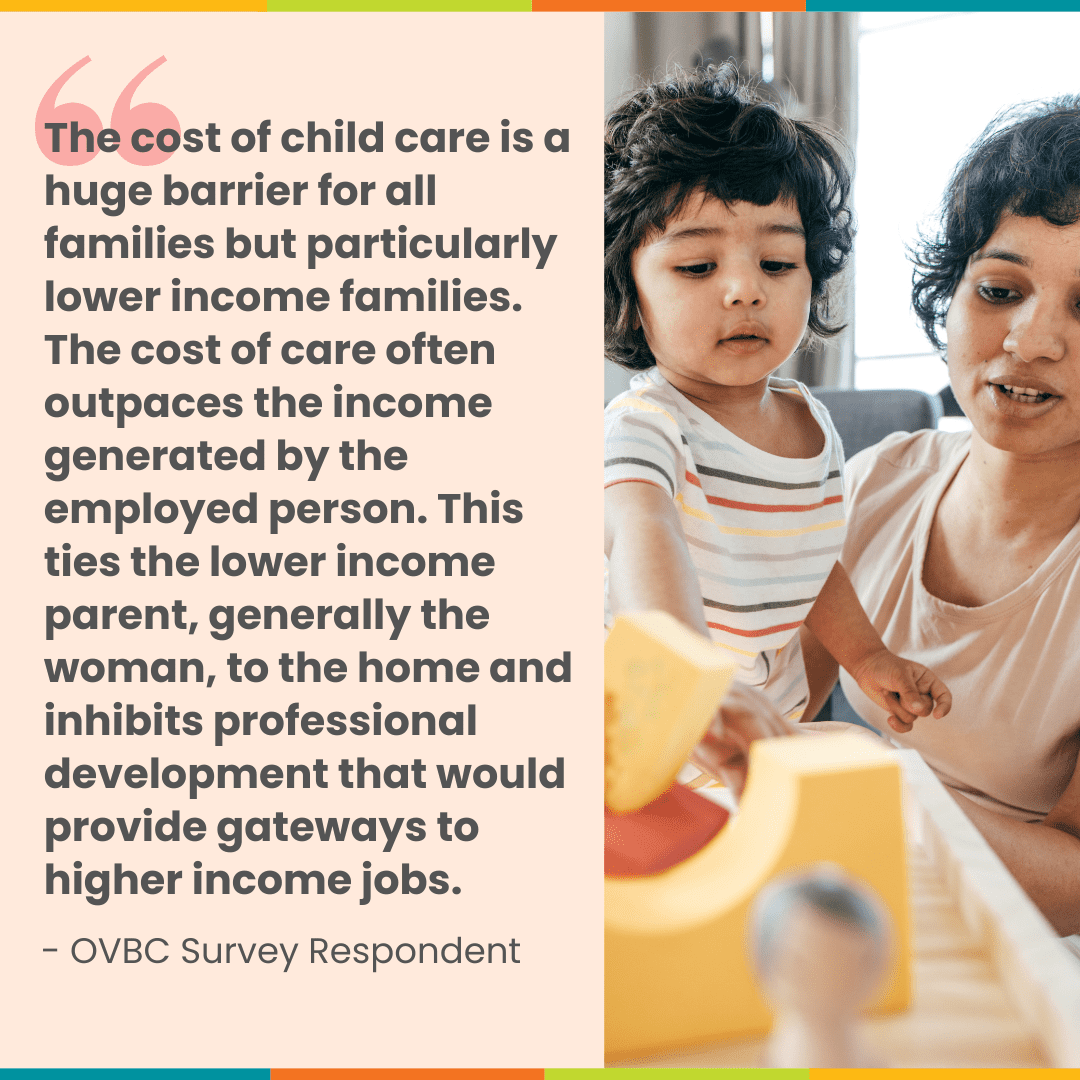
“The cost of child care is a huge barrier for all families but particularly lower income families. The cost of care often outpaces the income generated by the employed person. This ties the lower income parent, generally the woman, to the home and inhibits professional development that would provide gateways to higher income jobs.”
OVBC Survey Respondent


Children’s Institute’s mission is to shift systems toward justice for families so that all children in Oregon, prenatal to grade five, have access to opportunity. Children’s Institute advocates for and secures public investments in early childhood programs and services, and works directly with school communities to improve the learning experience for children. Learn more at childinst.org.

The mission of the Oregon Values and Beliefs Center is to provide accurate, inclusive opinion research to help Oregonians working to build stronger communities. OVBC’s research is ongoing; independent and nonpartisan; representative of rural Oregon and communities of color; valid and statistically reliable; and quantitative and qualitative. Learn more at oregonvbc.org.

###
 

Governor Kotek Visits Yoncalla Early Works in Douglas County

Governor Kotek Visits Yoncalla Early Works in Douglas County

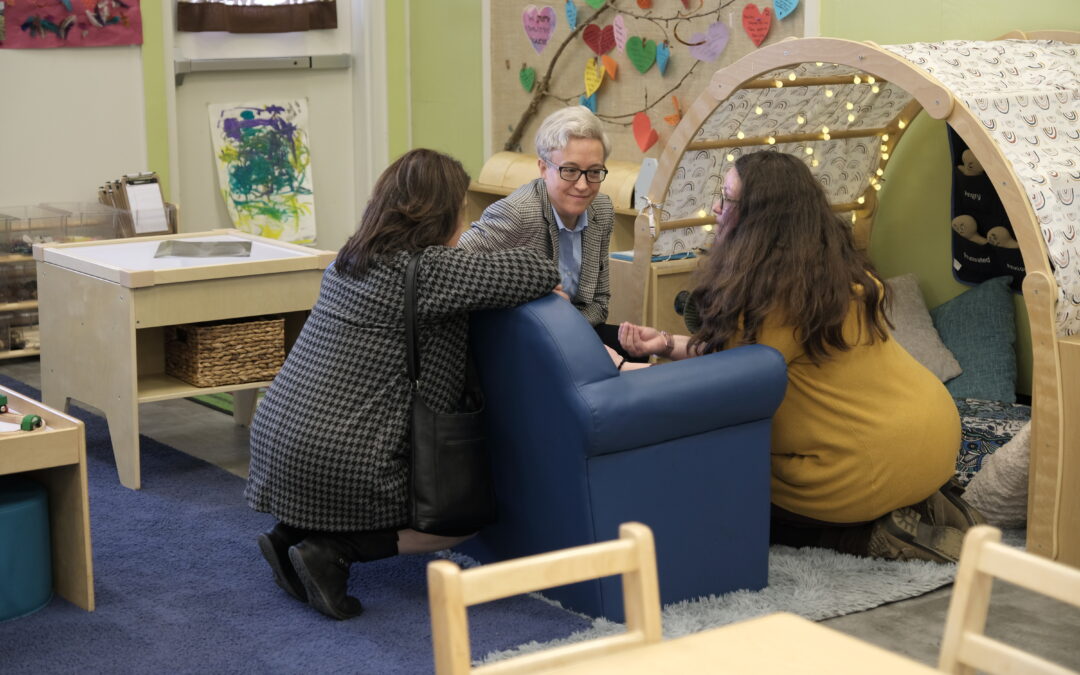
Governor Tina Kotek visited Douglas County as part of her One Oregon Listening Tour where she plans to visit all of Oregon’s 36 counties during her first year in office.

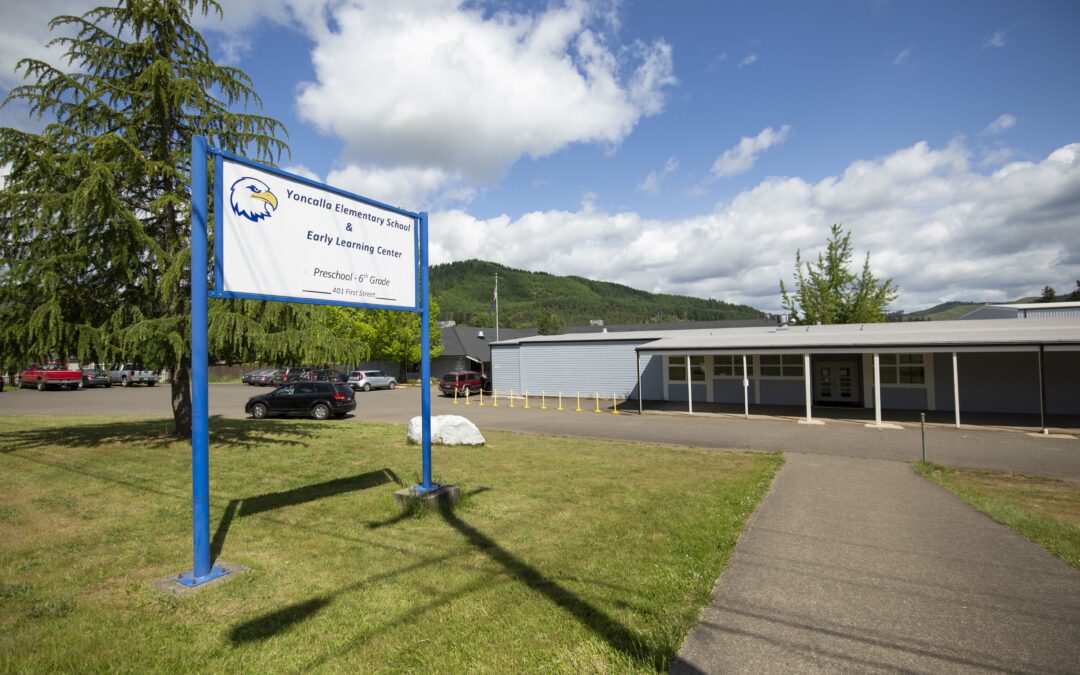
On Friday morning, she stopped at Yoncalla Elementary School’s Early Learning Center—a demonstration site for Children’s Institute’s Early Works program, which launched at the school in 2013.

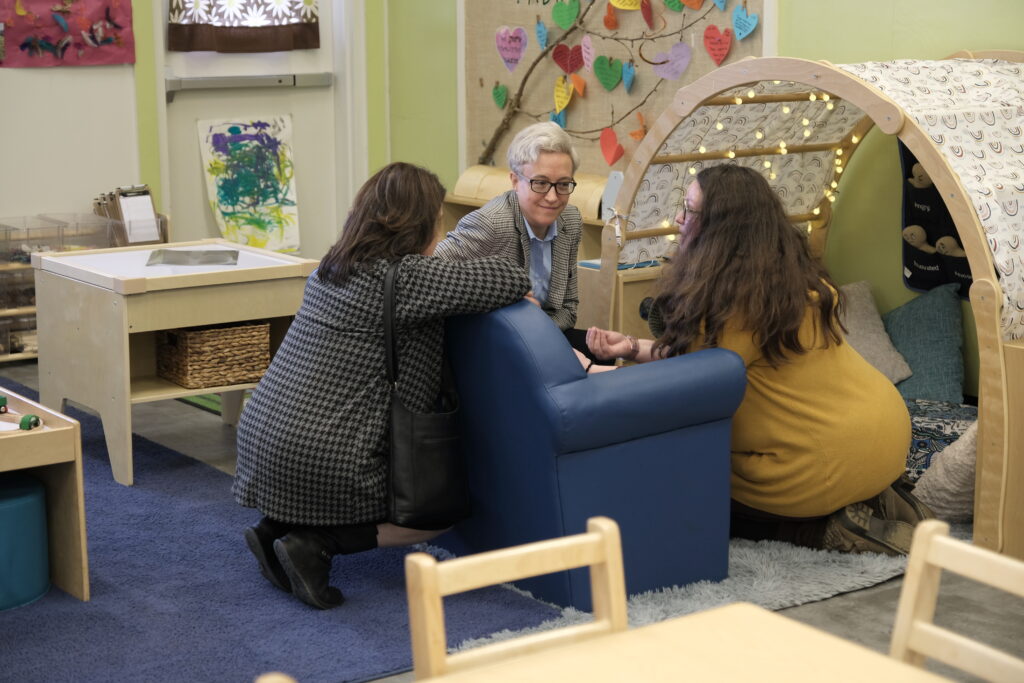
Governor Kotek toured the early learning classrooms with preschool director, Megan Barber.

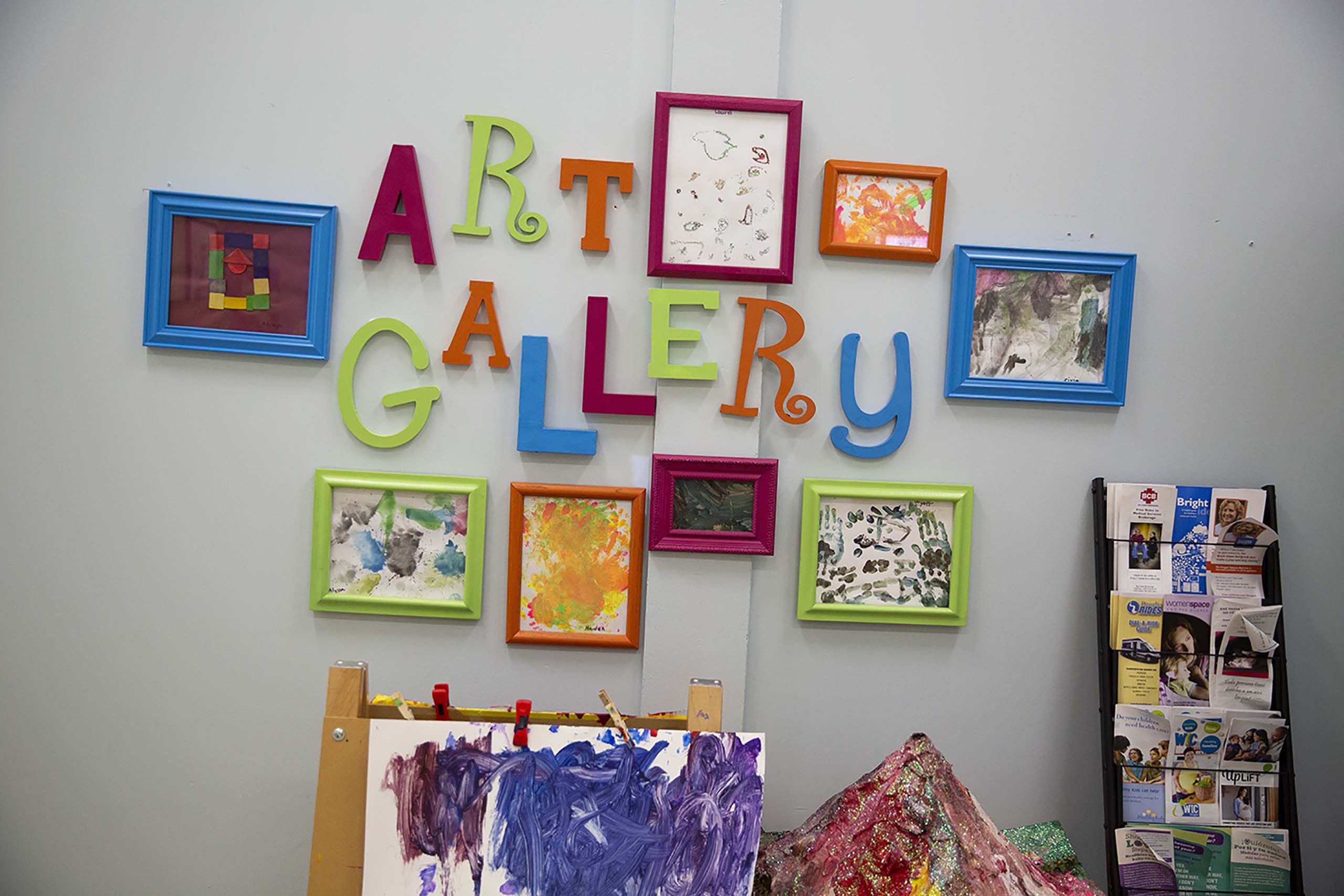
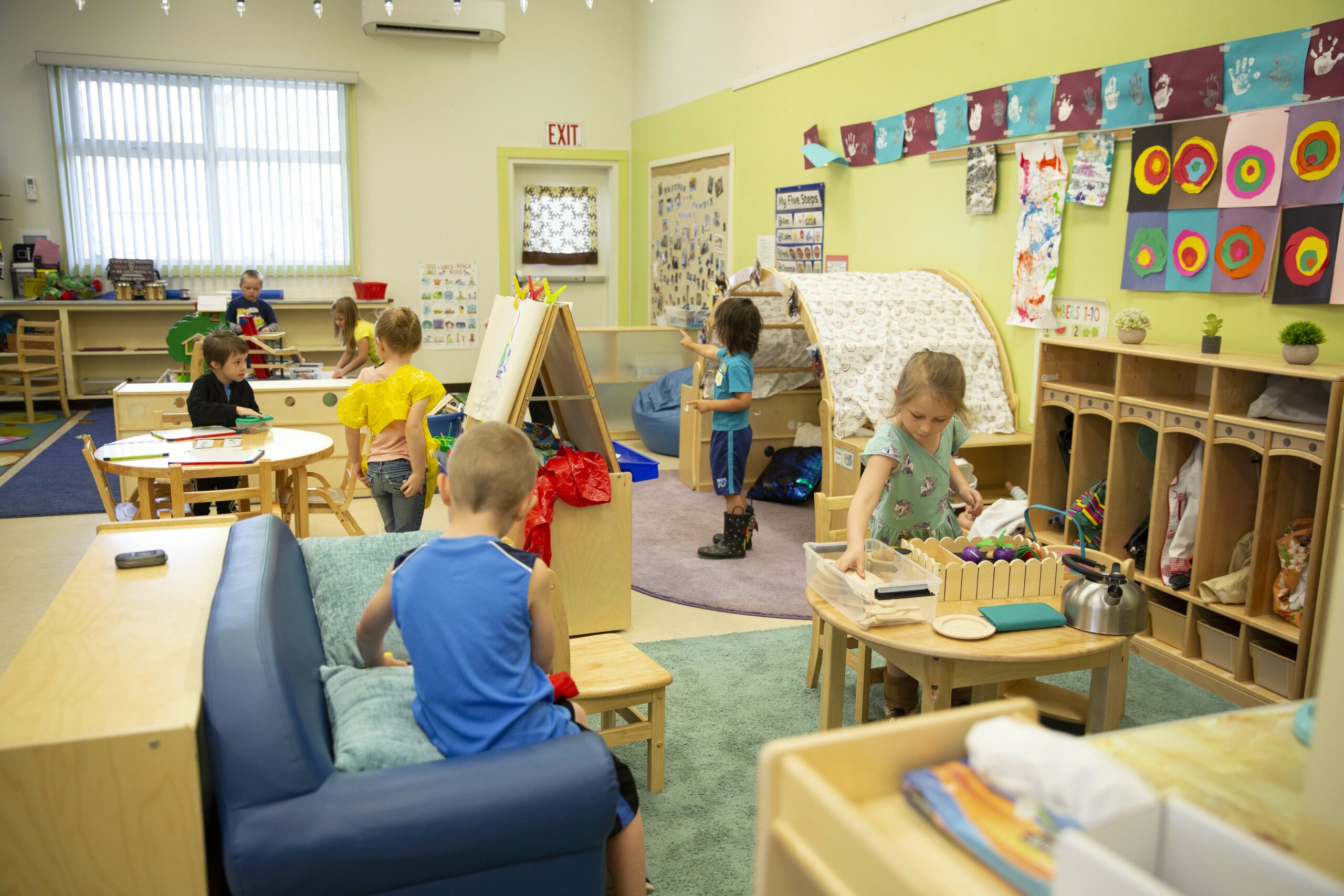
Barber guided Governor Kotek around each classroom, pointing to the various enrichment spaces for reading, STEM, and art, as well as areas for children to have quiet time and develop social-emotional skills.

She described the tight-knit relationships that children and their families have with teachers and school staff, sharing that before the beginning of each school year school staff does home visits with all the families that have children attending the Early Learning Center.

Governor Kotek visits Yoncalla Early WorksGovernor Kotek warmly thanked Barber for sharing and told her, “Every community deserves this.”
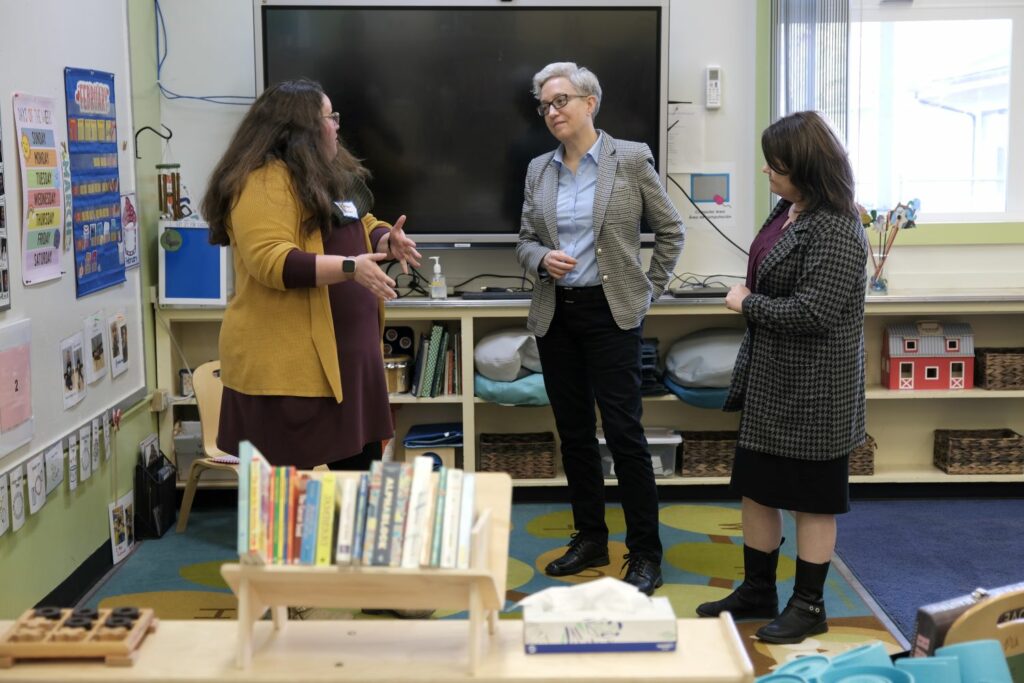
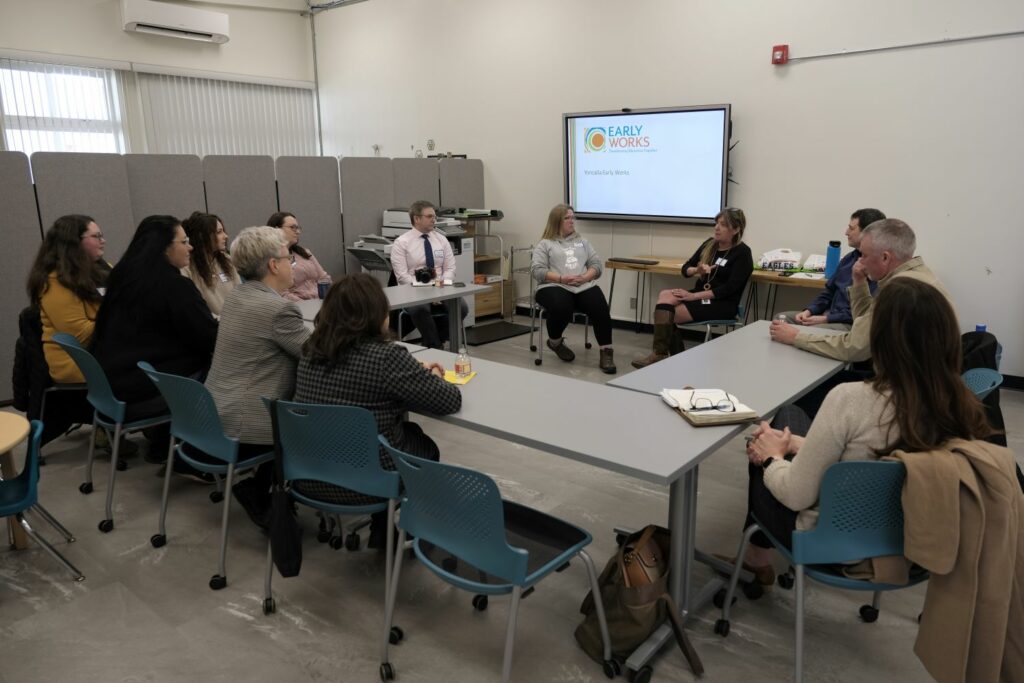
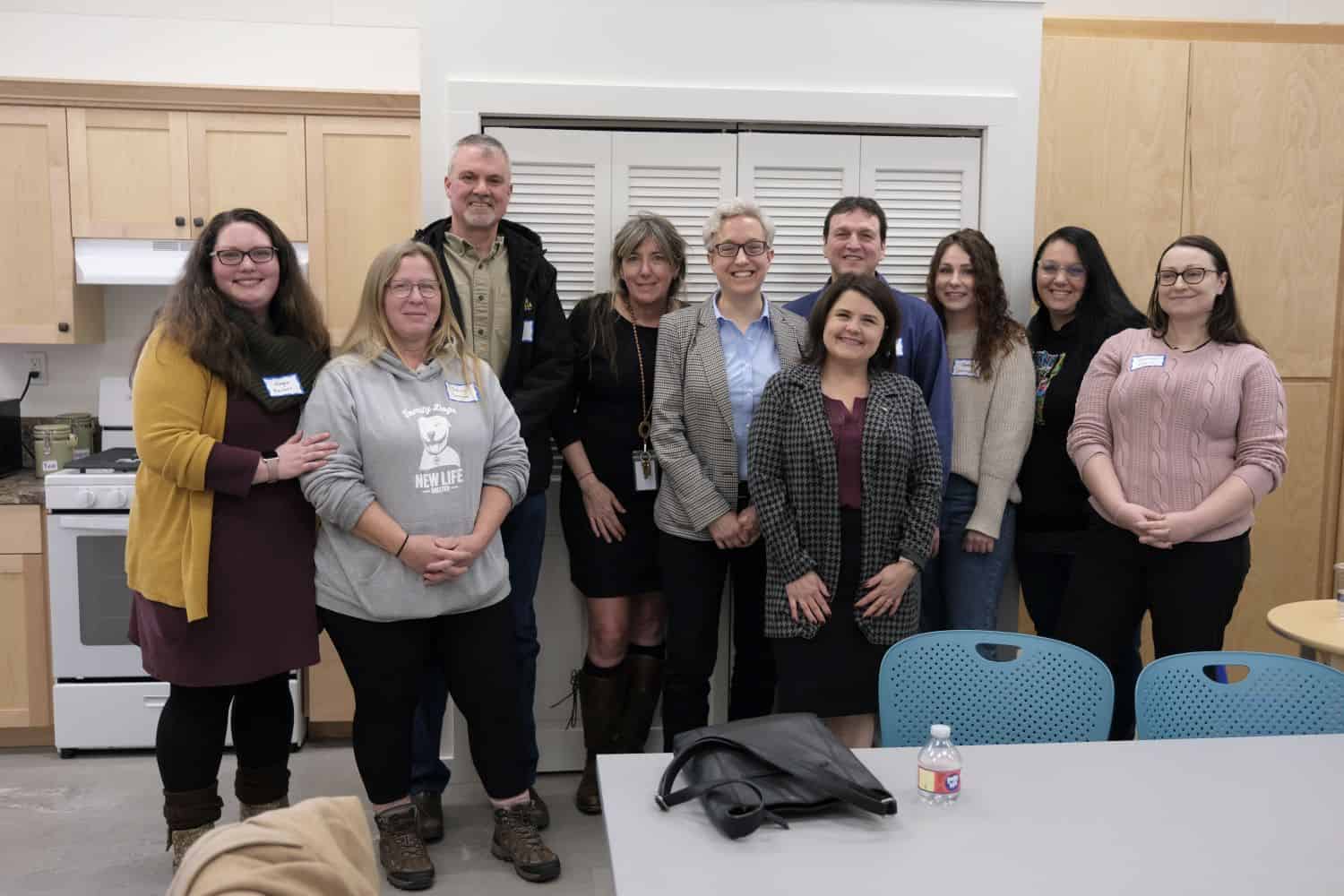
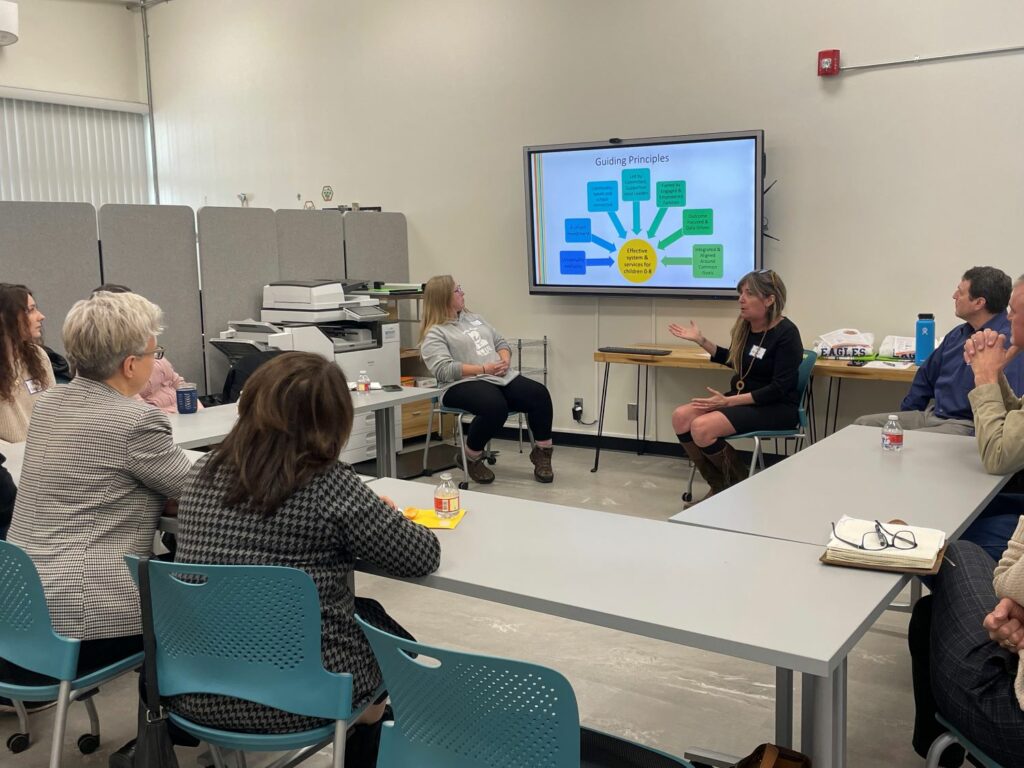
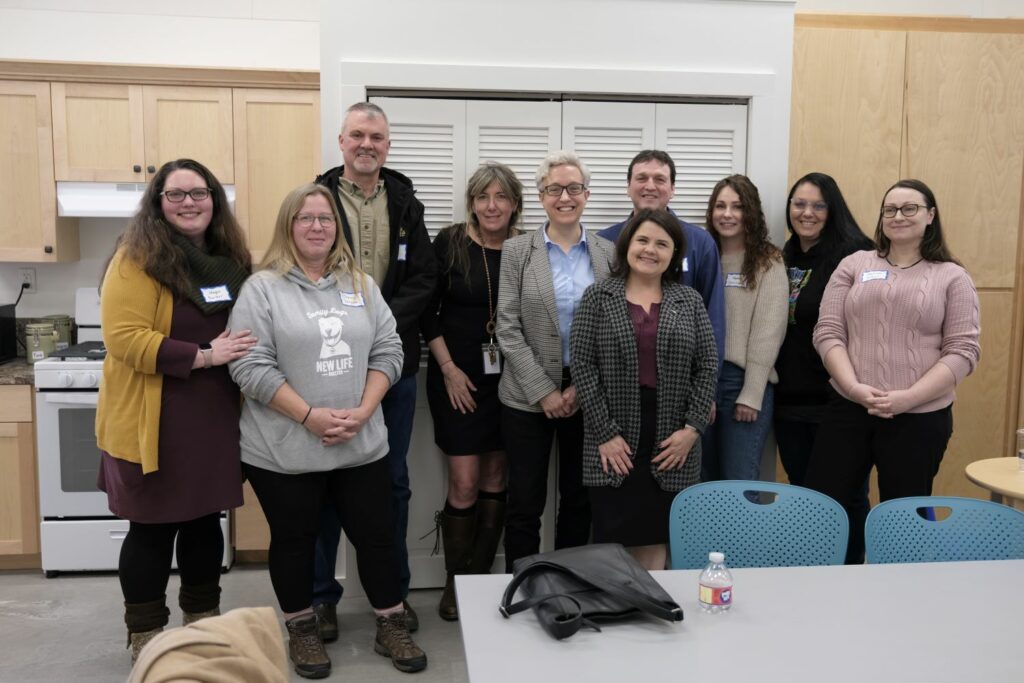
As the classroom tour came to an end, parent leaders, educators, and community members gathered in the kitchen/community space for a roundtable discussion about Early Works and the impact of a strong early learning program on children, families, and the community.

During the roundtable, Sara Ruiz-Weight shared how Early Works impacted her family.

“I started to realize what it was like to be part of a school family. I started to realize what it was like to be able to have help outside of my family. And so, it just became something bigger than what I ever expected,” said Ruiz-Weight. “Once you start to support families in small communities, they start to realize what their value really is,” she said.

There were few dry eyes as the room filled with stories from parents, grandparents, teachers, and community members.

One theme rang loud and clear – the school is the hub of this community, and a place where children and families can meet their needs.

Erin Helgren is the principal of Yoncalla Elementary School and the Early Works site liaison for Children’s Institute. She explained to Governor Kotek that the school’s early learning program is community-centered, community-driven, and that the focus should be on strengths, not deficits.

“This project is not grounded in poverty and what this community doesn’t have, but it’s grounded in what it DOES have.” said Helgren. “The foundation is justice and love, and feeling safe, and feeling connected. This is not head work, this is heart work,” she said.

Governor Kotek nodded thoughtfully and responded, saying, “It’s about the assets of the community, and the strengths that you have. It is about having community lead that transformation.”

She also said that, as governor, it is her job to listen and find ways to make it easier for communities to do what they need to thrive.

A Glimpse of How Yoncalla’s Youngest Learners Spend Their Day

A Glimpse of How Yoncalla’s Youngest Learners Spend Their Day

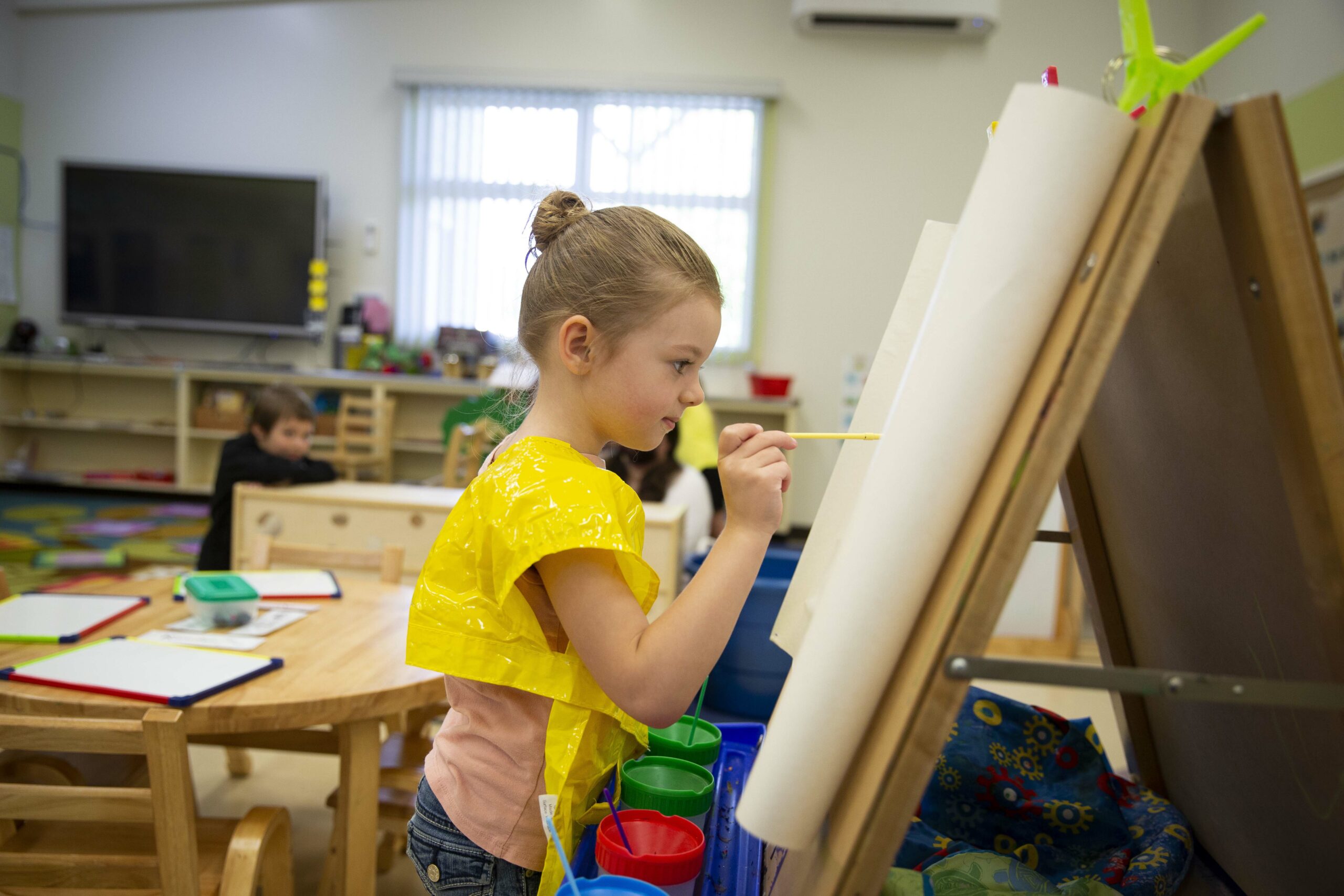
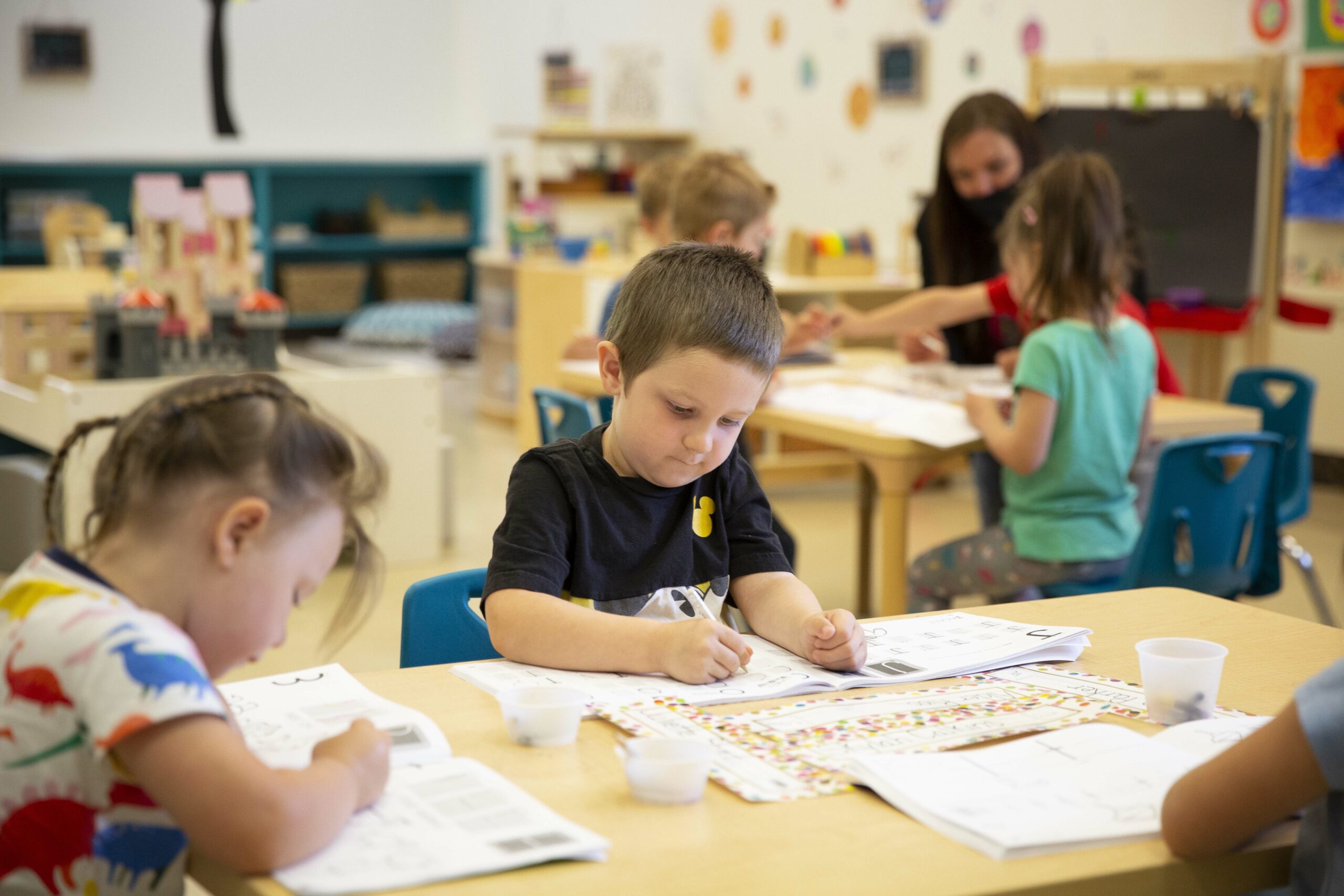
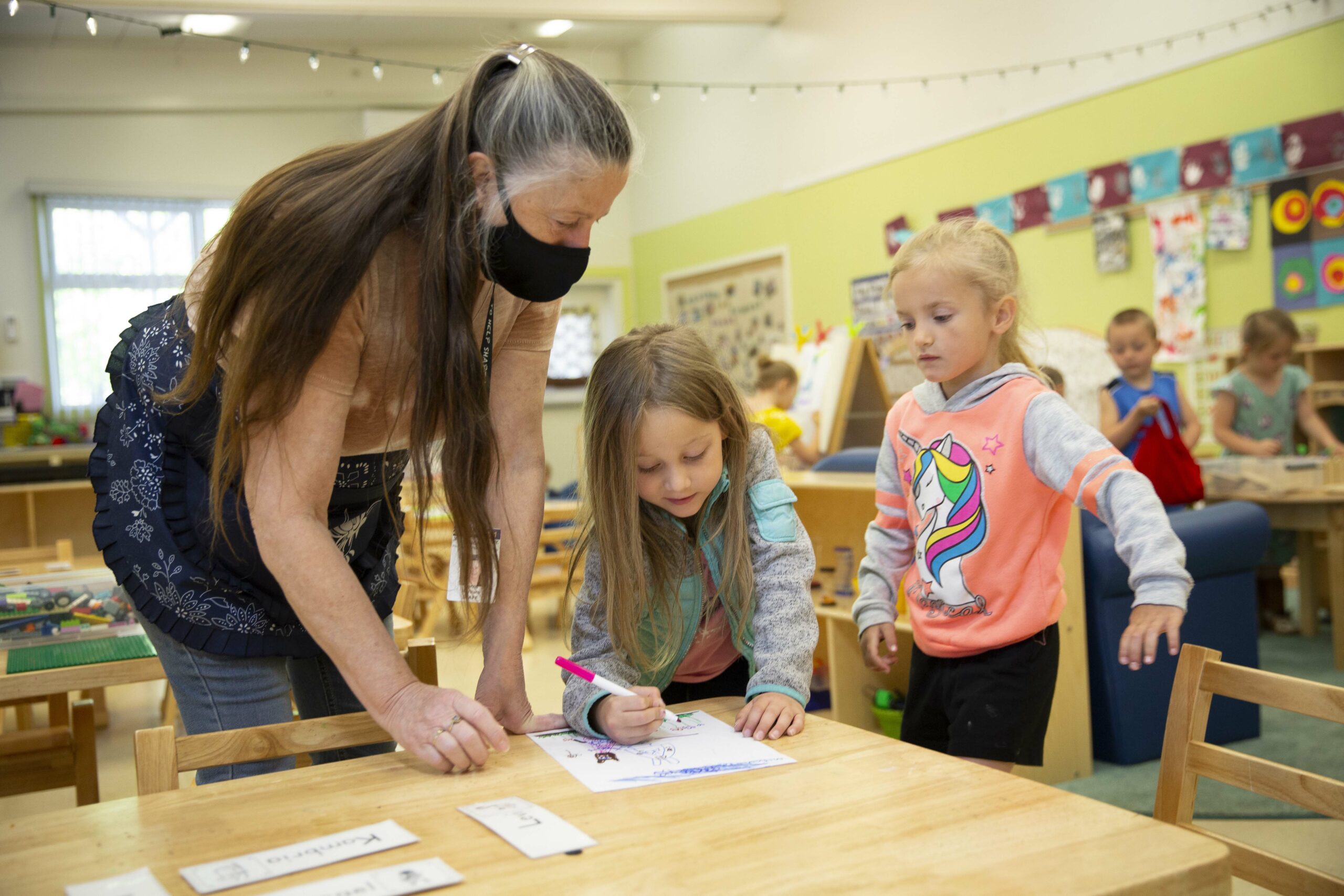
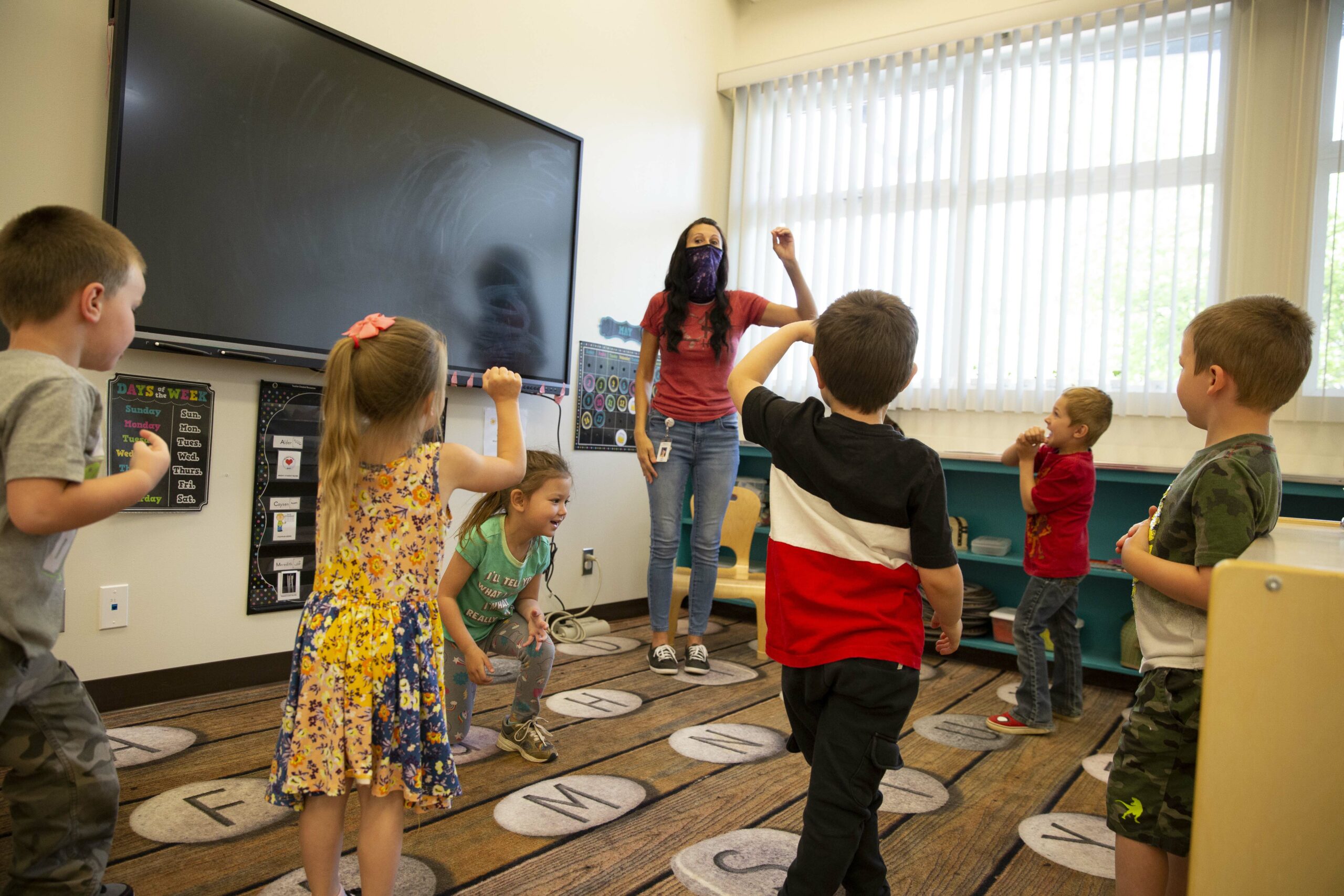
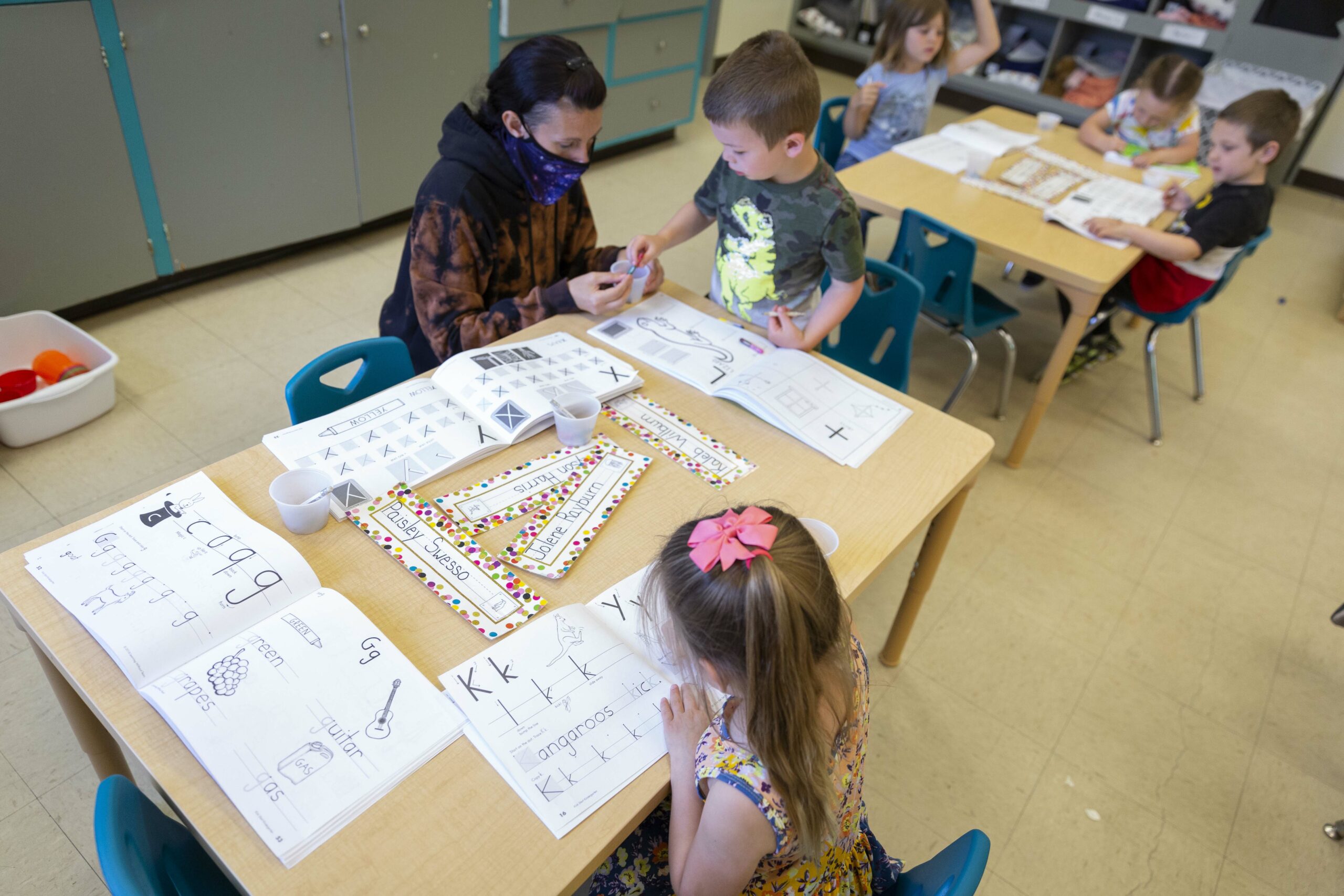
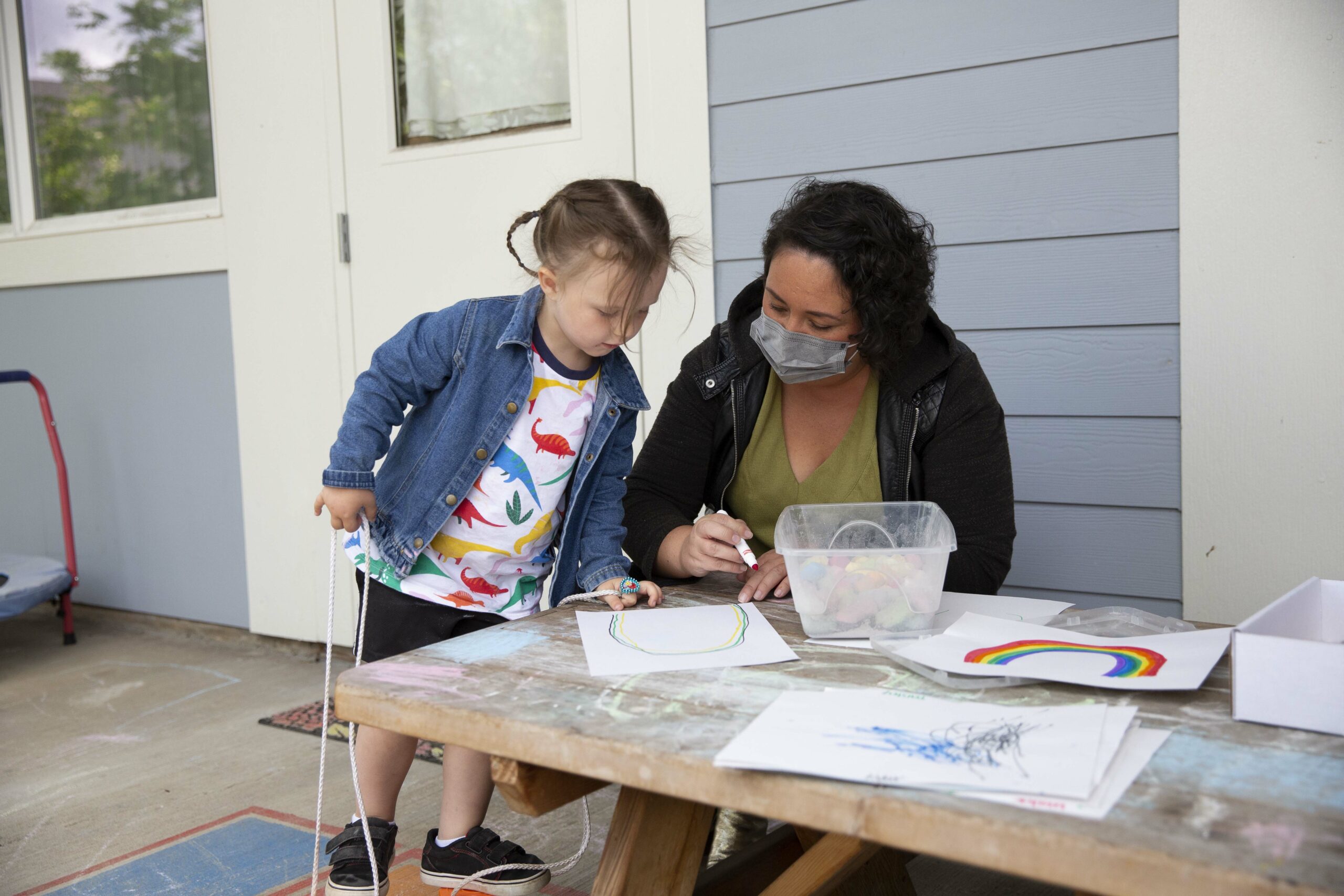
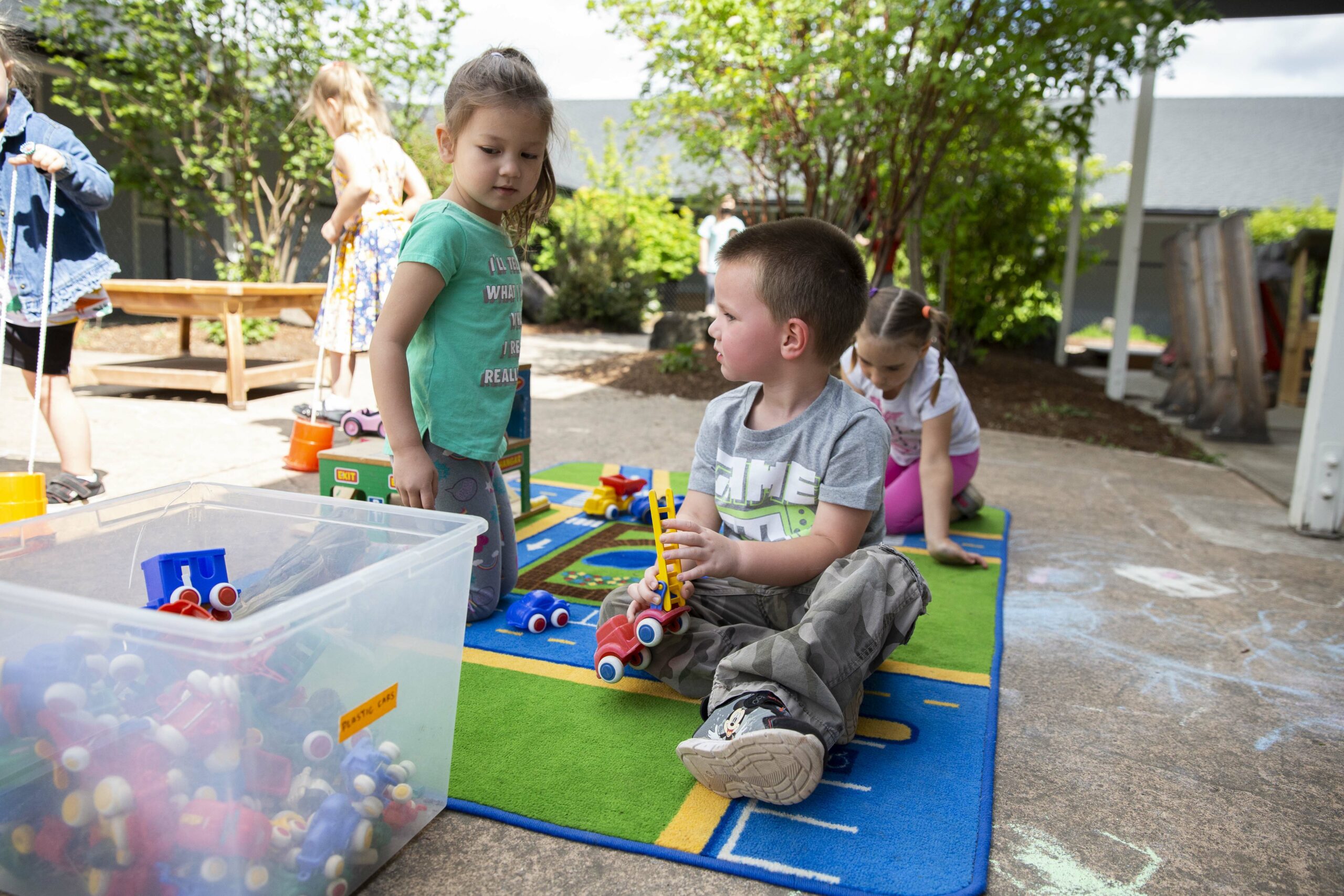
We visited the Early Learning Center at Yoncalla Elementary on a warm, May morning to see how some of Yoncalla’s youngest learners spend their day. 

Located about 2.5 hours south of Portland, Yoncalla is a close-knit, rural community in Douglas County that sprawls away from the freeway for miles into the countryside. Yoncalla Elementary hosts grades PreK-6 and is one of two sites in Oregon that is part of the Early Works initiative—a partnership between the Ford Family Foundation, Yoncalla School District, and Children’s Institute.

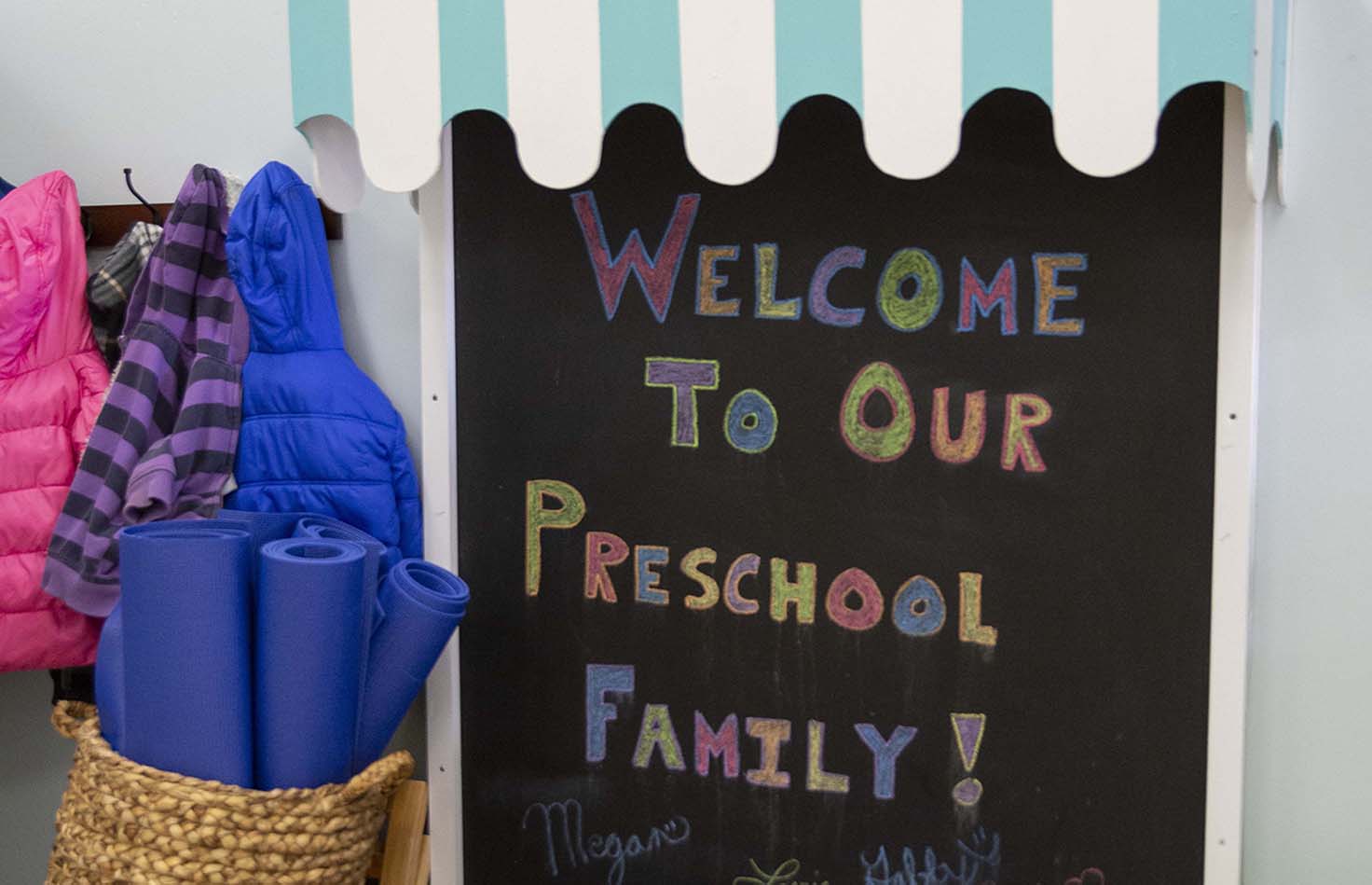
In the entryway of the preschool, a large chalkboard displaying “Welcome to our Preschool Family!” in bold chalk letters, serves as a warm greeting.

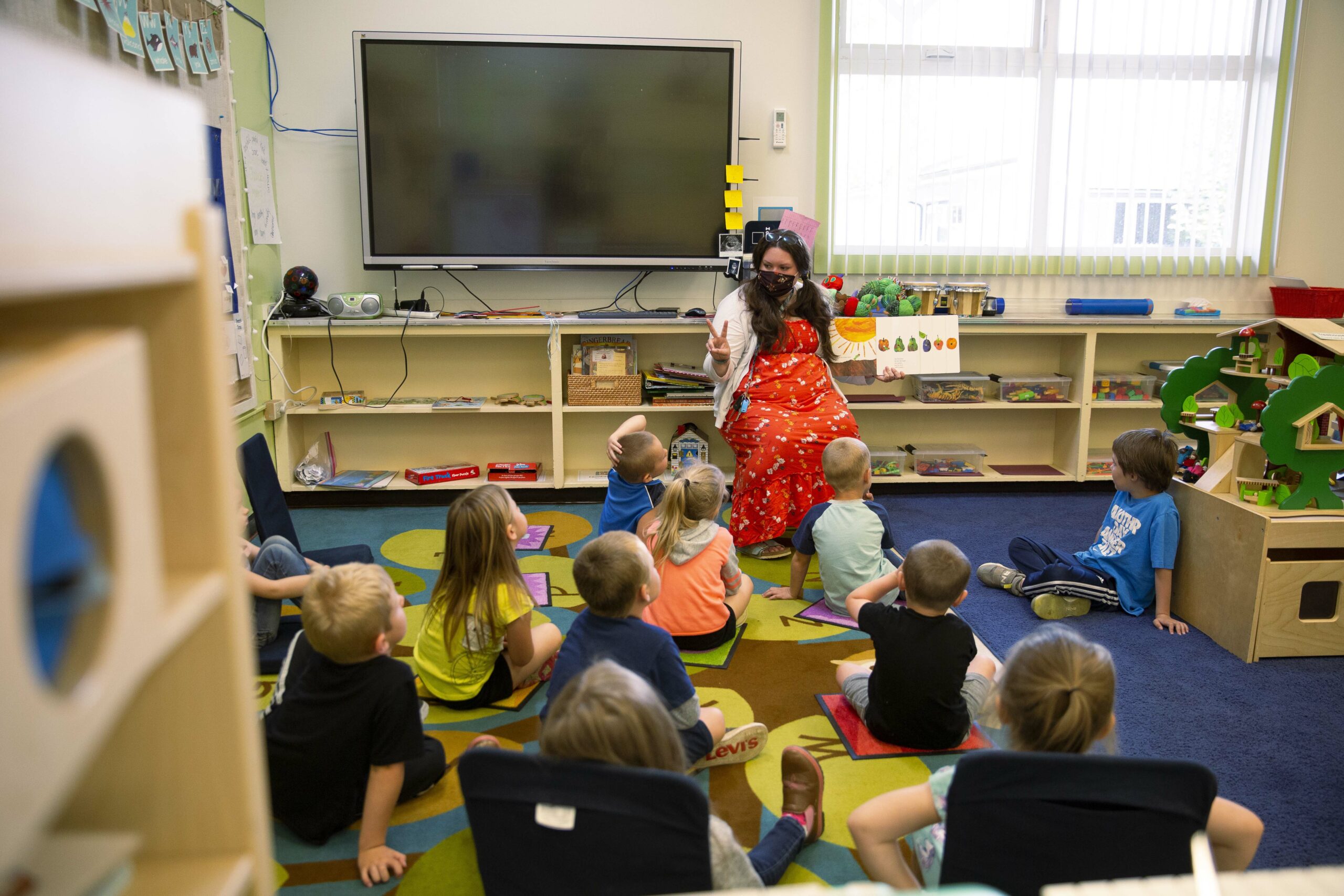
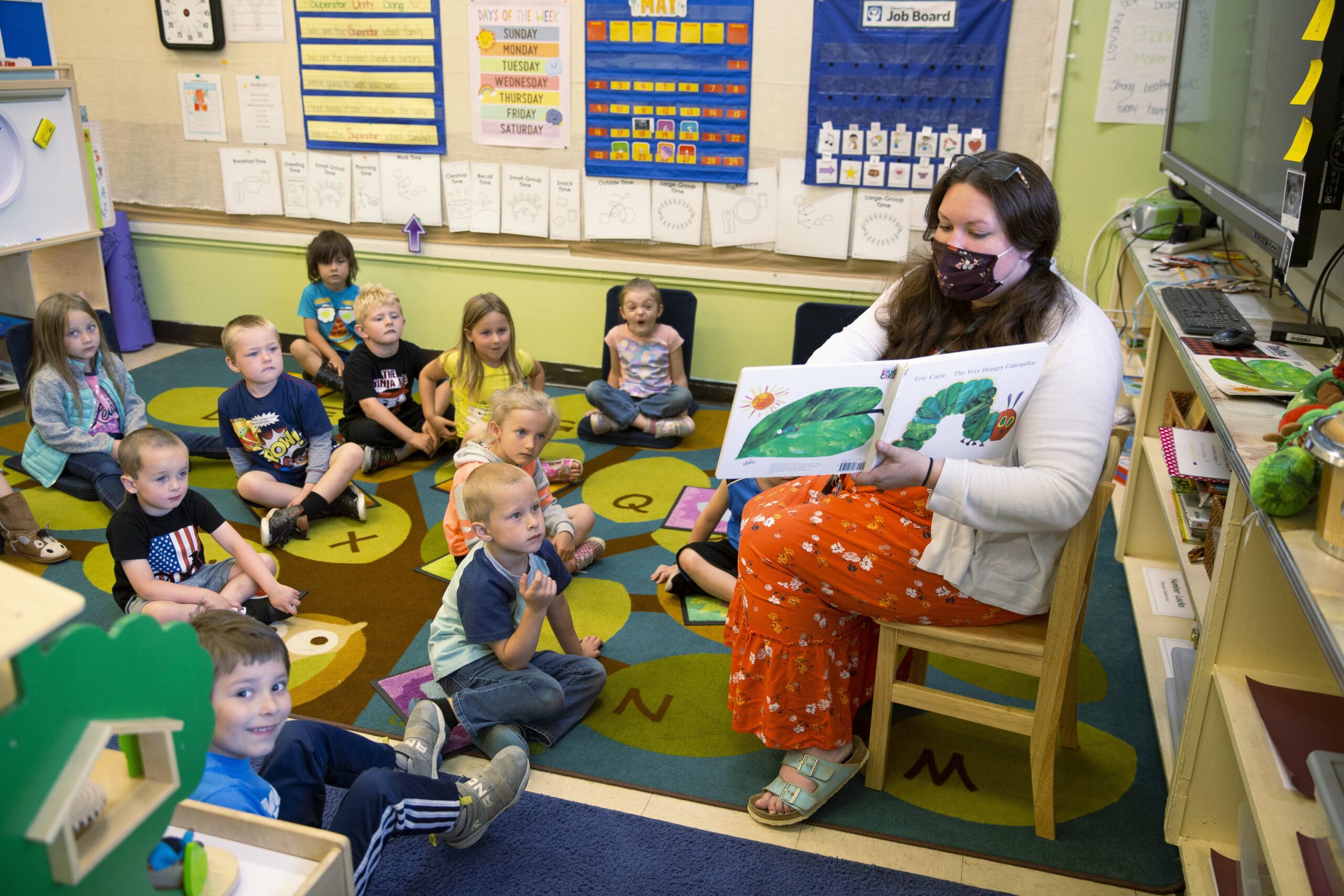
Megan Barber reads the Eric Carle classic, The Very Hungry Caterpillar to her preschool class. Just like thousands of children over multiple generations touched by Carle’s words and distinctive illustration, they were rapt!

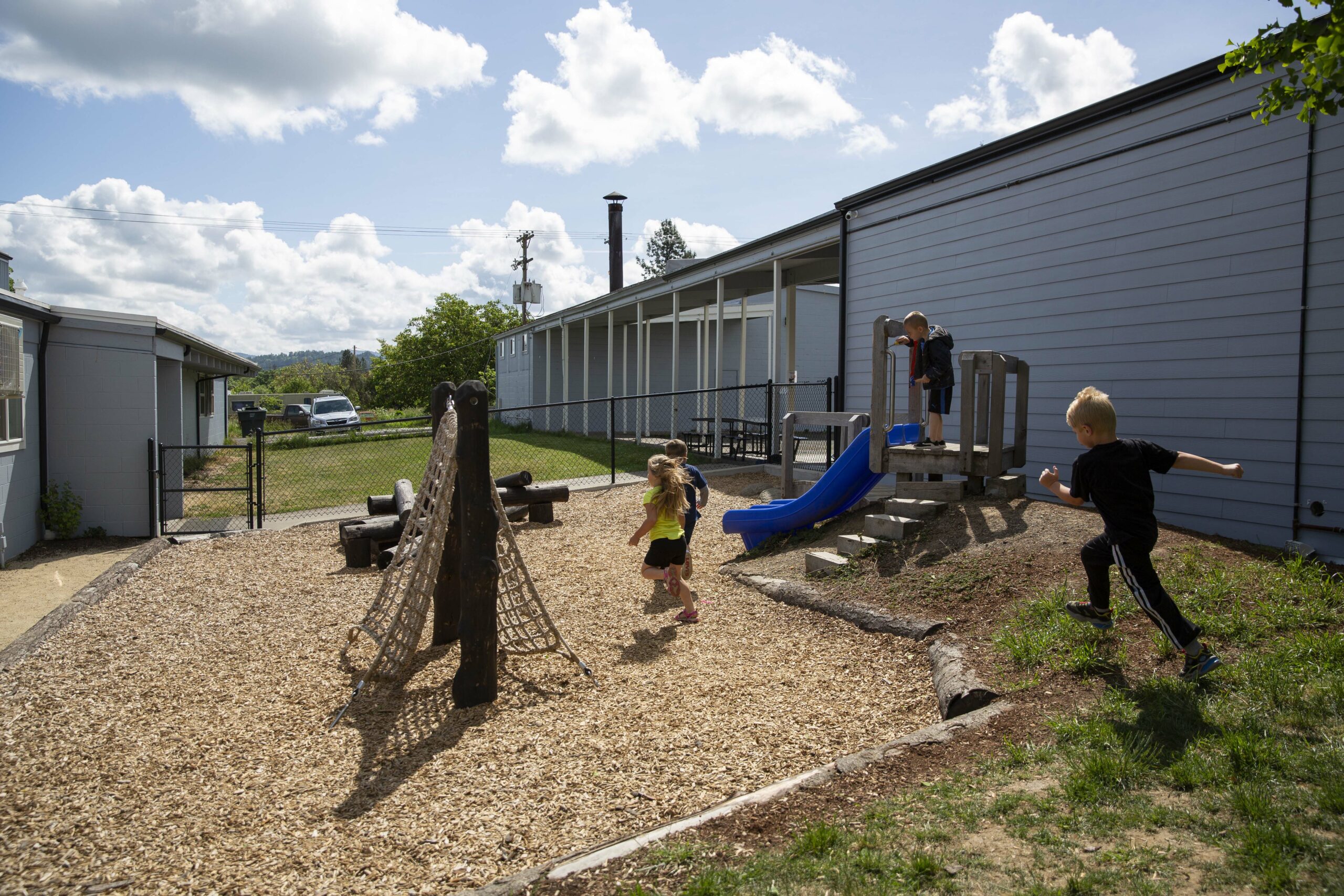
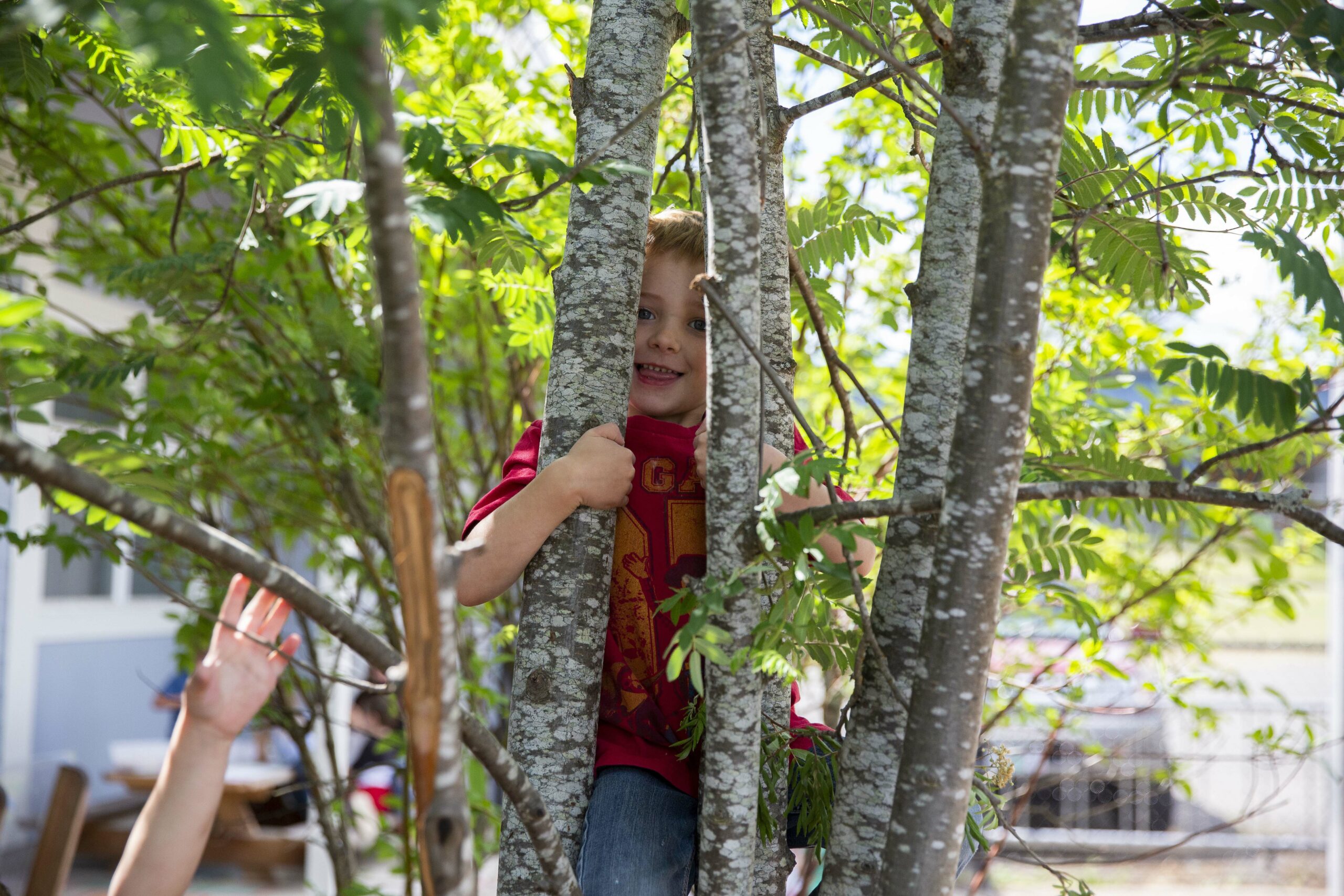
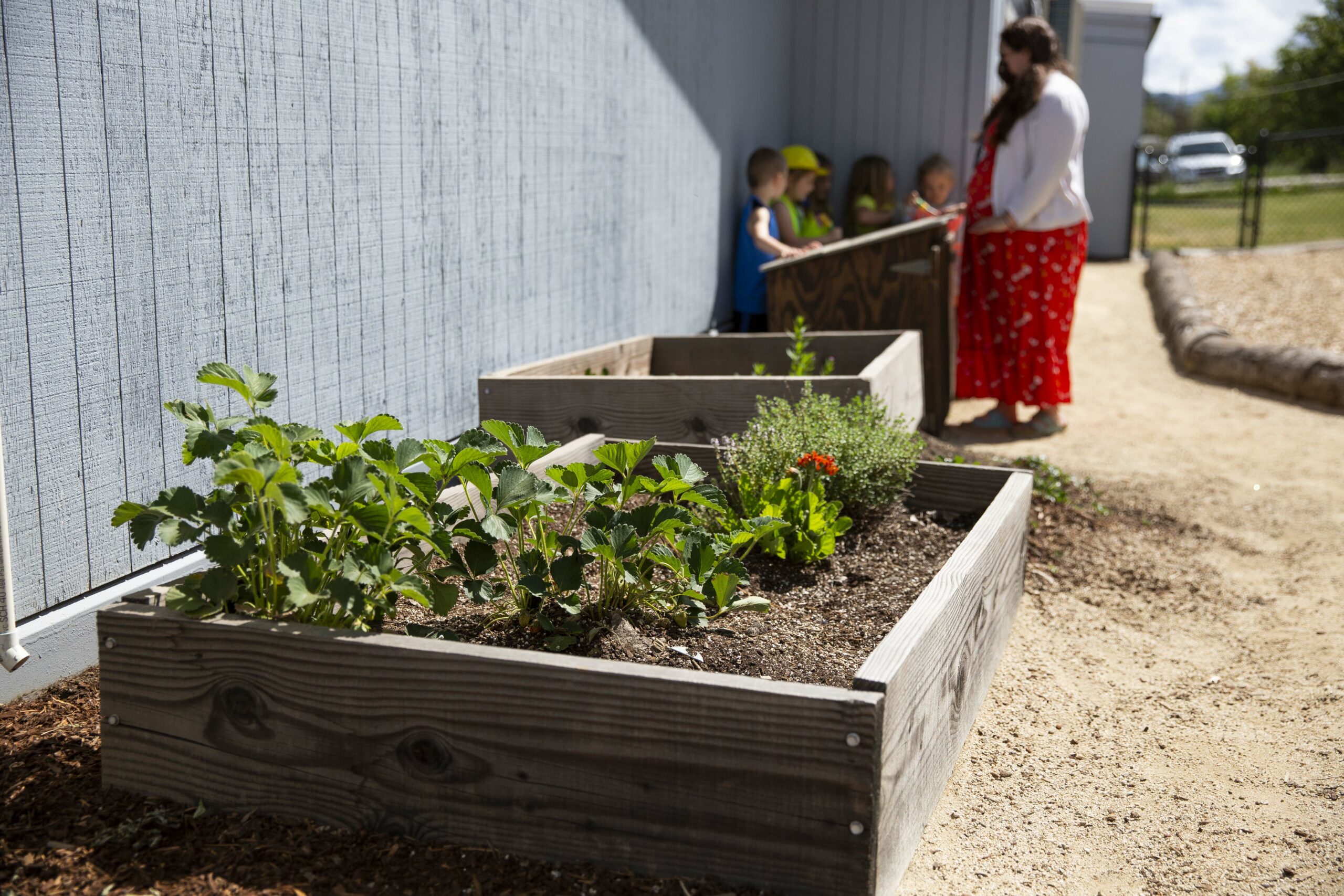
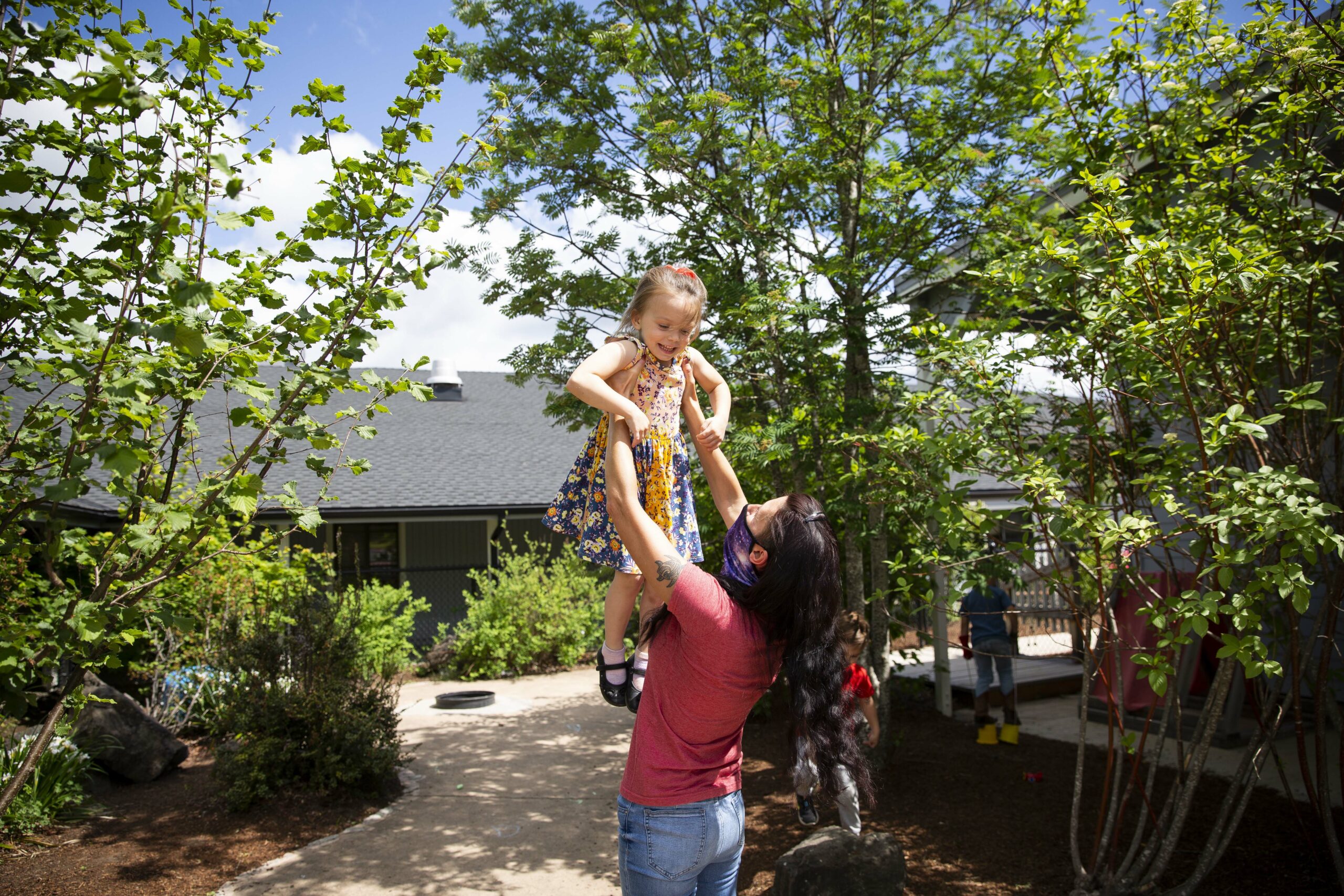
The Yoncalla Early Learning Center’s outdoor space encourages students (and staff!) to be playful and creative. 

Boston Study Findings Support Continued Investment in Public Preschool

Boston Study Findings Support Continued Investment in Public Preschool

It has long been known that a child’s earliest experiences, both positive and negative, have effects that last a lifetime and show up as disparities in physical and mental health, socioeconomic status, and educational attainment. High-quality preschool can provide the types of early experiences that help children to thrive. Proponents advocate for public preschool programs as a way to ensure that all children have access to the opportunities that will set them up for success in elementary school and beyond, regardless of their parents’ ability to pay.

Public preschool programs, largely funded by state and local governments, have grown steadily in recent years. According to the 2019 NIEER State of Preschool Annual Report, the number of US 4-year-olds in preschool increased by 20 percent from 2002 to 2019, with 44 states and 24 of the 40 largest US cities operating large-scale public preschool programs that year.

And the expansion of publicly funded early learning programs is not likely to slow; state and local investments are being joined by proposals at the federal level. President Biden’s American Families Plan would invest $200 billion in expanding access to universal prekindergarten and ensuring a minimum wage of $15 per hour. The administration says this plan would benefit five million children and save the average American family $13,000.

Just this week, the School Effectiveness & Inequality Initiative (SEII) released a new discussion paper called The Long-Term Effects of Universal Preschool in Boston. The study highlights the benefits of high quality early learning experiences and how these show up for children over time. It also examines evaluation results of the federal Head Start program that have indicated that initial test score gains among Head Start participants tend to level out by the end of elementary school, a phenomenon known as preschool fadeout.

According to SEII, “Some analysts interpret these findings as reflecting ineffective programs, while others argue that medium-term test scores are a poor measure of program effectiveness.” SEII suggests that “these disagreements may stem from the fact that no study to date has used a randomized research design to study the long-term effects of a large-scale preschool program.”


Research Design

The Boston study fills this gap with a lottery-based research design that compares 4,000 4-year-old applicants who were randomly selected in or out of public preschool over the course of seven admissions cohorts from 1997-2003. It estimates causal effects of public preschool on:

  • College enrollment and persistence
  • Grade progression and high school graduation
  • SAT and state achievement test scores
  • Behavioral outcomes related to truancy, suspension, and juvenile incarceration

Findings

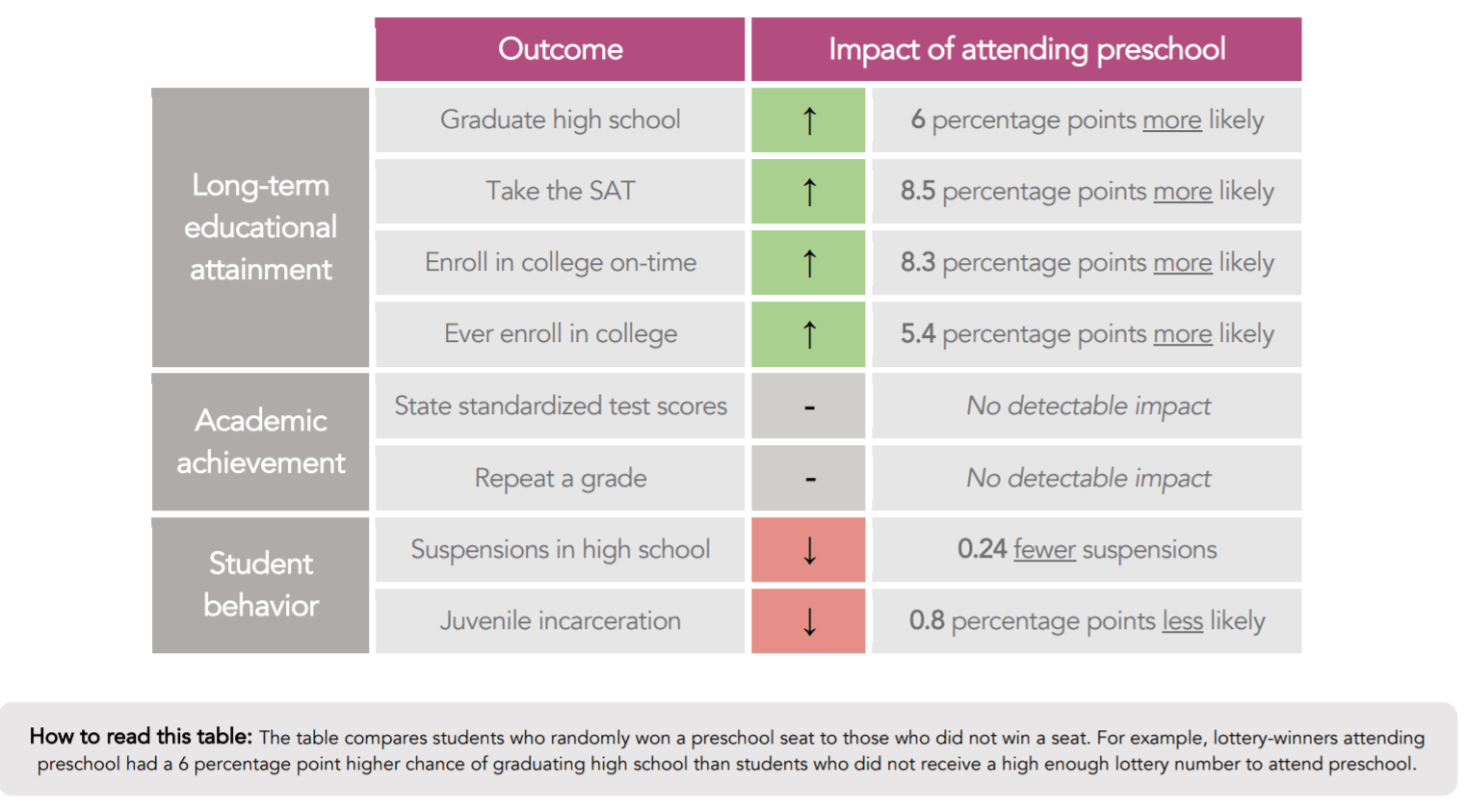
  • Attending a Boston public preschool led to positive long-term impacts on educational attainment as attendees were more likely to graduate from high school and enroll in college. 
  • The short-term effect of preschool on test scores was minimal, but there was a substantial impact on student behavior. 
  • Effects were larger for boys than for girls, but did not differ by race or income. 

Impact of Boston Public Schools' Preschool Program

Impact of Boston Public Schools’ Preschool Program

Policy Applications

The findings of this study support continued large-scale investment in universal public preschool, including local programs like Multnomah County’s Preschool for All, and the federal support for preschool expansion proposed in President Biden’s American Families Plan. 

From the study: “As policymakers consider increased public investment in universal preschool, the research findings suggest that preschool can lead to long-term educational attainment gains through improvements in behavior. Furthermore, the observed effects across demographic groups suggest that all students are likely to benefit from universal preschool.”

2020 NIEER Report: Federal/State Partnership Needed to Expand High-Quality, Full-Day Preschool

2020 NIEER Report: Federal/State Partnership Needed to Expand High-Quality, Full-Day Preschool

As expected, the COVID-19 pandemic set back state preschool enrollment and funding across the country, according to the 2020 edition of The State of Preschool Yearbook by the National Institute for Early Education Research (NIEER) at the Rutgers Graduate School of Education, released earlier this month.

Oregon had achieved an increase in enrollment and inflation-adjusted spending prior to the pandemic, and is poised to continue to make headway on preschool access by funding the Governor’s recommended expansion of Preschool Promise, Oregon Pre-Kindergarten, and the Equity Fund during the 2021 legislative session.

But nationally, the report found that:

  • Growth in state-funded preschool was slowing before the pandemic.
  • The pandemic imposed serious setbacks and reversed recent progress.
  • Uneven progress among states is worsening inequality in children’s access to high-quality preschool.
  • Most states spend too little per child to support high-quality, full-day pre-K and few reach all their 3- and 4-year-olds.

NIEER says now is the time for a renewed commitment to high-quality preschool for all, beginning with those in the lowest-income families.

“Oregon is one of a small number of states approaching levels of per-child spending adequate to truly support high-quality preschool,” said Steven Barnett, Ph.D., NIEER’s founder and senior co-director.

Dana Hepper, CI’s director of policy and advocacy, adds, “Oregon’s per-child spending reflects the progress we’ve made toward achieving funding parity with K-12 schools — which would mean preschool teachers were paid on the same scale as elementary teachers, and full school-day programs were available to 3- and 4-year-olds.”

Federal/State Partnership Needed Beyond COVID Rescue & Recovery Dollars

Nationwide, enrollment in state-funded preschool increased slightly in 2019-2020, but took a hit in 2020-2021 as many programs closed or only offered virtual learning and parents were hesitant to send children to in-person school during the pandemic.

“For nearly 20 years, annual progress on preschool has been slow and uneven, and at this pace universal pre-K will remain an unfulfilled promise into the next century,” said Barnett. “Beyond federal rescue and recovery dollars for the short-term, we need a new federal/state partnership to accelerate progress toward high-quality pre-K beginning with the most disadvantaged children, many of whom still receive no pre-K at all. This would require that federal and state governments steadily increase spending on pre-K during the next 30 years, expanding programs to reach all 3- and 4-year-olds, beginning with the many children in low-income families who still do not attend pre-K.”

As with last year, the survey reveals bipartisan support for preschool across the country, with both “red” and “blue” states among the nation’s leaders in high-quality preschool. That offers hope that the nation can move ahead to expand access more rapidly in the future.