
Celebrating Lyn Hennion’s Life and Legacy

Celebrating Lyn Hennion’s Life and Legacy

Celebrating Lyn Hennion’s Life and Legacy

Lyn Hennion received the Alexander Award at the 2025 Champions for Children luncheon.

Children’s Institute celebrates the life and legacy of Lyn Hennion with deep gratitude for her advocacy, dedication to young children, and lasting impact across Oregon. 

While Lyn had a successful career as a leader in banking and finance, she poured her heart into improving the lives of children and families.

She understood that children’s early experiences set the stage for the rest of their lives and spoke boldly about the importance of investing early, knowing that investing in children is an investment in all Oregonians.  
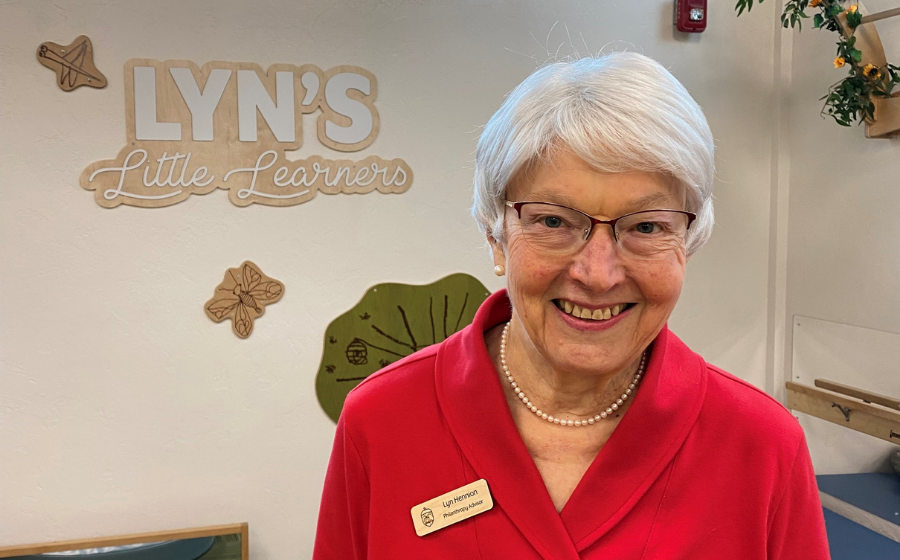
Lyn Hennion stands near the infant-toddler learning space, “Lyn’s Little Learners,” at the Children’s Museum of Southern Oregon

Lyn believed deeply that every child deserves the chance to explore, imagine, learn, play, and feel a sense of belonging — and she worked tirelessly to make this possible. 

She had a unique way of seeing possibility where others might not, and believed that every child is worthy of love, time, and energy. Because of Lyn, countless children have discovered that they matter and are capable of amazing things.

Her leadership on Children’s Institute’s Board of Directors was instrumental in expanding support for children in rural communities and particularly in Southern Oregon. Her influence helped shape systems and partnerships that continue to support children across the state. 

Those who knew Lyn remember her as a courageous and passionate advocate whose impact will be felt far beyond any single role or accomplishment. Peter Buckley, a current Children’s Institute board member and longtime friend of Lyn, shared:  

“I will always remember Lyn’s remarkable intelligence, passion, and humor. She had so many accomplishments in her life and her legacy is a wonderfully positive impact on the lives of thousands of children and families.” 

Kali Thorne Ladd (left) and Lyn Hennion at Children’s Institute’s 2025 Champions for Children luncheon. At the event, CI presented Lyn with the Alexander Award for her advocacy and dedication to improving the lives of children in Oregon.

In 2025, Children’s Institute was honored to present Lyn with the Alexander Award, a fitting recognition for someone whose leadership and commitment made a significant impact, not only on children and families, but anyone who crossed her path. Children’s Institute’s CEO, Kali Thorne Ladd reflected on Lyn’s enduring influence:

“Lyn was an unstoppable force for good. Her tenacity and spirit are an inspiration to anyone who had the privilege of being in her orbit.”

Lyn’s strategic vision, enthusiasm, and belief in what’s possible for children inspire us to carry her legacy forward with purpose and heart.



The Power of Preschool Promise

The Power of Preschool Promise

Heather Rogen has worn many hats working in early childhood for nearly 32 years – from home visiting to directing Head Start programs, and working in family health programs.  

In 2020, Rogen founded Boulden-Rogen Early Learning Academy. In just two years, the academy expanded to six early learning centers, serving communities in Redmond, Bend, and Prineville.  

“I decided it was time to look at my community and see where the gaps were,” Rogen said. “And I decided to design a program that had the fewest barriers as possible for families.” 

For Rogen, it is essential that all families have access to high-quality early learning and care, so the center offers a variety of payment programs, which gives parents more options for where they send their young children.  

“Part of that is having a private pay program, Employment-Related Day Care, Baby Promise, and Preschool Promise all wrapped into one center that looks the same, no matter who is paying for those spots,” she said.  

The first Boulden-Rogen site in downtown Redmond started small, with Preschool Promise providing some of the initial funding. This gave Rogen the means to build and expand early learning and care centers across Central Oregon, with well-trained and experienced staff, and lower child ratios.

Oregon’s Preschool Promise provides free high-quality preschool education to children ages 3-4 whose families live at 200 percent or below the Federal Poverty Level, foster families, and families in certain rural communities.  

In 2015, Children’s Institute collaborated with 34 partner organizations to support Preschool Promise legislation. After its successful passage, the program launched in 2016 across nine regions, as a part of a larger statewide initiative to improve early childhood education, and partners with public and private providers to expand access to preschool and support the diverse needs of Oregon families. 

Preschool Promise is administered by the state’s Early Learning Division (ELD)—part of the Oregon Department of Education—and coordinated by local early learning hubs, which promote the program, help to recruit families, and process applications.  


An agency in transition 

Preschool Promise was a staple source of income for early childhood programs during the pandemic, which devastated an already fragile sector. Coming out of COVID, the ELD has been focused on accountability, implementing new reporting requirements, examining enrollment thresholds, and having more targeted supports and conversations with early learning hubs for enrollment.   

Currently, Preschool Promise serves about 4,300 young children across Oregon. Some regions of the state are still struggling to fill slots and serve eligible families, but ELD director Alyssa Chatterjee is confident that the creation of a new state agency—the Department of Early Learning and Care (DELC)—will be more responsive to communities across the state and will support a more centralized and streamlined early childhood system.

“We need to be more responsive to the information that we get from early learning hubs, and we need to build a system that’s going to allow us to do that. And I think as we’re becoming the Department of Early Learning and Care, we have a lot more control and ability to create those systems,” said Chatterjee.

The passage of Oregon House Bill 3073 (2021) established DELC to centralize and streamline Oregon’s early childhood system, with Chatterjee leading the department. The ELD will begin operating as the DELC starting on July 1, 2023.  

Flexibility to meet families’ diverse needs 

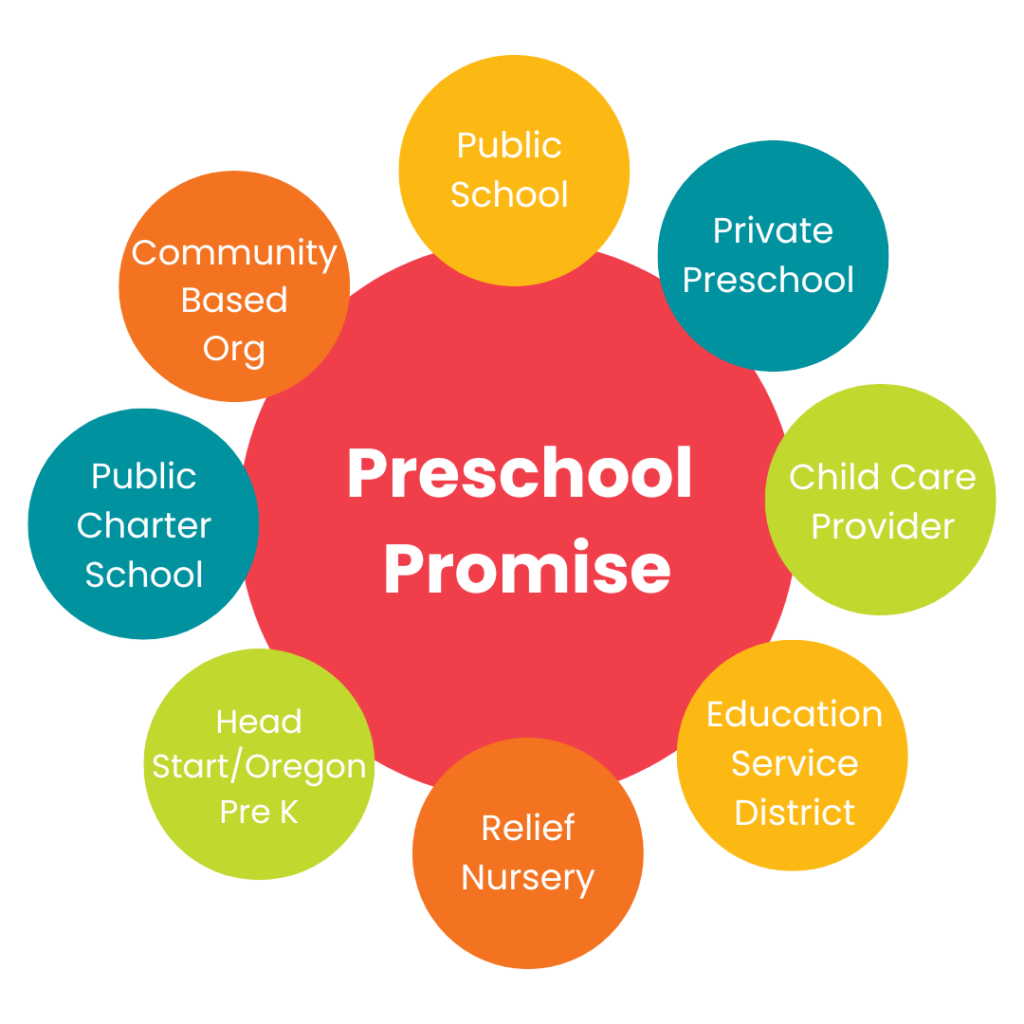
Preschool Promise offers a mixed delivery approach, meaning that families have more flexibility in where they take their children. Chatterjee explained that the mixed delivery system recognizes that high-quality preschool can happen in a variety of settings.  

“That means we have family child care providers, we have small and large private centers, nonprofits, school district partners, community organizations, and recognize that high-quality environments for preschool exists in all those settings,” said Chatterjee. 

An image of the different types of early childhood programs that are funded by Preschool Promise. This includes Head Start and Oregon Pre K, Public Preschool, Public Charter Schools, Private Preschool, Relief Nurseries, Education Service Districts, Community Based Organizations, and Child Care Providers

This allows families to choose a child care arrangement that best meets their needs, whether it be full-time, part-time, evenings and weekends, or drop-in care.  

It also ensures that families experiencing a range of financial and living situations have opportunities to access high-quality early learning and care.  

First Place Kids Preschool is a unique, low-barrier program through St. Vincent de Paul of Lane County that addresses the needs of children and families who are experiencing homelessness. 

The center’s wraparound model offers therapeutic child care, family resource coordination, advocacy and referrals, and family enrichment and bonding activities. 

The preschool is completely free to young children who are experiencing homelessness in the Eugene community and currently has 15 available slots in its first year of Preschool Promise.  

First Place Kids director, Ilana Jakubowski, says that although there has been a bit of a learning curve working with Preschool Promise, it is hugely beneficial both for families and the preschool program itself. 

“This program is huge because it provides a living wage for the preschool staff and free early education for families,” said Jakubowski. “It has allowed us to start a classroom from the ground up.” 


A profound impact 

Being a Preschool Promise family provides a peace of mind for parents, knowing they can enroll their children in preschool programs that stimulate healthy child development, help them reach milestones, and support a range of needs.  

Parent Kryssi Aguiar’s 5-year-old daughter, Kens, is enrolled in Preschool Promise at the Ivy School in Medford.  

Aguiar said that she was nervous about enrolling her daughter in Preschool Promise, concerned that she wouldn’t be able to find a program that would support Kens’ needs, as a child with autism. But the Ivy School exceeded her expectations and helped her daughter flourish. 

“We’re coming up on the end of our second year. She has been potty trained for almost a year and a half. She engages with other peers her age and older kids now and previously she wouldn’t,” said Aguiar. “I know that my daughter is safe and I know that she’s loved. I know she’s cared for. I know she’s appreciated and treasured.” 

Before Kens was enrolled in Preschool Promise, Aguiar’s family was a single income household. She said that if she and her husband had both been working, the cost of child care would have been financially impossible. Kens’ enrollment in Preschool Promise has enabled Aguiar to pursue higher education and she now works as a licensed tax professional for the State of Oregon. She and her husband are now both able to work. 

“Without my daughter being able to be at school and be safe, and taken care of, I would have literally never been able to do that,” she said. 

Providers are also seeing the direct impact of the program for young children and their families.  

“Our Boulden-Rogen parents are so excited that this program exists,” Rogen said. “We’ve had kiddos go on to kindergarten that are doing super, super well and are able to access the things they need.”  

At First Place Kids Preschool, many parents who waited to access early learning and care can now enroll their children in preschool, which in turn allows parents to access employment and other opportunities for themselves.  

“The families that have been able to access this care have told stories about waiting for months and months to access the care and now they can finally access it, so it definitely seems to be making an impact for families who are signing up,” said Jakubowski. 

“If a preschool program wants to be more accessible, then Preschool Promise is a great way to go.”

Listening to Our Communities on Early Childhood: Medford

Listening to Our Communities on Early Childhood: Medford

Last week, Children’s Institute staff visited Medford for two days to hear from parents and teachers and tour early childhood facilities with state legislators. From Coquille to Baker City, Redmond to the Rogue Valley, we continue to hear the same message from parents, educators, and providers: families want and need high-quality early care and education for their young children, and there isn’t enough access to either anywhere in Oregon. Families have also told us they want parenting education that supports positive, nurturing parenting and teaches them how to enhance their children’s natural love of learning.

The parents we heard from in Medford understand that babies are born learners. In fact, the developmental period of prenatal to age 5 is the most significant period of brain growth and development in their entire lives. The attention, care, and education young children receive during this important time sets the foundation for all future learning and life experiences. 

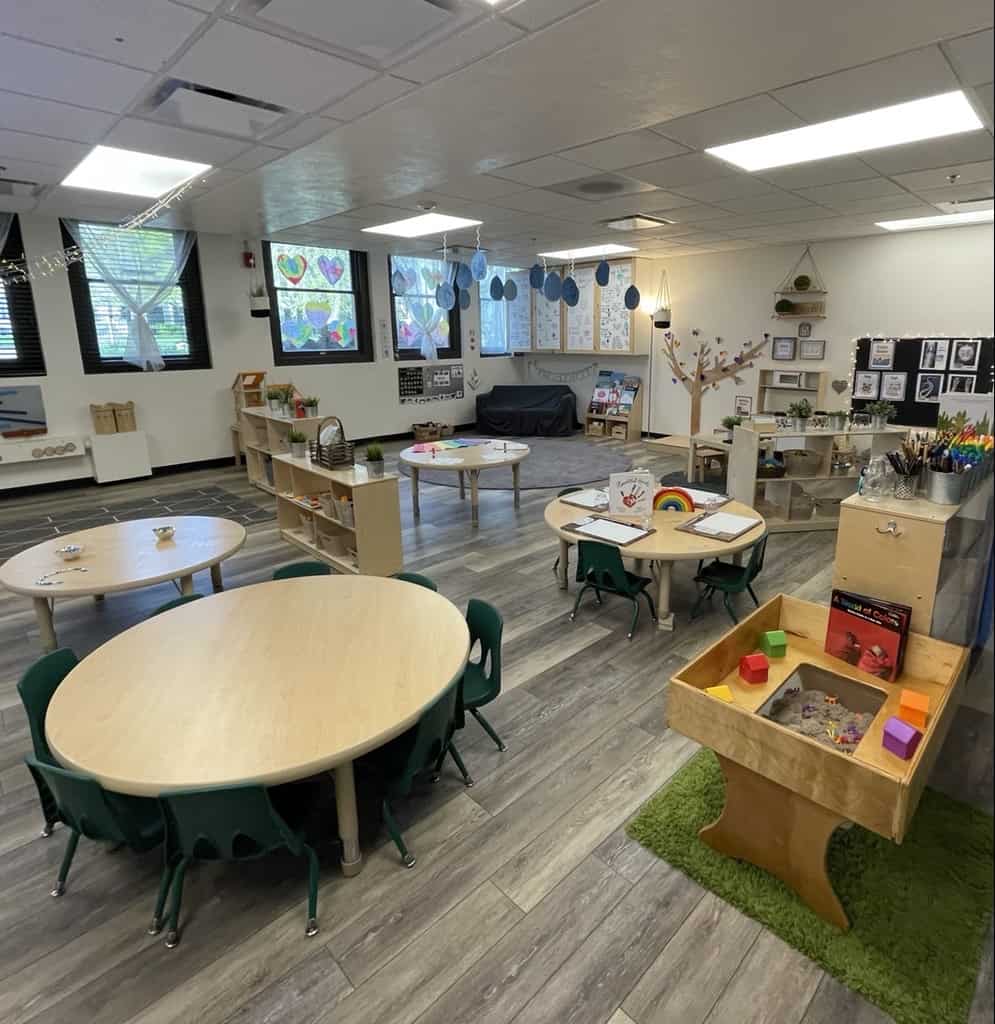
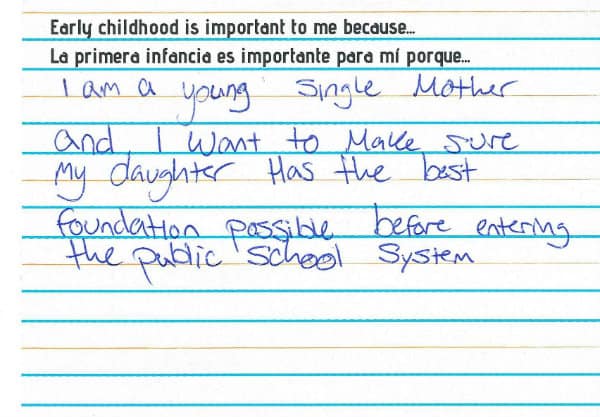
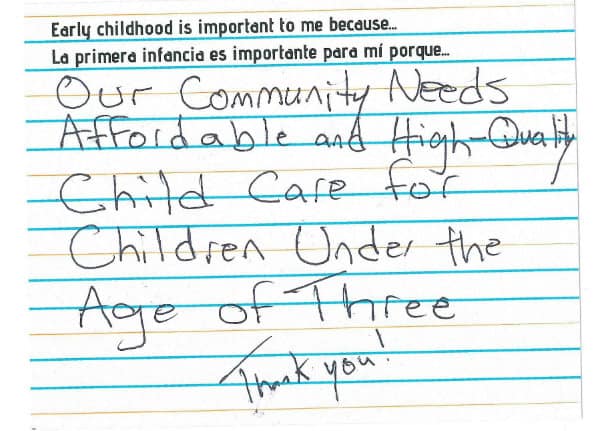
At Kid Time Children’s Museum, home of The Learning Loft Preschool, more than 40 parents, providers, and community members attended a forum to share via postcard with us and their lawmakers why early childhood is important to them. Cynthia Wright, who serves on the Medford School Board wrote, “I strongly feel that having the funds to have preschool as part of K–12 education would make a huge impact on student achievement in Oregon.” With four classrooms at Kid Time and one at Jackson Elementary School, The Learning Loft Preschool provides high-quality, child-centered, play-based learning to young children with a range of needs: 100 percent of children live in low-income households, 80 percent have been exposed to trauma, and 20 percent have diagnosed developmental delays.

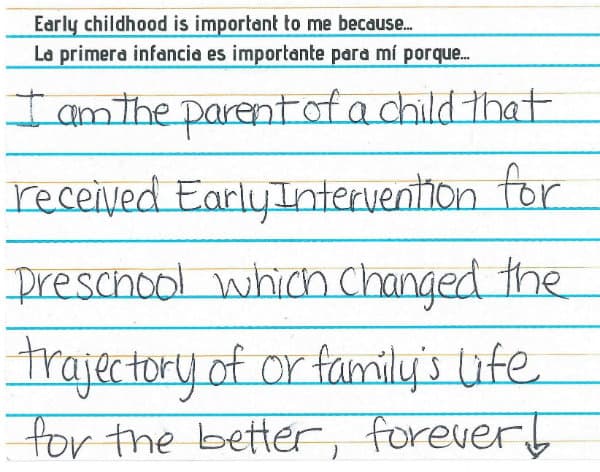
One parent at the forum whose child received Early Intervention during preschool at The Learning Loft wrote that those services “changed the trajectory of our family’s life for the better, forever.”  Another attendee explained the long-term benefits of high-quality preschool.

“It sets the stage for K–12 success. It’s cheaper to spend the money for this than incarceration later in life. Success breeds success. Kids deserve to have a good life and receive the best opportunities to be happy and contributing members of their communities.” High-quality early education also benefits parents. “Some of our parents need a lot of help like getting their kids dressed and ready for school. When we help parents where they struggle, we’re building trust and we’re helping them build skills that will help their children,” said Sunny Spicer, Kid Time Museum’s executive director.

The following day, on tours of Kid Time Museum, the Family Nurturing Center, and Jackson Elementary, state legislators Senator Jeff Golden, Representative Pam Marsh, and Representative Kim Wallan, as well as local law enforcement, learned firsthand about the tremendous benefits of early childhood programs and services. For example, families who attend The Learning Loft Preschool at Jackson Elementary form positive, trusting relationships with their child’s future elementary school community years before they begin kindergarten. That trust improves attendance and increases a child’s excitement about their own education. According to Jackson Elementary principal Marisa Poling, “The benefit of having the preschool in the elementary school is that we get to know kids from the beginning of their journey and can support and teach them throughout their early educational experiences.”

Supporting young children and their families is at the heart of the services provided inside and outside of the classroom at the Family Nurturing Center. With the stated goal of reducing child abuse and neglect, the center provides parenting education and intervention, preschool, and mental health and family support services. This innovative approach supports healthy parent-child relationships and ensures young children get the high-quality early experiences necessary for success in school and life.

Attendees of the community forum shared their thoughts on early childhood.

Lisa O’Connor, Family Nurturing Center’s executive director, attributes the organization’s success in part to radical non-judgment. “We believe in people until they are ready to believe in themselves,” she says.

The work in Medford demonstrates what a coordinated system of early care and education can do for young children — nurture their love of learning, grow their social emotional skills, and help their parents build positive relationships with them. But with 30,000 eligible children in Oregon lacking access to publicly funded preschool, the need to add programs like these is great. Read more about our 2019 policy agenda and the ways you can get involved with our advocacy efforts.

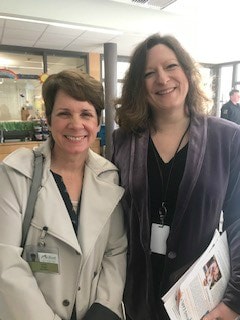
Liz Landon, Principal of Oak Grove Elementary School, and Representative Kim Wallan. 

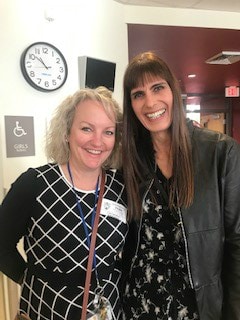
Cynthia Wright, Medford School Board Chair, and Sunny Spicer, Executive Director of Kid Time.

Representative Pam Marsh and Senator Jeff Golden.  

Special thanks to Sunny Spicer, Shannon Young, and Britt Zimmerman from Kid Time Museum, Marisa Poling from Jackson Elementary, Lisa O’Connor from the Family Nurturing Center, and Rene Brandon from the Southern Oregon Early Learning Hub for organizing the visit.

Local Op-Eds Argue for Increased Investments in Early Childhood

Local Op-Eds Argue for Increased Investments in Early Childhood

Newspapers in Bend, Medford, Eugene, Portland, and Salem have all recently made the case for increased investments in early learning and child care in Oregon.

The Bulletin: Strong Connection Between High-Quality Child Care and Healthy Communities, by Kendra Coates, regional director of PreK-3rd education for the High Desert Education Service District

Mail Tribune: Early Learning Can Help by Sunny Spicer, executive director of Kid Time Children’s Museum

The Register Guard: Legislators are Listening to Oregonians About Education by Representative Julie Fahey, D-Eugene

The Oregonian: We Must Help Multnomah County’s Youngest Find Success by Jessica Vega Pederson, Multnomah County commissioner

Statesman Journal: To Improve Salem’s Future, Affordable Child Care Must Be a Priority by Carol McAlice Currie, opinions editor

Jackson Elementary promotes reading with “Let’s Read” campaign

Jackson Elementary promotes reading with “Let’s Read” campaign

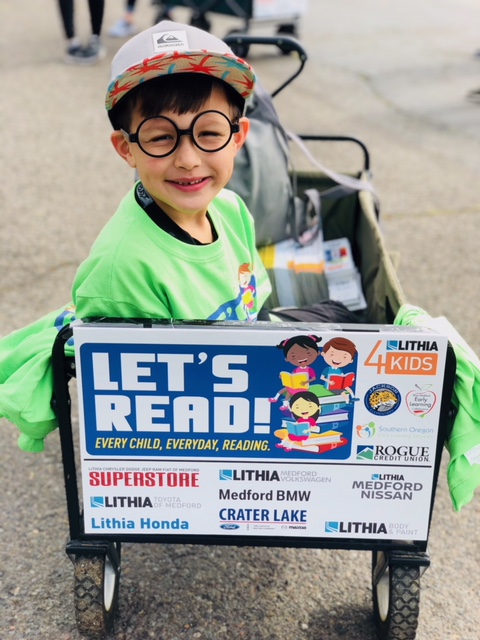
Jackson Elementary promotes reading with “Let’s Read” campaignPrincipal Kelly Soter of Jackson Elementary in Medford, Oregon continually looks for ways to promote reading for her community’s youngest learners. This year, she pulled together a team of volunteers to participate in the annual Pear Blossom Parade held on April 14 to promote her “Let’s Read” campaign.

“Let’s Read” was developed by the West Medford Early Learning Collaborative, a partnership between Jackson Elementary, Southern Oregon Early Learning Hub, and Lithia 4Kids.

Several years ago, Soter was inspired by attendees at a Campaign for Grade-Level Reading conference who had built similar campaigns to increase reading at home. “One community had developed a ‘Let’s Read’ campaign to encourage parents to read with their children. The campaign developed partnerships with schools, libraries, and community-based organizations, and messaging appeared throughout the community,” Soter said. “Another community substituted books for candy at a local parade and gave books to kids and families.”

Soter pulled the two ideas together, contacted partners and sponsors for help, started a book drive, and worked with Scholastic to purchase low cost books for kids ages zero to five. They collected 2,500 books to give away at the parade and stuffed them with flyers promoting play and learn groups at Jackson Elementary and story time at the library.

Held every year since 1954, the parade celebrates spring blossom season in the Rogue Valley. About 4,000 people participate in the parade with an audience of nearly 30,000. “I thought the parade would be a great way to spread our message about the importance of having adults read with young children every day,” Soter said.Jackson Elementary promotes reading with “Let’s Read” campaign

Ten fifth and sixth graders from the student leadership group at Jackson Elementary volunteered to give out books at the parade. Staff from the school and from Lithia also volunteered, and some brought their own kids along to help.

“We ran out of books half way through the parade! So many people loved the idea and wanted to take a book home with them,” Soter said. “We could easily have given away 5,000 books.”

“Let’s Read” is also designed to give books to kids before summer to stimulate reading at home and help prevent Summer Slide, a well-documented loss of skills during the summer months when kids are out of school. This year, Jackson Elementary students in kindergarten, first, and second grades will get to choose six Scholastic books. The books, along with a backpack and ideas for summer reading activities, will be ready for kids in early June as the school year winds down. Soter said that focusing on those grades is designed to get kids reading proficiently by third grade, a key indicator for success throughout school and a predictor of high school graduation.

“We want kids to be excited to read, and we want more parents reading with kids all summer long. Families will also get reminders from me during the summer by email, phone, and text,” Soter said. “After that we’ll want to capture data to see if our efforts pay off.”

Watch the video about the “Let’s Read” campaign

Listen to CI’s interview with Principal Soter