
Children’s Institute CEO to Co-Chair Early Childhood Care & Learning System Roundtable to Chart a Path to Universal Preschool for Oregon

Children’s Institute CEO to Co-Chair Early Childhood Care & Learning System Roundtable to Chart a Path to Universal Preschool for Oregon

Children’s Institute is thrilled to announce that our CEO, Kali Thorne Ladd, will co-chair Governor Kotek’s new Early Childhood Care and Learning System Roundtable along with Sara Mickelson, a national expert in early childhood systems and former Chief of Programs and Chief of Staff for the Oregon Early Learning Division.

Thorne Ladd will also join our partner, Candice Williams, Executive Director at For All Families Oregon, and more early childhood experts to improve access to affordable, quality child care and preschool, and ultimately create a path for universal preschool in Oregon.

This announcement signals a collaborative effort among state and national early childhood leaders to strengthen the systems that support children in the first eight years of life: this is the heart of Children’s Institute’s work to ensure that every child is Great by Age 8.

Read the original announcement from the Governor’s Office below.

Governor Kotek Convenes Experts to Chart a Path to Universal Preschool for Oregon

Early Childhood Care and Learning System Roundtable to start with assessing current state-funded early learning programs to identify gaps and recommend improvements, strengthen alignment


Salem, OR – Today, Governor Tina Kotek announced she is convening state and national early learning experts to provide recommendations to improve access to affordable, quality childcare and preschool across the state, with the ultimate goal of ensuring access to preschool for all Oregon children.


“While President Trump freezes funds for childcare and undermines early education, Oregonians agree that children should have access to high-quality education, and that starts before kindergarten,” Governor Kotek said. “These leaders will work together to help us chart an actionable path for Oregon to achieve universal, statewide pre-k that working families can access and afford. Achieving this goal will help all children succeed and support the working families who make our economy grow.”


The first five years of a child’s life are a critical period for learning and growth. The First Five Years Fund, a national non-profit organization dedicated to ensuring all children from birth to age five have access to high-quality, affordable early care and education, finds that children who receive a high-quality early childhood education are more likely to earn higher wages, live healthier lives, avoid the criminal justice system, raise strong families, and contribute to society.


Additionally, a lack of early childhood care and learning options hurts the state’s economy. The First Five Years Fund projects that Oregon’s economy loses $1.4 billion annually due to childcare challenges. Too often, parents face an impossible choice between missing work and caring for their children. For some, that means forgoing a job altogether.


Over the past decade, Oregon has made important progress in expanding access to quality preschool at both the state and local level. However, too many families still struggle to find and afford high-quality childcare and preschool.


The Early Childhood Care and Learning System Roundtable (Roundtable) will work in phases to develop a blueprint for an Oregon where every family can access and afford high-quality childcare and preschool. The scope of the Roundtable’s recommendations includes:


  • How to improve the state’s current childcare and preschool programs with existing resources.
  • How to expand access and improve affordability of childcare for infants and toddlers across the state.
  • How to achieve universal preschool access for 3-and 4-year-olds across all 36 Oregon counties.

The Roundtable will be chaired by Kali Thorne Ladd, CEO of Children’s Institute, and Sara Mickelson, a national expert in early childhood systems.


Thorne Ladd was previously the co-founder and executive director of KairosPDX, a culturally specific organization dedicated to eliminating educational opportunity and achievement gaps for historically underserved children. Thorne Ladd has a long track record of working to transform early learning and healthy development for children and families in Oregon. This has included serving as the chair of the board for Portland Community College, serving on the state’s Early Learning Council, and serving on the board of the James F. and Marion L. Miller Foundation based in Portland. Thorne Ladd has also worked on education strategies in the mayor’s office in the City of Portland and at the Oregon Department of Education.


“I am glad the Governor made the strategic decision to prioritize this conversation,” Thorne Ladd said. “Access to quality early learning has an enormous impact on Oregon’s economic prosperity and is essential for our children to thrive in school and in life.”


Mickelson recently served as Deputy Cabinet Secretary for the New Mexico Early Childhood Education & Care Department, where she managed an annual budget of over $700 million and led the teams responsible for New Mexico’s PreK expansion, home visiting, and childcare toward a universal system. Mickelson brings deep familiarity with Oregon’s specific landscape to the role, having previously served as Chief of Programs and Chief of Staff for the Oregon Early Learning Division. During her tenure in Salem, she led the budget development and implementation of the early learning portion of the Student Success Act, resulting in a historic doubling of the state’s early care and education budget and the creation of 15,000 new early learning opportunities.


“Expanding access to early childhood services isn’t just about policy; it’s about providing stability for working families and a strong start for children in their most important years of development,” Mickelson said. “Scaling an early learning system that truly works for every family, regardless of where they live in the state, is a critical undertaking. This starts with getting the plan right, creating a roadmap that is not just ambitious but sustainable and grounded in the reality of what Oregon parents need.”


“Governor Kotek’s leadership on universal preschool couldn’t come at a more critical moment,” said Candice Williams, Executive Director at For All Families Oregon (formerly Family Forward). “While we face alarming kindergarten readiness gaps and a childcare crisis that’s costing Oregon’s economy billions, this roundtable can be a source of hope for Oregon families. We’ve seen what happens when early learning programs work: children thrive, parents can go to work, and communities prosper. But we’ve also seen too many families struggle to find quality, affordable care. This effort must address the urgent needs of working families across all 36 counties and ensure every child has access to the strong start they deserve. This is about building an Oregon where families don’t have to choose between their paycheck and their child’s care and development.”


The Early Childhood Care and Learning System Roundtable follows a series of actions the Governor has taken to improve public education at every level. That work has included the highest level of K-12 funding support in Oregon history, new investments in science-backed reading instruction, a statewide cell phone ban in schools, and the expansion of summer learning opportunities. The Governor’s collective efforts to tackle education challenges in Oregon helped contribute to a record high 82% high school graduation rate in 2025.
 

St. Helens Learning Tour Takes Advocates Inside Classrooms

St. Helens Learning Tour Takes Advocates Inside Classrooms

Children aren’t the only ones learning at Lewis & Clark Elementary School in St. Helens.  

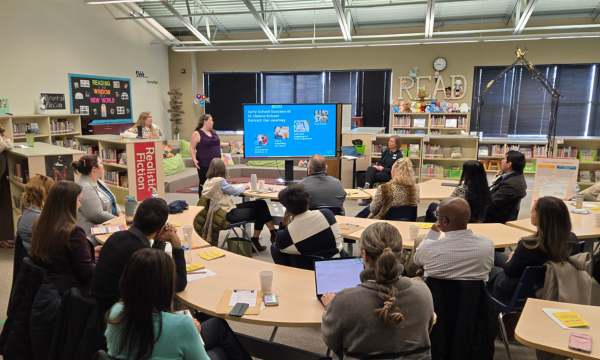
Early childhood advocates, leaders and policymakers visited classrooms on Jan. 20 to see how the Children’s Institute’s five-year Early School Success partnership with St. Helens School District helps students thrive academically, socially, and emotionally.  

The Learning Tour gave the group an inside view of what it means to prioritize early learning from preschool to 3rd grade – and how their support can make a difference for Oregon kids.  

“As a state representative, although I wish we could be in the classrooms every day, we don’t get the luxury to do that,” said Rep. Ricki Ruiz of Gresham. “I’m here learning from the professionals who are doing this work on a daily basis. I hope I can bring back some lessons to share with my colleagues in the Oregon Legislature.”  

In St. Helens, visitors observed how teachers and staff collaborate to align and enhance their classroom practices across grade levels and schools. For instance, teachers at Lewis & Clark bring play into the classroom with a strategy called “loose parts” to engage students and help them build academic and social skills. They give children small materials such as buttons, sticks, blocks or beads to manipulate in fun, creative ways

A panel discussion followed the tour. Panelists were Cheri Martin, Lewis & Clark principal; Dani Henningsen, St. Helens early learning director; Teresa Gore, a kindergarten teacher, and Julio Bautista, continuous improvement specialist at Children’s Institute.  

Martin said classroom activities like loose parts level the playing field by giving every child an access point to a lesson. That is, some children who may not engage with a writing activity may engage with loose parts to communicate.  

As a result, test scores have shown incremental improvement, Martin said. “We’re moving the dial.”   

“The engagement piece has increased quite a bit, and we are seeing kids eager to learn and be happy,” Henningsen said. “Our newest mission now is to bring back the trust in our community and have people see how great our schools are and how great our teachers are.”

Children’s Institute partners with educators in Early School Success to align instruction, environments, family engagement, and support in early grades. In St. Helens, Children’s Institute has helped with facilitation, coaching, professional development, and tailored supports to help educators address challenges and improve student experiences. 

These partnerships help set the foundation for Oregon’s early learners to be “Great by Age 8,” ensuring they have the confidence to learn and explore by third grade, so they can lead fulfilling lives. 

“We want to see our children thrive,” said Dr. Alexa Pearson, Oregon’s assistant superintendent of teaching, learning and assessment. “We get to start with the earliest learners and see where we’re making those bridges and connections between our pre-K to kindergarten, and the ways we can blend those together. That’s really exciting work, and I got to see that today.”


Partner with Children’s Institute to strengthen school-based early childhood supports. Learn more.

What School District Data Reveals About Preschool Access in Oregon

What School District Data Reveals About Preschool Access in Oregon

This fall, Children’s Institute released key findings from the 2025 Preschool Landscape Survey, offering an early look at how Oregon’s district-run preschool programs and their partners are currently serving preschool-aged children.  

Initial findings showed that while many districts have offered preschool for years, most operate on a small scale, demand often exceeds availability, and funding and workforce challenges continue to constrain growth.  

A new report builds on these early findings with a deeper exploration of survey data from school districts across the state, providing the most comprehensive snapshot of district-run preschools in Oregon since 2015. This report offers a clearer picture of the current preschool landscape in Oregon, including insights into program scale, funding, workforce, family engagement, and the conditions needed to build an aligned early learning system.  

Download the report (PDF)

For questions about the 2025 Preschool Landscape Survey, please contact Marina Merrill, director of research and strategy at marina@childinst.org 

2025 Oregon School District Preschool Survey Report by Children's InstituteTYZhZl0Cil5jCQO6CtA/view
¡Échale Ganas!: Supporting Multilingual Learners and Educators

¡Échale Ganas!: Supporting Multilingual Learners and Educators

This year’s Échale Ganas gathering brought together bilingual and multilingual educators for a dynamic day of learning and creativity. The day was filled with collaboration, creative practice-building, and honest conversations about what multilingual students need—and the powerful role teachers play in shaping those experiences.

The Gap: What teachers told us

Across several empathy interviews with teachers across Oregon, Julio Bautista heard one thing over and over again: to receive high-quality professional development opportunities focused on bilingual and multilingual learning, they often have to travel outside of the state. This barrier was not unfamiliar to Julio, who joined the Children’s Institute (CI) in July 2023 as a Continuous Improvement Specialist supporting and scaling our Early School Success (ESS) framework.

The Why: Creation of Échale Ganas

In response, Julio designed and piloted Échale Ganas, a professional development experience for bilingual, multilingual, and bicultural teachers. He envisioned a day where teachers from preschool through third-grade could come together, reflect on their instructional practice, and strengthen a network of support and learning across the state.

The Experience: How the day unfolded

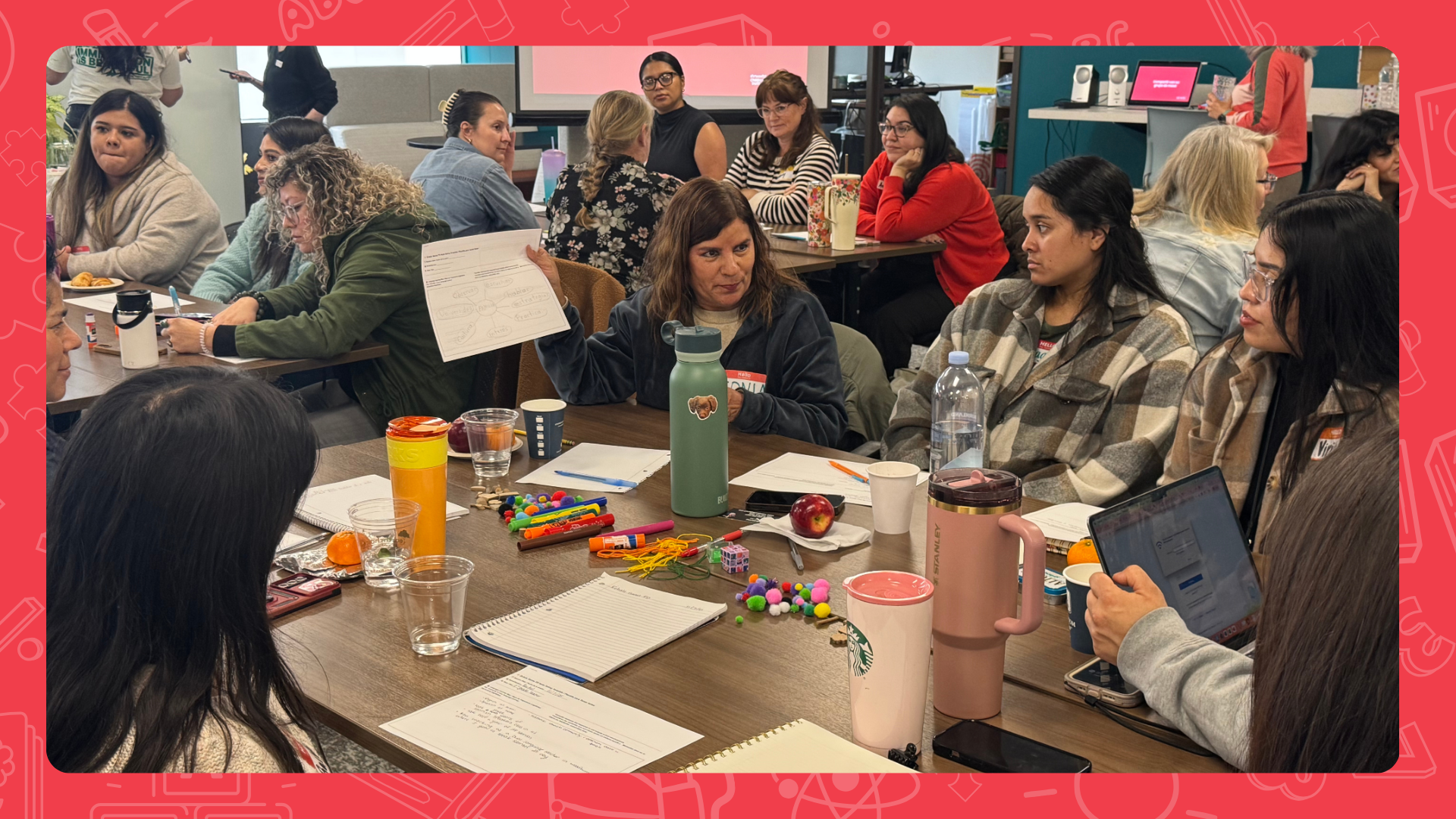
On November 7th at 8:00 a.m., to our surprise, as we walked into our downtown office to welcome teachers joining us from different school districts across Oregon, we noticed many teachers were already there, a whole hour early, reconnecting with colleagues and greeting new peers. By 8:50 a.m., the CI office had transformed beyond what we could’ve imagined and planned for. Forty teachers filled the space, along with the smell of coffee, empanadas, and laughter. Almost instantly, and without prompting, community and camaraderie were formed.

The Learning: What teachers explored together

Preschool through third grade are critical years for a child’s development and love for learning, so it was widely understood when one teacher shared, “Everyone is a language learner, regardless of mono- or multilingualism.” Children are learning to express themselves, and teachers are learning how best to support them. Across hundreds of little classrooms, teachers are preparing lesson plans that hopefully welcome students with different levels of language and cultural comprehension, from Spanish, English, Russian, Chinese, or the 247 other languages spoken across our education system. No one understands the reality of the education system better than our teachers. 

For many teachers in the room, this means pushing themselves: teaching full days in different languages, improving their own language proficiency, and overcoming fear. That courage led to many breakthroughs. Teachers described feeling more confident, better serving their multilingual learner students, and being proud of improving their teaching practices. Sometimes, impact comes from simple shifts, like incorporating music that let’s children sing and dance together, introducing new languages, having fun moving their bodies, and encouraging them to sing along to the words even when they don’t know the language yet.

Building on this, Julio guided participants through multiple Language Lab stations to leverage their expertise while exploring design strategies that foster language-rich environments supportive of multilingual students. These focused on three core practices: translanguaging, biliteracy, and bilingual playful inquiry.

Some of the teachers shared that math-based games can teach turn-taking and sharing, reinforcing social skills alongside academic concepts. These inclusive, playful approaches foster safety, connection, and joy, ultimately creating classrooms where multilingual and bicultural students thrive.

The Practice: What teachers designed and created

Teachers were then invited to create a teaching practice model using loose parts that could support and deepen a multilingual learner’s experience. Even teachers new to CI’s ESS coaching model quickly began generating creative ideas together, using colorful, tactile materials to bring their concepts to life.

One team of teachers focused on syllables and phonetics using pipe cleaners, beads, LEGO-style blocks—turning literacy targets into a hands-on experience for both teachers and students. They explored how these simple materials, used intentionally, can help students identify sounds, syllables, and stress points in words like sapo or casa, while also strengthening fine motor skills. Another teacher expressed that she had to adapt to the limited time, preventing her from prepping materials, so she often resorted to just using hard materials like cut-up index cards. This practice neither engaged her nor her students, signaling that simply dreaming and waiting for more resources is not enough.

By the end of the six-hour session, the group envisioned and experienced a shift toward intentional, playful inquiry, where manipulatives, movement, and creativity are more than just distant dreams but essential strategies for engaging students to successfully learn. A kindergarten teacher encouraged her peer by saying, “If kindergartens can do this, first graders can too.” The spark of possibility carried through the room.

This energy was infectious, affirming that when we give our teachers the high-quality professional development to reflect, play, and experiment in ways they can intentionally support multilingual students in their classrooms, new ideas transform practice and lead to meaningful learning experiences.

The Takeaways: Insights, emotions, and reflections

To close the day, teachers stood together in a circle and reflected on what the experience meant. (In my) 19th year (of teaching), I have never been in a space that looks like this, and that is something we need to be thankful for.” This session created a space where they could see themselves as part of a much bigger narrative than what happens within their individual school sites.

When we intentionally flip the script and center teachers’ lived experiences and wisdom, we collectively move forward. The session validated what we know to be true; teachers understand what they need in the classroom because they are closest to the work.

The energy was inspiring. In just one day, the teachers uplifted the work in ways that I’ve never seen, sharing stories, sharing practices, and asking critical questions on the system, while providing answers on what the system can do to better serve the students and families. It was a beautiful space to say the least.”

What surprised us was the level of hunger for this kind of professional development. Even teachers who couldn’t attend were asked for materials and future opportunities. We saw that Oregon’s teachers want this, they need this, and those who joined us left energized to keep building an education system that meaningfully supports our multilingual learners.

The Bigger Picture: What Oregon needs next

Early in the day, teachers raised critical questions that only our system leaders can truly answer: “Why do so many multilingual learners appear concentrated in elementary grades? How do we identify and support students as they transition to higher grades? How is language development measured, and how do families understand those processes?

These questions point to a larger issue: without clear systems and collaboration, multilingual students and their families face stigma, confusion, and unnecessary barriers. Teachers emphasized that advocacy is essential, not just for adopting language-specific programs within schools or districts, but for shifting mindsets to see bilingualism as a strength and investment in Oregon’s future.

How we invest in, create, implement, and experience professional development for teachers must fundamentally evolve. It should create a space for trust, reflection, vulnerability, curiosity, growth, and shared learning among teachers. Julio and the leaders who joined demonstrated that bilingual and multilingual teachers are leaders best positioned to create this change. Their voices, experiences, and cultural knowledge must be centered in curriculum, budgeting, academic standards, and professional learning.

Échale Ganas showed what’s possible when they are.

Interested in joining our next session? Reach out to Julio Bautista at julio@childinst.org

Webinar: Insights From Oregon’s District-Run Preschools

Webinar: Insights From Oregon’s District-Run Preschools

Webinar: Insights From Oregon’s District-Run Preschools

Ten years after our first statewide preschool survey, the 2025 Preschool Landscape Survey reveals important trends in Oregon’s district-run programs. While many districts have offered preschool for years, most operate on a small scale and struggle to meet growing demand. The findings point to critical areas for investment such as funding, workforce development, and stronger data partnerships, to build a more equitable and sustainable early learning system for Oregon’s children.

Take a closer look at the findings in our recorded webinar and stay tuned for the full report, coming in December.