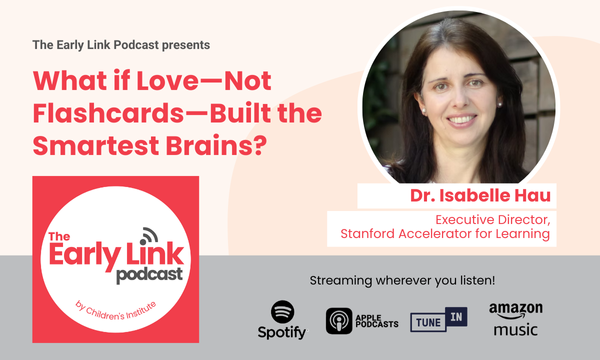
Isabelle Hau asks, “What if love—not flashcards—built the smartest brains?”

Isabelle Hau asks, “What if love—not flashcards—built the smartest brains?”

What if love—not flashcards—built the smartest brains?

In this episode of The Early Link Podcast, Stanford’s Dr. Isabelle Hau joins guest host Kali Thorne Ladd, CEO of Children’s Institute, to share fresh insights on relational intelligence, why babies laugh eight times harder with a friend, and how technology is quietly disrupting family dinners. She digs into France’s universal preschool, Head Start’s looming funding cliff, and the Sunday-night ritual that turns bedtime dread into disco therapy. Prepare to learn about science, real-world inspiration, and hopeful ideas!


More about The Early Link Podcast

The Early Link Podcast highlights national, regional, and local voices working in early childhood education and the nonprofit sector. The podcast is written, hosted, and produced by Children’s Institute.

Listen to more episodes of the Early Link Podcast here or stream on Spotify, Stitcher, Amazon Music, TuneIn, and Apple Podcasts.

Early Childhood is Making Headlines! | CI News Roundup

Early Childhood is Making Headlines! | CI News Roundup

The momentum for early learning and care, and child well-being in Oregon is growing, and Children’s Institute’s work is at the center of these conversations. From advocating for more health supports for parents during and after pregnancy, to expanding investments in family support services, our work is making headlines!

Don’t miss the latest media coverage, featuring Children’s Institute and our partners, below.

June 2025

June 18, 2025 Children’s Institute, Latino Network, and Healthy Families Oregon say early intervention is key to positive long-term social and economic outcomes. The latest state budget proposal for early learning and care programs would lead to major setbacks in educational outcomes and destabilize communities.

Watch here

June 17, 2025 In a “reluctant yes” vote, the Oregon Senate passed SB 5514 on Monday, June 16. The $1.4 billion budget is 3 percent less than current levels and could lead to preschool closures and job losses. The bill includes cuts to all programs offered by Oregon’s Department of Early Learning and Care including, Preschool Promise, Healthy Families Oregon, Early Childhood Equity Fund, and Parenting Education. 

Read more

June 12, 2025 In Oregon, early learning and child care programs are on the brink of facing a significant financial setback, with proposed budget cuts amounting to $45 million over the next two years. This reduction jeopardizes access to vital services for families struggling to secure reliable and affordable child care before their children enter kindergarten.

Read more

June 11, 2025 Oregon’s Department of Early Learning and Care, the agency overseeing child care and early childhood education, is poised to receive $45 million less from the Oregon Legislature than it needs to operate those programs at their current level of operation over the next two years. 

Read more

February 2025

February 20, 2025  In this op-ed, Dana Hepper (Children’s Institute) and Alejandro Queral (Oregon Center for Public Policy) urge Oregon lawmakers to expand Employment Related Day Care (ERDC) and increase the Earned Income Tax Credit (EITC). These investments would make child care more affordable, ease financial stress for families, and improve outcomes for young children across Oregon.

Read more

February 20, 2025A six-part report finds Oregon needs to modernize its decade-sold funding formula to meet statewide goals for student success, especially in schools that serve a concentration of students from low-income families. In this article, Dana Hepper, director of policy and advocacy at Children’s Institute emphasizes the need for both increased funding and accountability, so resources lead to better educational outcomes.

Read more

February 19, 2025 Former Oregon governors and early childhood advocates convened on February 17 to push legislation that will support early childhood education, child care, and family supports that will help set a strong foundation for young children in Oregon.

Read more

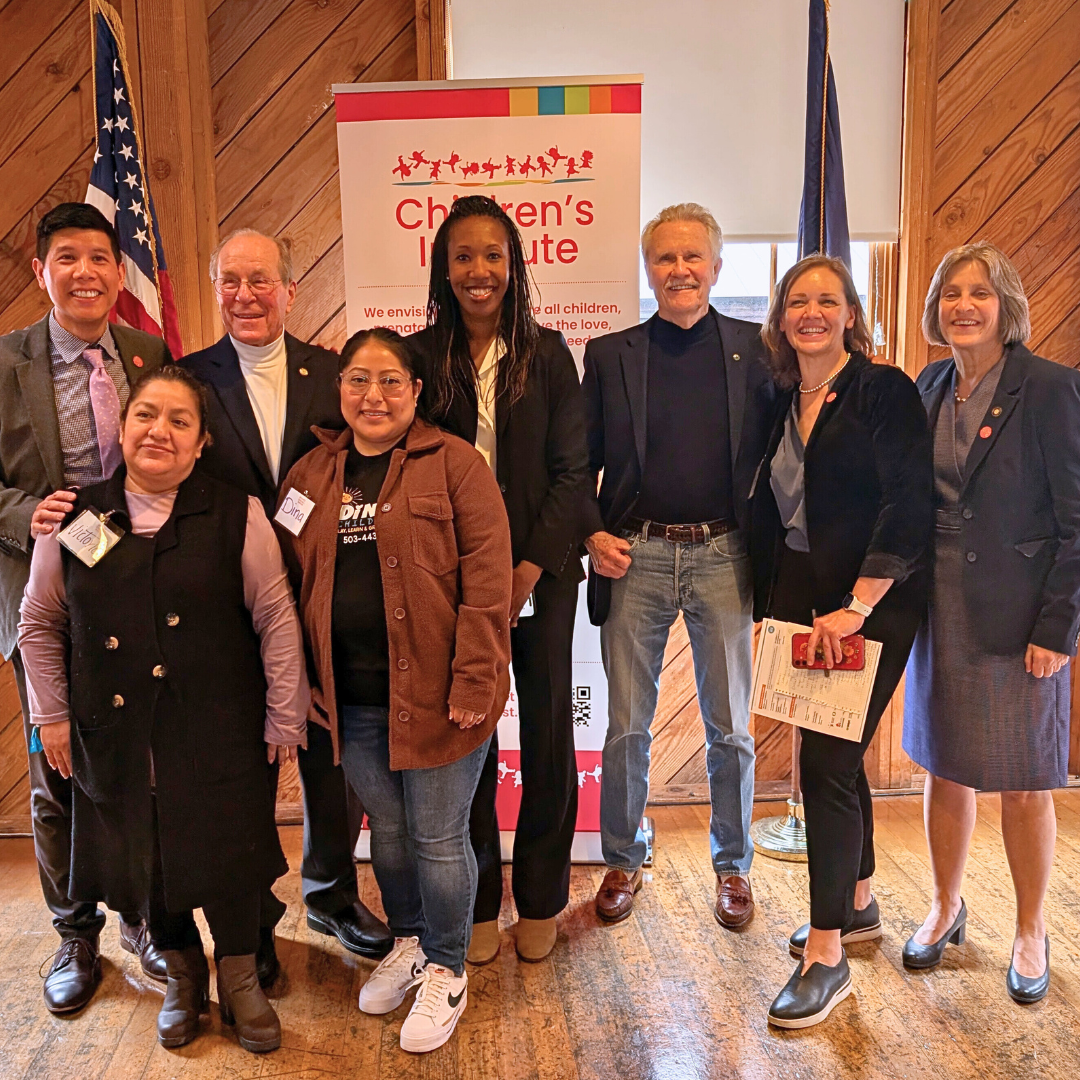
February 17, 2025Former Oregon governors John Kitzhaber and Ted Kulongoski joined early childhood advocates from across sectors at the Choose Children Day of Action to push for increased state funding for young children and families. Organized by Children’s Institute, the effort supports investments in child care, early education, and health care, including the Momnibus package.

Read more

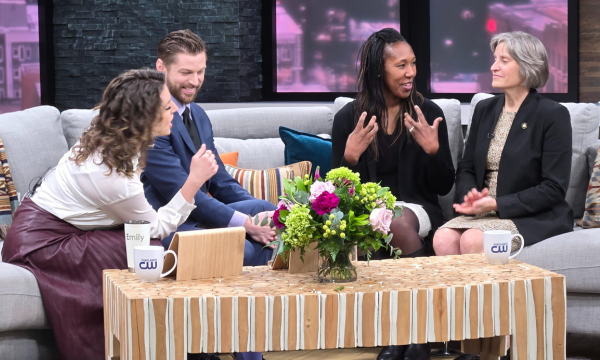
February 17, 2025 Children’s Institute CEO, Kali Thorne Ladd, and Senator Lisa Reynolds joined KOIN 6 AM Extra co-hosts to talk about Oregon’s Momnibus Act and the impact that these policies will have on infants, young children, and families.

Watch here

Pause to Reflect and Reimagine Now

Pause to Reflect and Reimagine Now

The final few weeks of school are here. The countdowns are up, the energy is shifting, and summer is near. But before the last bell rings, this is a powerful moment to pause—not just to reflect but to reimagine.

You’ve spent the year nurturing your students and cultivating a love of learning. You’ve built routines, responded to needs, and gathered insights—both big and small. Now is the time to ask: What have I learned? And how can I use that learning to grow forward in service of equity and justice?

A few years ago, our Early School Success network brought in Dr. Brandi Hinnant-Crawford- an advocate for Improvement Science. I have been revisiting her work lately, which emphasizes using data for improvement, not just a systematic way to make incremental changes for students. She writes, “Improvement science is not neutral. It is a tool—and like any tool, it can be used to build justice or reinforce inequity. We must choose justice.” 

Here are a few ways to use these final weeks with intention and liberation in mind:

Look beyond the numbers

In early childhood and early grades, data is more than test scores. It’s the stories, the observations, the growth you’ve seen day by day. As Dr. Hinnant-Crawford says, “Data must be humanized. It must be contextualized. It must be used to tell the truth about systems—not just students.” 

Celebrate the small wins

A student who now writes their name. A child who learned to share. These are not small things. This is everything. These moments are evidence of transformation—and they matter deeply.

Reflect on what worked

What routines supported learning best? What strategies helped students feel seen and successful? What might you do differently next year? “Improvement is not about fixing students,” Dr. Hinnant-Crawford reminds us. “It’s about fixing systems that fail students.”

Set the stage for next year

Use what you’ve learned to shape student-centered goals. Even one small change—rooted in equity and empathy—can have a big impact. Ask yourself: What do my students need to thrive, and how can I design for that from the start?

Rest is part of the work

Reflection is powerful, but rest is essential. You’ve done meaningful, heart-centered work. Take time to breathe, celebrate, and restore. Liberation work requires sustainability.

You’re almost there. Thank you for your care, your commitment, and your courage. As you close out this year, know that your work matters—and that your reflection now is the seed of transformation for what’s next.

With gratitude,
Marina and the ESS Team

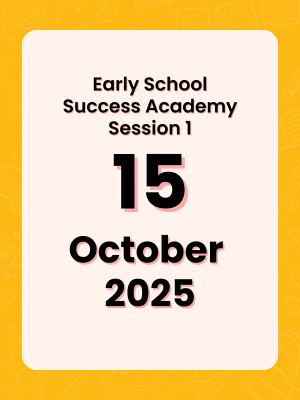
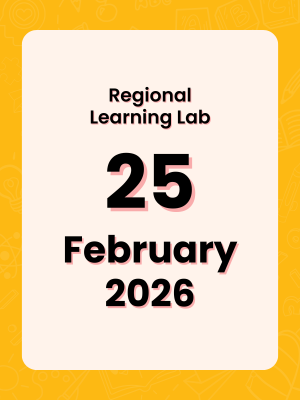
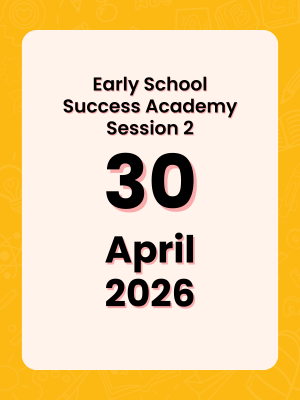
Register today: 2025-2026 Early School Success Academy

Register today: 2025-2026 Early School Success Academy

Register today for the 2025-2026 Early School Success Academy!

The Early School Success Academy equips schools and districts to build strong early learning programs with practical tools and hands-on coaching that boost student success. This professional learning experience is led by educators, for educators!

This year’s focus:
Boosting Early Literacy

Registration is open!
To register or learn more, please contact Shawnté Hines at shawnte@childinst.org