
Funding Relief Nurseries is an Investment in Families and Communities

Funding Relief Nurseries is an Investment in Families and Communities

Oregon Relief Nurseries provide critical support to families with young children ages 0-5. They currently serve about 3,500 young children throughout the state and are an integral part of Oregon’s early childhood system. The Relief Nursery model is nationally-recognized and unique to Oregon, focusing on the specific issues of children from families experiencing multiple stressors, trauma and abuse, or families that are at-risk of having these experiences. These complex challenges put families at an increased risk of becoming involved in the child welfare system. To prevent this, Relief Nurseries provide tools and resources so families can strengthen parent-child bonds, establish healthy patterns, and build protective factors.

“Our vision is that all children in Oregon thrive in safe, nurturing and stable families,” explained Cara Copeland, executive director of the Oregon Association of Relief Nurseries (OARN). “The Relief Nursery model has over forty years of success in strengthening families and keeping children safe from maltreatment and unnecessary foster care.” 

Unfortunately, low wages for direct service staff have put these programs in a precarious situation, putting Oregon children and families at-risk of losing needed services. One of the biggest hurdles facing Relief Nurseries today is a glaring pay gap, when compared to other salaries in the early childhood sector. While Oregon has made some progress by raising wages for early childhood direct service staff in other early childhood programs, such as Early Head Start and Oregon Pre-Kindergarten, wages for Relief Nursery staff fall short. This results in recruiting challenges, high staff turnover, a reduction in services, and disrupts relationships with families and children. 

According to OARN, the average Relief Nursery teacher/home visitor would need a 19 percent wage increase to meet the Early Learning Council minimum salaries for early childhood educators.

During the 2021 legislative session, one of the Early Childhood Coalition’s (ECC) legislative priorities was to expand early childhood investments. This included providing wage parity for Relief Nurseries, with OARN as lead advocate. OARN and the ECC requested $4.8 million from the Oregon Legislature to increase Relief Nursery wages and maintain levels of service. Ultimately, Oregon’s Relief Nurseries received partial funding.

“We received $2 million of our request and will continue to fight for those dollars,” said Copeland. “The consequence of not having these funds is fewer families served and staff being recruited out of our programs to partner services. The turnover and transition of staff have negative consequences on children and families currently receiving services as well because they often drop out of services when a beloved home visitor or teacher leaves.”

Relief Nursery staff are critical in shaping the future for children, families, and communities. With the early years being such an important time for brain development, Relief Nurseries are essential for thousands of young children in Oregon.

Central Oregon Spotlight: MountainStar Relief Nursery

MountainStar Relief Nursery is just one of 38 Relief Nurseries in Oregon, serving young children and families in Bend, Madras, Prineville, Redmond, and La Pine. Families in MountainStar’s programs join voluntarily, often connecting to the program by word of mouth, but they may also be referred by doctors, social workers, and partner agencies. 

Kara Tachikawa, executive director of MountainStar, attended the ECC’s advocacy kick-off event in May. She subsequently met with lawmakers during the 2021 legislative session, providing testimony in support of raising wages for Relief Nursery teachers, home visitors and support staff. 

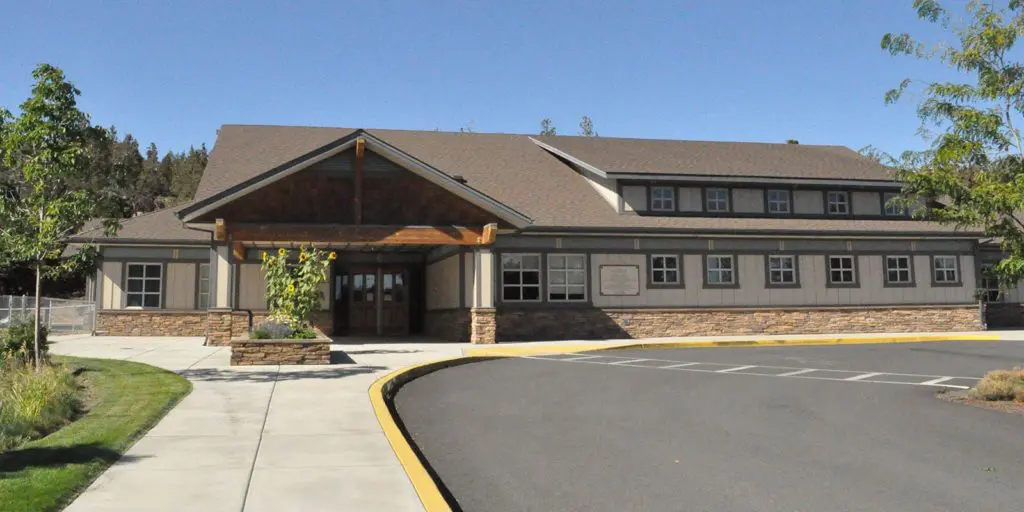
This summer, CI staff visited MountainStar at the East Bend Campus and toured the building, which actually houses multiple organizations that also serve children, youth, and families. We learned that this co-location provides convenience, allowing families to access more services in one place, and promotes collaboration and partnership between like-minded nonprofit agencies. Healthy Families of the High Desert, the Central Oregon branch of Healthy Families Oregon, is one such program that shares space in the building and partners with MountainStar to reach more families.


While there, we learned that in September 2020, MountainStar opened three Preschool Promise classrooms in Bend, Madras, and Prineville to provide more high-quality, publicly funded preschool for low to moderate-income families. Their goal is to provide early intervention so children are safe and healthy, build parental resilience, and strengthen families through integrated early childhood education and therapeutic support services. 
Healthy Families of the High Desert

Healthy Families of the High Desert is a program through Healthy Families Oregon. It is a voluntary home visiting program that provides support and education to families expecting or parenting newborns. The program offers weekly home visits for families that need and want some extra help, and partners with MountainStar to reach more families with young children.
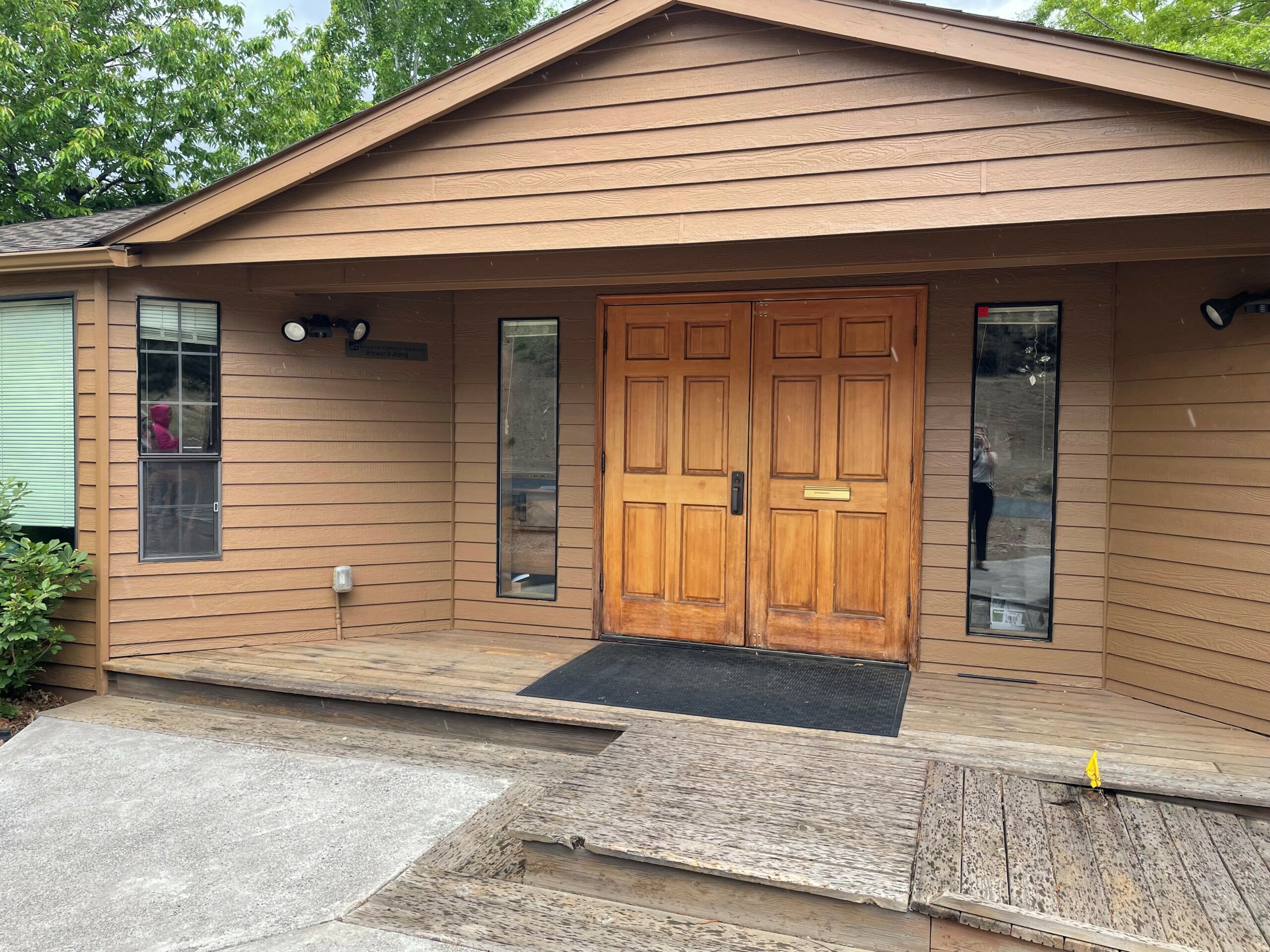
An image of the building that houses MountainStar Relief Nursery
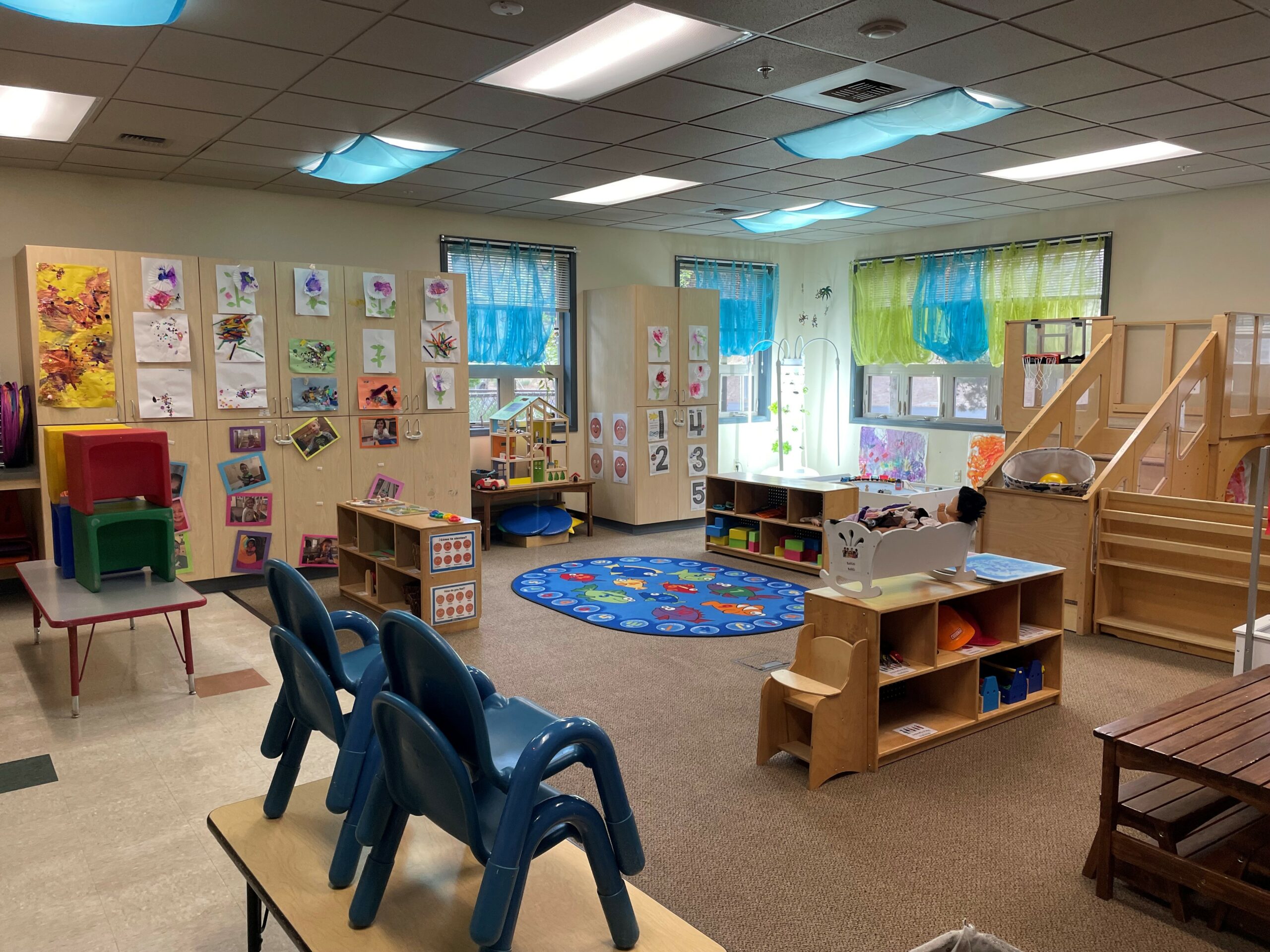
A photo of a classroom at MountainStar Relief Nursery

Looking Ahead

Since the Oregon Legislature concluded in June, Relief Nursery programs are now moving towards implementation. At MountainStar, Kara Tachikawa remarked that she is hopeful about successfully navigating the season of change, as the program is expecting staffing changes, solidifying programs, and looking to expand services over the next three years. 

As for the near future, she said, “We’re excited to move back into our regular services for therapeutic classrooms and to return to in-home visiting with families. We know that these connections provide the basis for positive social-emotional development for the children, and the support that families need to make it through the challenging, precious, irreplaceable time of raising young children.”

Additional Resources
 

The Path to the Student Success Act

The Path to the Student Success Act

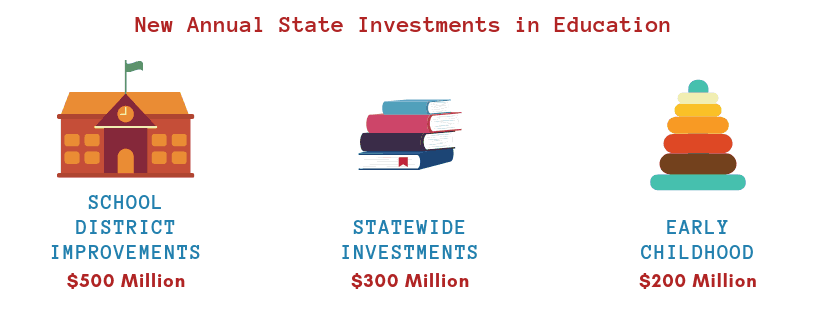
This year, Oregon passed the Student Success Act: a new annual $1 billion public investment in education. Twenty percent of this budget—nearly $200 million per year—will go toward early childhood programs and services. This new funding is in addition to existing allocations to early childhood, roughly doubling the state’s commitment to programs and services for kids under 6.
Speaking at the City Club of Portland, House Speaker Tina Kotek credited these historic investments to the determined efforts of advocates over many years. Those efforts included educating lawmakers on the connections between early childhood experiences and future academic success.

Lawmakers Won’t Fund What They Don’t Understand

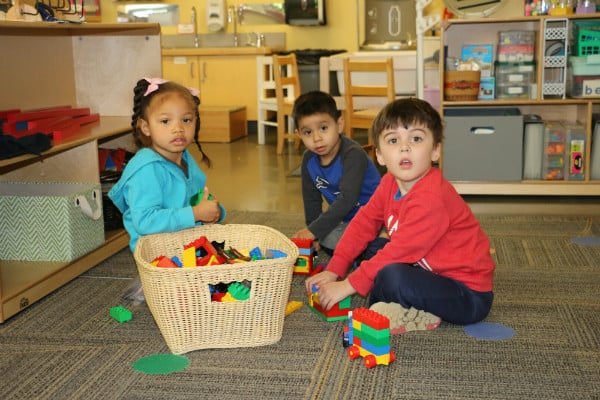
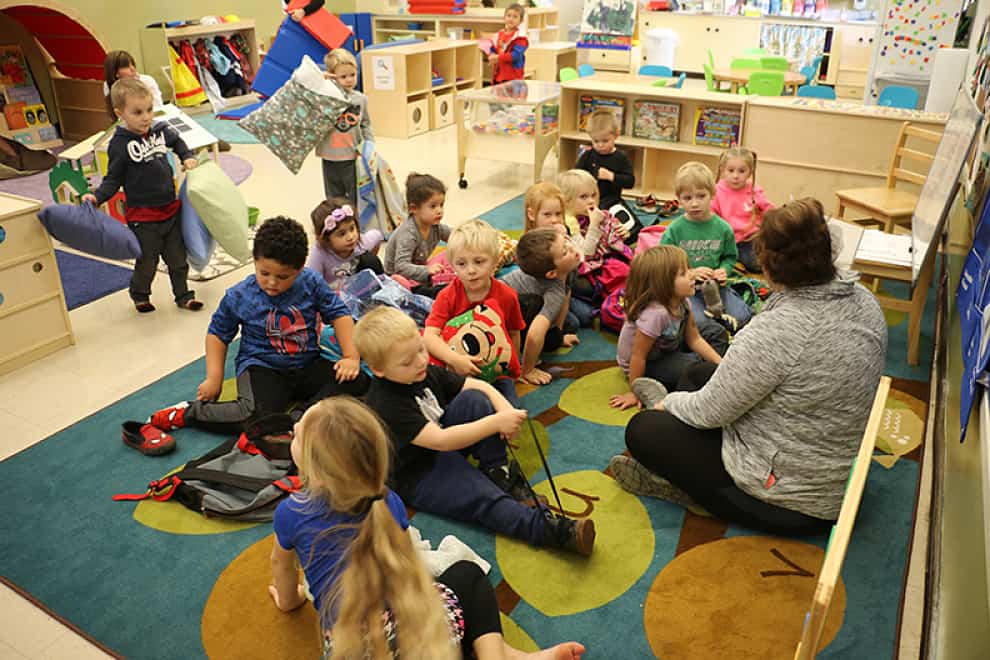
Students in preschool classes at Earl Boyles (above) and Yoncalla Elementary Schools (below).

The profound cognitive, social, and emotional experiences children have in the first five years of their lives set the foundation for all future learning. “If we want to improve health and education outcomes in Oregon, we need to ensure all kids have equitable access to high-quality early care and education,” says Swati Adarkar, president and CEO here at Children’s Institute. “Lawmakers need to understand the connection between the early years and long-term academic success. We work alongside partner organizations around the state to make that case.”

Making the case takes more than presenting decades of research on the long-term benefits of high-quality early education. In 2010, we launched the Early Works initiative to demonstrate the impact of combining high-quality preschool with other supports like infant and toddler play and learn groups, health care and housing supports, and parenting education.

Adarkar explains: “Our Early Works sites at Earl Boyles and Yoncalla Elementary Schools have served as learning laboratories. Lawmakers and educators can see firsthand what happens when families and schools meaningfully partner together to make sure kids get high-quality early childhood experiences.”

Working Together, Advocates Delivered a Consistent Message

Educating lawmakers on the importance of early childhood was only the first step. Because we’re still in the process of developing a comprehensive system for children under 6, it’s not possible to “invest in early childhood” in the same way the state invests in K–12 education. Instead, lawmakers needed to determine which programs and services to fund, and how much money to give them.

The nearly 40 advocacy organizations in Oregon’s Early Childhood Coalition (ECC) played a key role in helping legislators make those determinations. Dana Hepper, our director of policy and advocacy, helped lead the coalition, which formed in December 2017. “The investments in early childhood that were ultimately included in the Student Success Act were based on recommendations developed by the ECC. We worked together over six months to determine which programs and services needed to be funded and at what levels, educate lawmakers about their impact, and engage Oregonians to support the investments,” Hepper explains. Thanks to Governor Brown’s leadership leading up to the 2019 session, the ECC was able to use investments in early childhood included in the governor’s recommended budget, released in November of 2018, as a starting point for their legislative agenda.

Speaker Kotek echoed the importance of this advance work to determine the coalition’s priorities. “Success [in the legislature] is grounded in the hours and hours of work that are done even before the session starts in January,” she told attendees of the City Club’s Friday Forum last month. “Education experts consistently told us that more resources for early childhood education were necessary if every student were to be able to succeed.”

The consistency of the message was key. “The ECC was successful because we aligned our efforts by aligning our missions,” says Cara Copeland, executive director of the Oregon Association of Relief Nurseries. “When early childhood providers work and fundraise in isolation, they lose sight of the fact that families raising young children need a variety of supports in order to thrive. A family may receive support from a Relief Nursery to help build their protective capacity, but after that child leaves our therapeutic classroom the parent must still have affordable child care and a plan for quality preschool.”

The ECC’s requested investments in Relief Nurseries, Early Head Start, parenting education, Oregon Pre-Kindergarten, Preschool Promise, Early Intervention and Early Childhood Special Education, an Early Childhood Equity Fund, and opportunities for the early childhood workforce were all included in the Student Success Act.

ECC recommendations to fund the universal voluntary home visiting program “Family Connects” and launch a task force to address Oregon’s child care crisis were also passed by the legislature this year in separate bills.

Parents and Educators Spoke, and Lawmakers Listened

Evidence-based policy recommendations on their own are never enough to sway lawmakers, especially when it comes to allocating record amounts of money. To pass the Student Success Act, legislators needed to hear from those most impacted: parents and educators. When the Joint Committee for Student Success (JCSS), co-chaired by Senator Roblan and Representative Smith Warner, announced their state-wide listening tour to formulate a plan to improve education in Oregon, the ECC pushed for early learning sites to be included.

The JCSS sought to understand Oregon’s education crisis: the state ranks 49th in the nation for high school graduation, has the fourth-worst chronic absenteeism rate, and is in the midst of a behavioral crisis. “Research shows that all of these issues are tied to early childhood experiences,” explains Danielle Pacifico-Cogan, our director of community affairs. “But stories from real people have a bigger impact than statistics. When lawmakers visited early learning sites, they were able to hear directly from parents who want and need high-quality early care and education for their young children.” Members of the JCSS reported to Speaker Kotek that this listening tour was one of the highlights of their legislative careers.

“The message they heard was consistent across the state: early childhood services and programs deliver huge benefits, but many families don’t have access to them,” Pacifico-Cogan says. Thirty-thousand children living in low-income families in Oregon currently lack access to high-quality preschool; child care in the state is just as scarce.

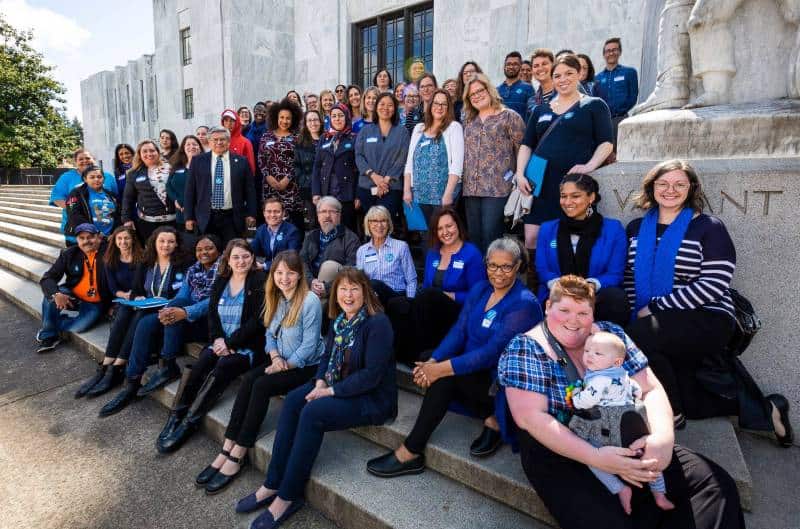
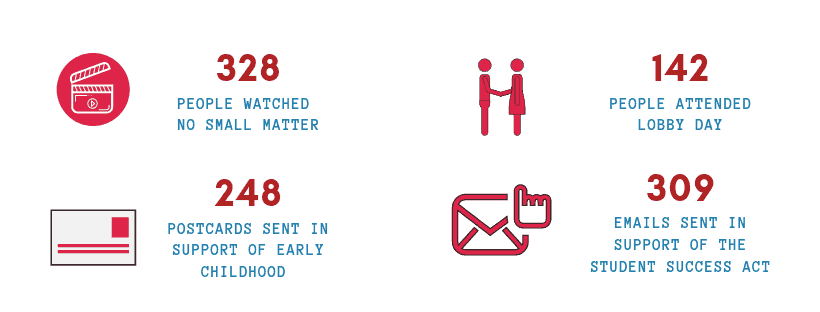
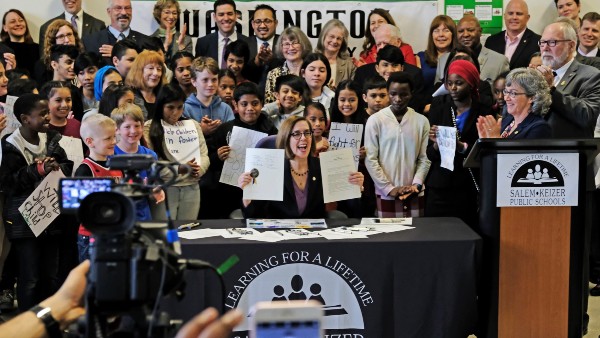
In addition to bringing lawmakers into early learning settings, the Early Childhood Coalition brought supporters to Salem for Early Childhood Lobby Day. Over the course of the day, nearly 150 parents, educators, child care providers, and advocates met with 63 state lawmakers to voice their support for the coalition’s agenda.

Amanda Manjarrez, director of advocacy for Latino Network, participated in small group meetings between constituents and lawmakers throughout the day.

“Lawmakers hear from me all the time about the need to fund culturally specific early childhood programs. On Lobby Day they heard from providers who need these resources to close opportunity gaps for children of color and dual language learners. They met parents who want access to programs like Juntos Aprendemos that equip Spanish-speaking parents and kids with the skills they need to succeed.” The Student Success Act includes $20 million over two years for an Early Childhood Equity Fund dedicated to culturally specific early learning services.

The coalition also engaged supporters who couldn’t make it to Salem. Attendees of two screenings of the early childhood documentary No Small Matter wrote postcards to their senators in support of early childhood investments; hundreds of other voters sent emails. All of this was part of the ECC strategy to enable constituents from across the state—particularly those represented by members of the JCSS—to share their lived experiences with lawmakers, and to support these stories with data. The end result: lawmakers learned that in Oregon—like in many other parts of the country—there is broad support for funding for early childhood.

Early Investments Have Long-Term Impacts

This year’s historic investments in early childhood followed years of research, innovative initiatives, partnerships, and community engagement. Following the announcement that opponents of the bill will no longer be working to refer it to the ballot, this funding is now one step closer to reaching critical early childhood programs and services. Over the coming months, we’ll continue to work with our ECC partners to share personal stories from across Oregon about the impact of early health and learning. We’ve seen how important the voices of parents, educators, and health care providers are, and we’re committed to making sure they get heard. If you’d like to add your voice to this movement, use the link below to share with us why early childhood matters to you.

Hundreds Gather at OMSI to View a Groundbreaking Early Childhood Documentary

Hundreds Gather at OMSI to View a Groundbreaking Early Childhood Documentary

On April 22 and April 29, Children’s Institute and the Oregon Association for the Education of Young Children (ORAEYC) teamed up to host the Oregon premier of the groundbreaking early childhood documentary No Small Matter

Hundreds of parents, child care providers, educators, and advocates came to OMSI for two sold-out screenings of the movie, the first feature-length documentary that aims to kick-start the public conversation about early care and education.  

Following the first screening of the film, Dana Hepper, Children’s Institute’s director of policy and advocacy moderated a panel discussion on Oregon’s early childhood programs and services. She focused on the need for additional state investments to fund early childhood. Member of the Joint Committee On Student Success Representative Diego Hernandez joined Cara Copeland, executive director of the Oregon Association of Relief Nurseries; Andrea Paluso, executive director of Family Forward; and Dorothy Spence, hub director of the Northwest Regional Education Service District on the panel.

Attendees at the second panel heard up-to-the-minute updates from Danielle Pacifico-Cogan, Children’s Institute’s director of community affairs and James Barta, Children First for Oregon’s strategic director on HB 3427. This bill includes historic investments in early childhood programs and services currently moving through the state legislature.

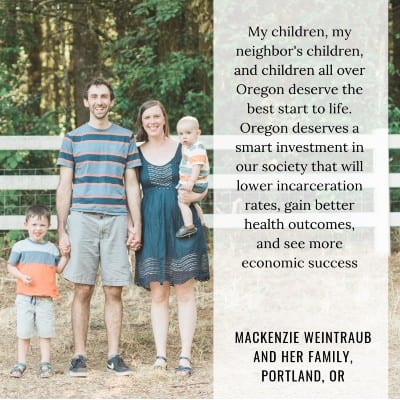
Attendees at both screenings took the opportunity to voice their support for investments in early childhood programs and services. Mother of two Mackenzie Weintraub explained why early childhood matters to her: “My children deserve the best start and so do all children everywhere. It is also important to make a smart investment in our society and get lower rates of incarceration, better health, and more economic success!”

The enthusiasm for the film demonstrates growing support across the state for increased investments in the programs and services that support young children, parents, and the early childhood workforce.  Parents, educators, and child care providers are joining a coalition of more than 30 organizations across the state speaking up on behalf of kids.

Oregon’s Relief Nurseries Support Families and Keep Kids Out of Foster Care

Oregon’s Relief Nurseries Support Families and Keep Kids Out of Foster Care

Oregon’s nationally recognized Relief Nursery model serves families with children ages 0–5 who are most at-risk for abuse and neglect. In 2019, Children’s Institute is joining a coalition of early childhood advocates to request an additional $5.6 million in funding for Relief Nurseries to strengthen parent-child bonds and decrease abuse. We spoke with the Association of Oregon Relief Nurseries Executive Director Cara Copeland to learn more the need for additional investments in these critical programs.

All photos in this story were taken at the Chelsea’s Place Family Building Blocks Relief Nursery in Salem.

Children’s Institute: Can you explain how Relief Nurseries, which are unique to Oregon, use a multidisciplinary approach to serve children and families?

Cara Copeland: Relief Nurseries have been in Oregon for just over 40 years. The core model relies on three things: a therapeutic classroom for children, home visiting for parents, and parent education. A lot of our children are behind developmentally, so we work one-on-one to make sure they’re ready for kindergarten, focusing on the social emotional development of kids ages 0­–5. The home visiting and parent education provide tools and emotional support. Many Relief Nurseries also have other supports: they might have food and diapers available, or mental health, drug and alcohol counseling, or peer services.

CI: Why do you think the ages birth to 5 are such a critical time for kids and families?

Cara Copeland: Research shows that a child’s brain is 80 percent developed by age 3. The first 1,000 days are the most critical. We know that if you don’t invest in that child in the first three years, you’re compromising that child’s future capacity.


There’s no wrong door.

Cara Copeland explains how families can connect with a Relief Nursery. 

“When a new Relief Nursery starts in a community, typically families come to us via referral. The idea is that there’s no wrong door, and there’s one piece of paper that a pediatrician could fill out, a DHS worker, a self-sufficiency worker, an employment office, or a WIC provider. The Early Learning Hubs have been integral in helping communities, either partnering alongside what communities are already doing to coordinate referrals, or to instigate that process. Over time, what we’ve seen across virtually every Relief Nursery is that within a couple of years, most referrals are self-referrals: families in the program refer their friends. We build trust within a community, and that’s what’s really important.”

This is also an important time for a family to establish healthy patterns, especially for a first birth. Forty-five percent of children reported to be abused or neglected are under age 6, and 12 percent of children who suffer abuse are under age 1, according to the Oregon DHS 2017 Child Welfare Data Book. Many of our families are products of abuse, generational neglect, substance abuse, and incarceration. In those first few years when they are becoming a family, if we can establish some patterns of interaction and parent-child attachment, that’s going to serve that family for the long haul.

CI: How do Relief Nurseries help establish those healthy patterns for families?

Cara Copeland: Sometimes people think of Relief Nurseries as child care or preschool. We do serve families that are raising children of preschool age, and we do care for their children, but we are neither child care nor a preschool program. We’re focused on building the five protective factors in families: concrete supports, social supports, understanding of child development, social-emotional competence of children, and parental resilience. When parents have something traumatic happen to them—homelessness, food insecurity, domestic violence—that’s where relief nurseries step in, to build parental resilience along with these other supports. We can’t guarantee that life is going to get easier, but we can help give parents tools to stand up when life is hard.

CI: What kind of impact have Relief Nurseries had in Oregon?

Cara Copeland: Across the state Relief Nurseries serve about 3,000 children, and about 2,600 families. Forty percent of the families coming to us are already involved in child welfare. Statewide our families have an average of 16 risk factors associated with a higher likelihood of abuse and neglect, which often lead to foster care. Across the state, our most recent independent evaluation showed that 98 percent of our children required no further foster care placement after they entered Relief Nursery services. Parents love their children and they really want to parent, and we’re often their last chance at keeping their kids.

We need a strong foster system. We need quality foster parents, and we need to support our foster parents. But my goal would be that at some point we have no need for foster care. Can you even imagine? I think that’s a worthy goal to fight for.

The Impact of Adverse Childhood Experiences

Cara Copeland explains why trauma-informed care is critical to preventing child abuse and supporting families. 

Children’s Institute and many other early childhood advocacy groups from across the state recognize the value of Relief Nurseries and have joined together to request a $5.6 million investment in Relief Nurseries that help prevent child abuse and strengthen parent-child bonds. 

Learn more about our 2019 Policy Recommendations and add your voice in support of programs that support healthy and intact families.