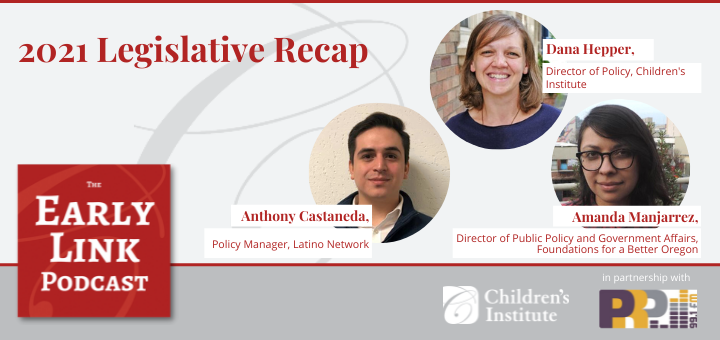
2021 Legislative Recap

2021 Legislative Recap

On this episode of The Early Link Podcast, host Rafael Otto speaks with three guests about the latest legislative session in Oregon. They talk about highs and lows, what passed and did not in the interest of children and families, and what it was like to move through the session virtually.

Guests:

Dana Hepper is the director of policy & advocacy at Children’s Institute, overseeing the organization’s legislative advocacy and community engagement work.

Anthony Castaneda works as the policy manager at Latino Network, a non-profit transforming the lives of Latino children, youth, and families in the Portland metro area.

Amanda Manjarrez brings creative leadership and a deep commitment to social justice to her work as director of public policy and government affairs at Foundations for a Better Oregon.

Summary:

The guests agree that the general mood for early childhood advocates post-session is “hopeful and exhausted!” While there were challenges associated with the pivot to a virtual legislative session, it was largely more accessible to those who could not easily make the commute to Salem. Parents, providers, and community members from around the state were able to successfully advocate for legislation that will support Oregon children and families.

Transcript

Rafael Otto: This is the Early Link Podcast. I’m Rafael Otto. Thanks for tuning in. You can catch us on the airwaves on 99.1 FM in Portland on Sunday at 4:30 PM or subscribe and listen wherever you find your podcasts.

Today, I’m speaking with three guests about the latest legislative session here in Oregon for 2021. We’ll be talking about highs and lows. What passed, what didn’t and in the interest of keeping it in the interest of children and families. We’ll also talk about what it was like to move through session virtually; hopefully the only time we’ll have to do it that way. I’ll be talking with Amanda Manjarrez from Foundations for a Better Oregon, Anthony Castaneda from Latino Network, and Dana Hepper from Children’s Institute.

Hi everyone. Thanks for joining me today on the podcast.

Anthony Castaneda: Hi there.

Dana Hepper: Thank you.

Amanda Manjarrez: Thank you.

Rafael Otto: First of all, let’s just kind of check in. Is there a sigh of relief now that the session has passed us? And that work is over and we’re just a little bit of a pause. What’s the mood?

Anthony, do you want to start?

Anthony Castaneda: Sure. I think, at least for me, the dust is still settling. I’m beginning to understand what really has happened. What are some of the changes, and what were some of the successes, and what were some of the failures for us.

Rafael Otto: Amanda, Dana, how’re you feeling?

Amanda Manjarrez: I think that captures it pretty well. There’s a lot of dust. I think a lot happened in the final week of the session, even for folks who were tracking it or have been tracking it pretty closely for the last five months. And so I would say in terms of how I’m feeling? Um, hopeful and exhausted.

Rafael Otto: Dana, what do you think?

Dana Hepper: Yeah, I would have to agree there. Exhausted is a great descriptor of what us, and including legislators, are all feeling right now. In fact, the speaker of the house kind of wrapped up the session saying, “Hey, I want you all to take a break in July. Don’t do any work.” So I think that all speaks to how we’re feeling.

We know what bills passed and didn’t pass but we’re still trying to uncover why.

Rafael Otto: I want to talk about some of the specific bills and talk about what those highlights are. But I know it was a strange session for advocates for a lot of reasons, because it was virtual. It just made the work of advocacy, I think, a lot more difficult.

Amanda, do you have thoughts on that? What was it like for you?

Amanda Manjarrez: Yeah. So it was an interesting session for many reasons. As you mentioned, it was all virtual because of the pandemic, but also, 2020 has been a little crazy. And so I think heading into session, while many of us are navigating the pandemic and trying to think about how we can continue to move Oregon forward, there was a lot of banding together to figure out how we could work collectively to advance some of the longstanding and complex educational challenges that we’re facing. So we actually worked closely with the coalition called the Oregon Partners for Education Justice. I think I’ve mentioned that previously in this podcast.

Rafael Otto: Yeah.

Amanda Manjarrez: Yeah. A cross-cultural network of dozens of community organizations, culturally specific groups, education advocates, etc., who are championing racially just policies. It was… I think, on the positive side, more accessible than it’s ever been. I would say I would give the legislative session a mixed bag because in terms of accessibility and inclusivity, we had communities from across Oregon who were actually able to engage in the way that they had never had before.

Folks didn’t have to travel to Salem to testify, especially for our partners out in Eastern Oregon. That’s a long journey. A better online platform emerged, I think by necessity. And to a certain extent, lobbyists and members of the public were actually navigating some of the same online information.

So it did level access in a way for folks who don’t spend their time in Salem. And so I know that many of our partners within the coalition, myself, others, spent countless hours tracking legislation online, meeting with policy makers virtually, wordsmithing, bill submitting, letters, etc. And you could actually see the growing influence of that community engagement, and culturally specific partners being able to show up and share their experience through the process.

That said, in terms of transparency, I do think, to Dana’s point, same old. Decisions are often made behind closed doors, and you know, it’s a little more challenging when you can’t go to a legislator’s office, talk to their staff, have a conversation about what’s going on with some of these budgets.

And oftentimes items are posted without much time for review. So you’ll get documents that, you know, a hundred-plus pages that are posted a few hours before a public hearing begins. And in some cases, especially towards the end, the public hearings go away. So I do think we have a lot of work to do in terms of transparency. But I do hope that there are parts of this virtual session that sustain moving forward, because I do think it made it accessible for folks who hadn’t been part of it in the past.

Rafael Otto: Dana, Anthony, do you have additions to that?

Dana Hepper: This is Dana. I just really agree. I think being able to meet with legislators from home or from work, being able to testify at hearings remotely, was really important for people from all across Oregon, to be able to participate in the process in that way. And I hope we hold on to that more inclusive approach even as the Capitol building reopens to the public. But yeah, Amanda rightly named a really big con, which was, if the only way to contact a legislator is to call them or email them or text them, and they don’t necessarily call you or email you or text you back, you’re just kind of stuck. Whereas when, you know, Amanda, Anthony, I, people who are professional advocates can be in the building, we can usually find someone within a day or so and try to get the answers that we need. Why is the bill being killed or what is the controversy? This time it was just so much harder to get that information, even for us who do this for a living. And that makes it harder for us to communicate that back to the communities across Oregon that we work with.

Please download the full transcript below.
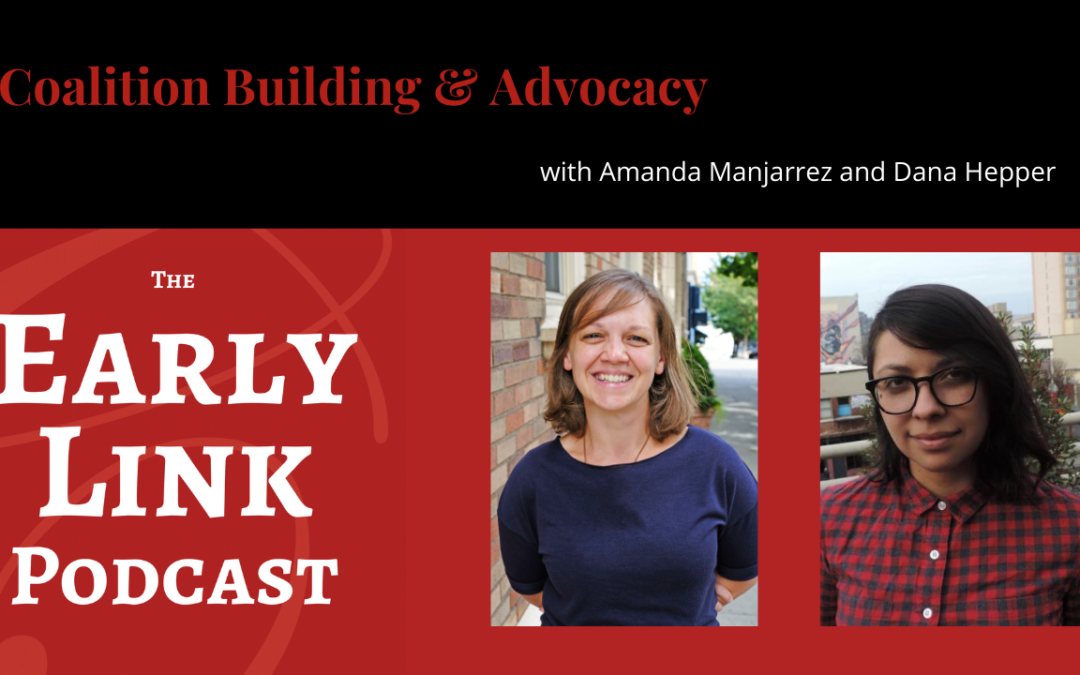
Coalition Building & Advocacy with Amanda Manjarrez and Dana Hepper

Coalition Building & Advocacy with Amanda Manjarrez and Dana Hepper

In this episode of The Early Link Podcast, host Rafael Otto explores the topic of advocacy and the details of two legislative agendas focused on building an inclusive, equitable, and just public education system.

Guests:

Amanda Manjarrez is the public policy & government affairs director at Foundations For A Better Oregon. Previously, Amanda served as director of advocacy at Latino Network, and as advocacy director for the Coalition of Communities of Color.

Dana Hepper is the director of policy & advocacy at Children’s Institute. She oversees the organization’s legislative advocacy and community engagement work, including Oregon’s Early Childhood Coalition.

Coalitions:

Oregon Partners for Education Justice is a cross-cultural network of community-based organizations, culturally specific service providers, and education advocates who are championing a racially just and community-centered public education system for Oregon. The coalition believes in the vision, wisdom, and leadership of impacted communities, and advocates for equitable policies and investments that eliminate disparities and empower historically underserved children. Foundations For A Better Oregon is the coalition’s coordinating member. Read their 2021 Legislative Agenda.

Oregon’s Early Childhood Coalition includes more than 40 state and national organizations that work to advocate for young children and families. The coalition asks legislators to commit to continued improvement in early care, education, and supports for all of Oregon’s young children and families and to center the voices of those most impacted by legislative actions in their decision-making processes. Children’s Institute serves as a coordinating member of the coalition and offers facilitation support. Read their 2021 Legislative Agenda.

Summary:

In this episode, Amanda Manjarrez and Dana Hepper explain the priorities of the coalitions’ respective agendas as well as where they overlap. They also share why racial equity is key to an advocacy agenda, and discuss the need to build on the historic investments established in the 2019 Student Success Act.

Relevant Resources:

The Early Link Podcast’s episode on the 2019 Student Success Act

Transcript

Rafael: [00:00:00] This is the Early Link Podcast. I’m Rafael Otto. Today, we’re exploring the topic of advocacy and the details of two legislative agendas focused on education for kids from birth all the way through high school. I’m talking with Dana Hepper from Children’s Institute. She’s the director of policy and advocacy. And Amanda Manjarrez, who’s the public policy and government affairs director at Foundations for a Better Oregon. Amanda and Dana, welcome to the podcast.

Dana Hepper: [00:00:26] Thank you.

Amanda Manjarrez: [00:00:26] Thank you for having us.

Rafael: [00:00:28] So I know you’re both involved in two coalitions that are, that have been very active in, are active right now in the advocacy space, Oregon Partners for Education Justice, and the, and Oregon’s Early Childhood Coalition. I would love it if you could talk a little bit about these two coalitions, who’s involved, how you work and what your purpose is. Amanda, would you start us off?

Amanda Manjarrez: [00:00:52] Sure.  So I work most closely with the Oregon Partners for Education Justice, which is essentially a cross-cultural network of over two dozen community-based organizations, culturally specific service providers and education advocates who are working on efforts to create a more racially just and community-centered public education system for Oregon.

In terms of how we work, I would say the coalition is a BIPOC community-driven space that’s rooted in on the ground experience and expertise. So this really drives the conversations and the design and implementation of the agendas that we advocate for. And our purpose as an organization is to ensure that impacted communities are more involved in the development and implementation of equitable and inclusive education policy that centers kids, families, and those who are directly affected by systemic inequities.

Rafael: [00:01:44] And tell me a little bit about who’s involved in that coalition. What are some of the organizations or people?

Amanda Manjarrez: [00:01:49] Sure. it’s predominantly culturally specific partners. So those include organizations like the Latino Network, Adelante Mujeres, the Native American Youth and Family Center, Kairos PDX, Euvalcree, APANO, among many others. We have folks  from across the state who are providing services to families who work in the education space.

We also have education advocates like Foundations for a Better Oregon, the organization I work for, Children’s Institute and other organizations who do more work in the policy sector space.

Rafael: [00:02:24] Okay Dana, can you talk about the Early Childhood Coalition and who’s involved? How has the coalition been functioning? Kind of bring us up to speed.

Dana Hepper: [00:02:34] Yeah of course! The Early Childhood Coalition first formed to advocate for and support early learning investments in the Student Success Act in 2019. But after that session, the coalition decided to center racial equity in developing our shared agenda for the 2021 legislative session. Really recognizing that well, all children are born full of potential, and even young children can experience barriers to opportunity that are driven by racism, classism, and other forms of discrimination. And so we wanted to tackle those issues head on with the development of our legislative agenda. Many of the partners who are on the Oregon Partners for Education Justice also participate in the Early Childhood Coalition. Some that Amanda named, the Latino Network, Adelante Mujeres,  and we also have many early learning hubs and other child advocacy organizations. FACT Oregon works with families experiencing disability, the Head Start Association, and Relief Nursery Association, and foundations, as well as others.

So, that’s a summary of who we are.

 Rafael: [00:03:49] In thinking about the language that the Early Childhood Coalition uses, I thought this was pretty powerful that children ages zero to five are the most racially, ethnically, and linguistically diverse Oregonians. And they are the group of Oregonians most likely to live in poverty.

And to me, you’re making the case for why a focus on racial equity is so important in the advocacy agenda. Can you say more about why that is and what that means in terms of the coalition’s priorities?

Dana Hepper: [00:04:17] Absolutely. I think early childhood advocacy has often focused primarily on serving low income children and closing income related opportunity gaps. But we know that not all gaps are driven by income. There’s actually an interaction between the impact of racism and the impact of economic disparity that layers.

And if we look at who are Oregon’s children, who live in low income families, children of color, especially Black children, Indigenous children and Latino children are more likely to live in families with lower incomes. And, if we really want early learning strategies to be effective, they need to be designed by and for the families that they’re intended to serve.

So we wanted to make sure as a coalition that we were doing a better job of ensuring the policies and investments that we advocated for weren’t just good for children that are low-income children generally, but that we specifically were thinking about how these policies would impact children who are Black, Indigenous, Latino, children of color and have an impact on those children specifically.

For the full transcript, please download the pdf below.

The Path to the Student Success Act

The Path to the Student Success Act

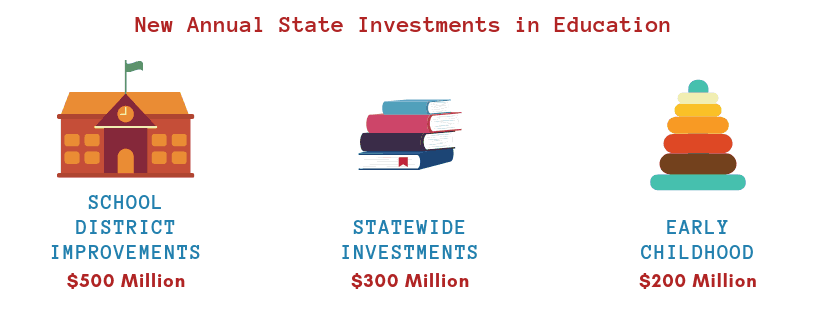
This year, Oregon passed the Student Success Act: a new annual $1 billion public investment in education. Twenty percent of this budget—nearly $200 million per year—will go toward early childhood programs and services. This new funding is in addition to existing allocations to early childhood, roughly doubling the state’s commitment to programs and services for kids under 6.
Speaking at the City Club of Portland, House Speaker Tina Kotek credited these historic investments to the determined efforts of advocates over many years. Those efforts included educating lawmakers on the connections between early childhood experiences and future academic success.

Lawmakers Won’t Fund What They Don’t Understand

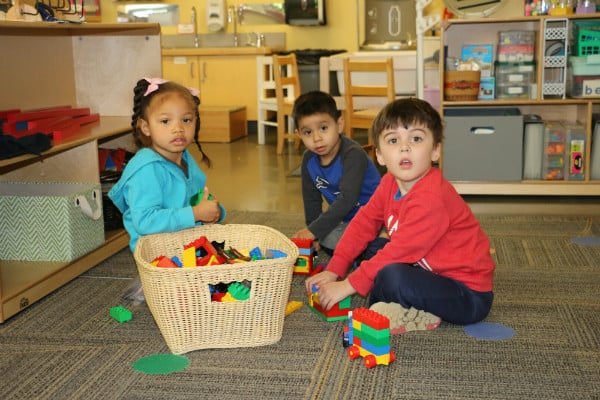
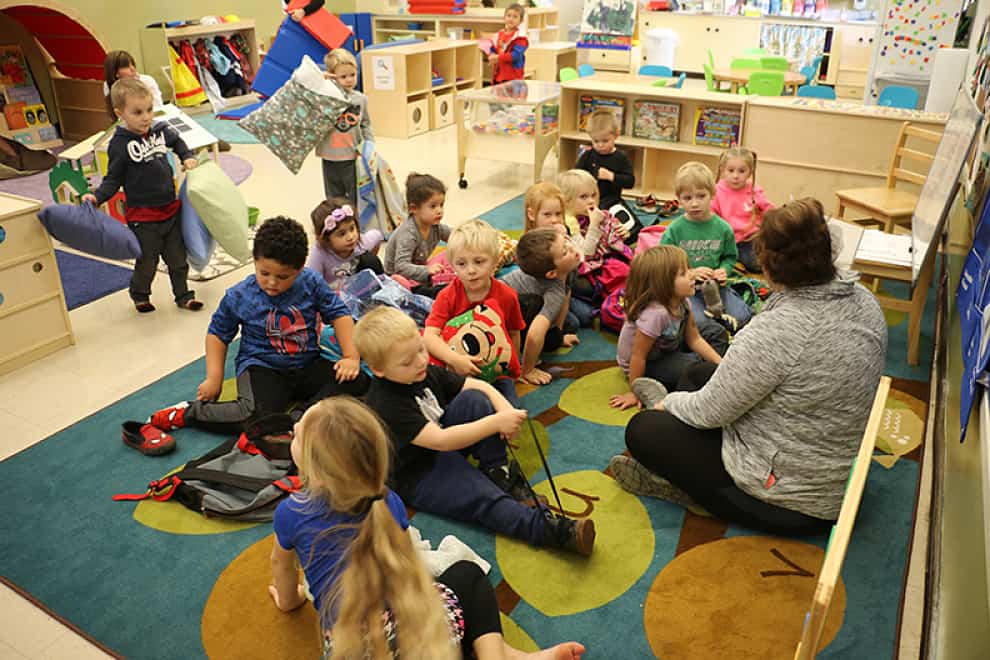
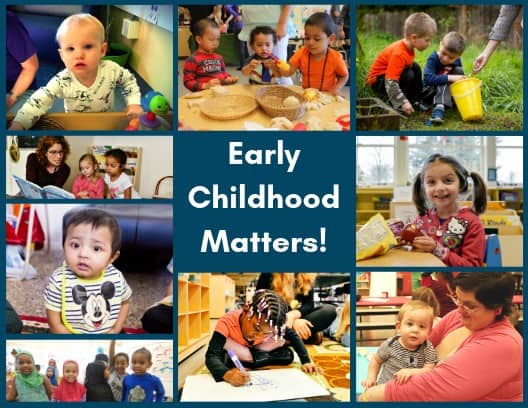
Students in preschool classes at Earl Boyles (above) and Yoncalla Elementary Schools (below).

The profound cognitive, social, and emotional experiences children have in the first five years of their lives set the foundation for all future learning. “If we want to improve health and education outcomes in Oregon, we need to ensure all kids have equitable access to high-quality early care and education,” says Swati Adarkar, president and CEO here at Children’s Institute. “Lawmakers need to understand the connection between the early years and long-term academic success. We work alongside partner organizations around the state to make that case.”

Making the case takes more than presenting decades of research on the long-term benefits of high-quality early education. In 2010, we launched the Early Works initiative to demonstrate the impact of combining high-quality preschool with other supports like infant and toddler play and learn groups, health care and housing supports, and parenting education.

Adarkar explains: “Our Early Works sites at Earl Boyles and Yoncalla Elementary Schools have served as learning laboratories. Lawmakers and educators can see firsthand what happens when families and schools meaningfully partner together to make sure kids get high-quality early childhood experiences.”

Working Together, Advocates Delivered a Consistent Message

Educating lawmakers on the importance of early childhood was only the first step. Because we’re still in the process of developing a comprehensive system for children under 6, it’s not possible to “invest in early childhood” in the same way the state invests in K–12 education. Instead, lawmakers needed to determine which programs and services to fund, and how much money to give them.

The nearly 40 advocacy organizations in Oregon’s Early Childhood Coalition (ECC) played a key role in helping legislators make those determinations. Dana Hepper, our director of policy and advocacy, helped lead the coalition, which formed in December 2017. “The investments in early childhood that were ultimately included in the Student Success Act were based on recommendations developed by the ECC. We worked together over six months to determine which programs and services needed to be funded and at what levels, educate lawmakers about their impact, and engage Oregonians to support the investments,” Hepper explains. Thanks to Governor Brown’s leadership leading up to the 2019 session, the ECC was able to use investments in early childhood included in the governor’s recommended budget, released in November of 2018, as a starting point for their legislative agenda.

Speaker Kotek echoed the importance of this advance work to determine the coalition’s priorities. “Success [in the legislature] is grounded in the hours and hours of work that are done even before the session starts in January,” she told attendees of the City Club’s Friday Forum last month. “Education experts consistently told us that more resources for early childhood education were necessary if every student were to be able to succeed.”

The consistency of the message was key. “The ECC was successful because we aligned our efforts by aligning our missions,” says Cara Copeland, executive director of the Oregon Association of Relief Nurseries. “When early childhood providers work and fundraise in isolation, they lose sight of the fact that families raising young children need a variety of supports in order to thrive. A family may receive support from a Relief Nursery to help build their protective capacity, but after that child leaves our therapeutic classroom the parent must still have affordable child care and a plan for quality preschool.”

The ECC’s requested investments in Relief Nurseries, Early Head Start, parenting education, Oregon Pre-Kindergarten, Preschool Promise, Early Intervention and Early Childhood Special Education, an Early Childhood Equity Fund, and opportunities for the early childhood workforce were all included in the Student Success Act.

ECC recommendations to fund the universal voluntary home visiting program “Family Connects” and launch a task force to address Oregon’s child care crisis were also passed by the legislature this year in separate bills.

Parents and Educators Spoke, and Lawmakers Listened

Evidence-based policy recommendations on their own are never enough to sway lawmakers, especially when it comes to allocating record amounts of money. To pass the Student Success Act, legislators needed to hear from those most impacted: parents and educators. When the Joint Committee for Student Success (JCSS), co-chaired by Senator Roblan and Representative Smith Warner, announced their state-wide listening tour to formulate a plan to improve education in Oregon, the ECC pushed for early learning sites to be included.

The JCSS sought to understand Oregon’s education crisis: the state ranks 49th in the nation for high school graduation, has the fourth-worst chronic absenteeism rate, and is in the midst of a behavioral crisis. “Research shows that all of these issues are tied to early childhood experiences,” explains Danielle Pacifico-Cogan, our director of community affairs. “But stories from real people have a bigger impact than statistics. When lawmakers visited early learning sites, they were able to hear directly from parents who want and need high-quality early care and education for their young children.” Members of the JCSS reported to Speaker Kotek that this listening tour was one of the highlights of their legislative careers.

“The message they heard was consistent across the state: early childhood services and programs deliver huge benefits, but many families don’t have access to them,” Pacifico-Cogan says. Thirty-thousand children living in low-income families in Oregon currently lack access to high-quality preschool; child care in the state is just as scarce.

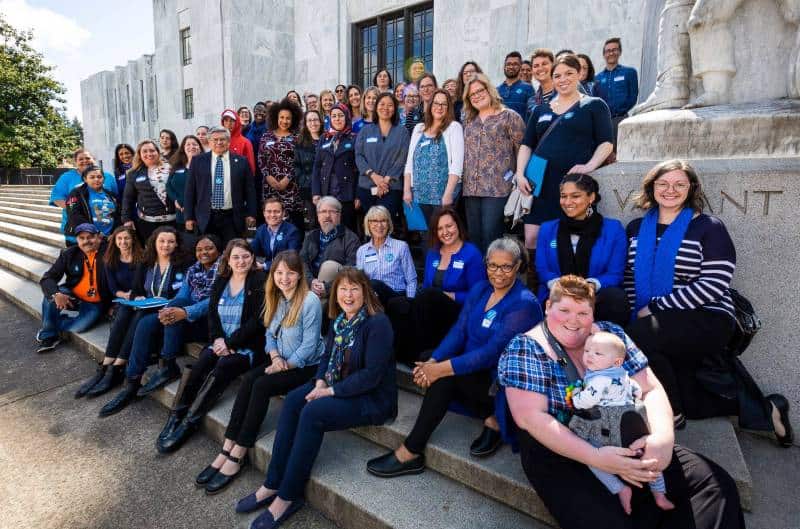
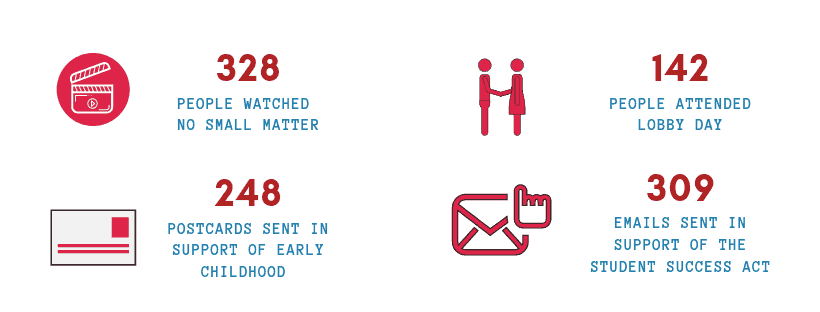
In addition to bringing lawmakers into early learning settings, the Early Childhood Coalition brought supporters to Salem for Early Childhood Lobby Day. Over the course of the day, nearly 150 parents, educators, child care providers, and advocates met with 63 state lawmakers to voice their support for the coalition’s agenda.

Amanda Manjarrez, director of advocacy for Latino Network, participated in small group meetings between constituents and lawmakers throughout the day.

“Lawmakers hear from me all the time about the need to fund culturally specific early childhood programs. On Lobby Day they heard from providers who need these resources to close opportunity gaps for children of color and dual language learners. They met parents who want access to programs like Juntos Aprendemos that equip Spanish-speaking parents and kids with the skills they need to succeed.” The Student Success Act includes $20 million over two years for an Early Childhood Equity Fund dedicated to culturally specific early learning services.

The coalition also engaged supporters who couldn’t make it to Salem. Attendees of two screenings of the early childhood documentary No Small Matter wrote postcards to their senators in support of early childhood investments; hundreds of other voters sent emails. All of this was part of the ECC strategy to enable constituents from across the state—particularly those represented by members of the JCSS—to share their lived experiences with lawmakers, and to support these stories with data. The end result: lawmakers learned that in Oregon—like in many other parts of the country—there is broad support for funding for early childhood.

Early Investments Have Long-Term Impacts

This year’s historic investments in early childhood followed years of research, innovative initiatives, partnerships, and community engagement. Following the announcement that opponents of the bill will no longer be working to refer it to the ballot, this funding is now one step closer to reaching critical early childhood programs and services. Over the coming months, we’ll continue to work with our ECC partners to share personal stories from across Oregon about the impact of early health and learning. We’ve seen how important the voices of parents, educators, and health care providers are, and we’re committed to making sure they get heard. If you’d like to add your voice to this movement, use the link below to share with us why early childhood matters to you.