Advocates, Parents Call on Oregon Legislature to Protect Preschool for All

Advocates, Parents Call on Oregon Legislature to Protect Preschool for All

On Tuesday, a broad coalition of parents, early childhood educators, and advocates gathered at Escuela Viva in Southeast Portland to speak out in support of Preschool for All in Multnomah County—a nationally recognized, voter-approved model for universal preschool.   

Advocacy organizations, parents, and early learning and care providers gathered at Escuela Viva in support of Multnomah County Preschool for All on Tuesday, June 24. 2025. Photo: Chris Hagan Photography

The gathering was a response to Oregon lawmakers’ last-minute changes to Senate Bill 106, seeking to eliminate Preschool for All by 2027 despite broad voter approval of the initiative in Multnomah County. 

The amendments to SB 106 were posted on the Oregon Legislature’s website late Monday night without public notice—just days before sine die, the official end of the legislative session when no further action can be taken on bills. 

Advocates came together to protect Preschool for All because they believe in supporting local, equity-driven solutions to the child care crisis. Rather than engaging in a thoughtful conversation about tax collection, there was an attempt to dismantle the program entirely—a move that reinforces the importance of ongoing community engagement and discussion. 

Many Portlanders agreed. Some estimate that legislators received up to 5000 emails/calls protesting this effort. Their voices were heard. The county preschool program appears to be safe for now, with the bill not advancing out of committee. 

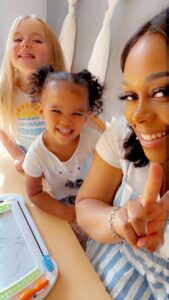
Oregon children have the right to an early education, regardless of their race, family income, or zip code. Lydia Gray-Hollifield, a Portland parent and former preschool worker, highlighted the difficult choices many families face when trying to access child care. 

“No mother should have to choose between rent and child care, but that is the reality for so many of us. Hands off Preschool for All,” she said.  

Lydia-Gray Hollifield, a parent and former preschool worker. Photo: Chris Hagan Photography.

While all families who need child care benefit from universal preschool, Preschool for All invests directly in lower-income families with young children, creating a more equitable system and delivering real resultswhile supporting a stable workforce and sustainable business economy.  

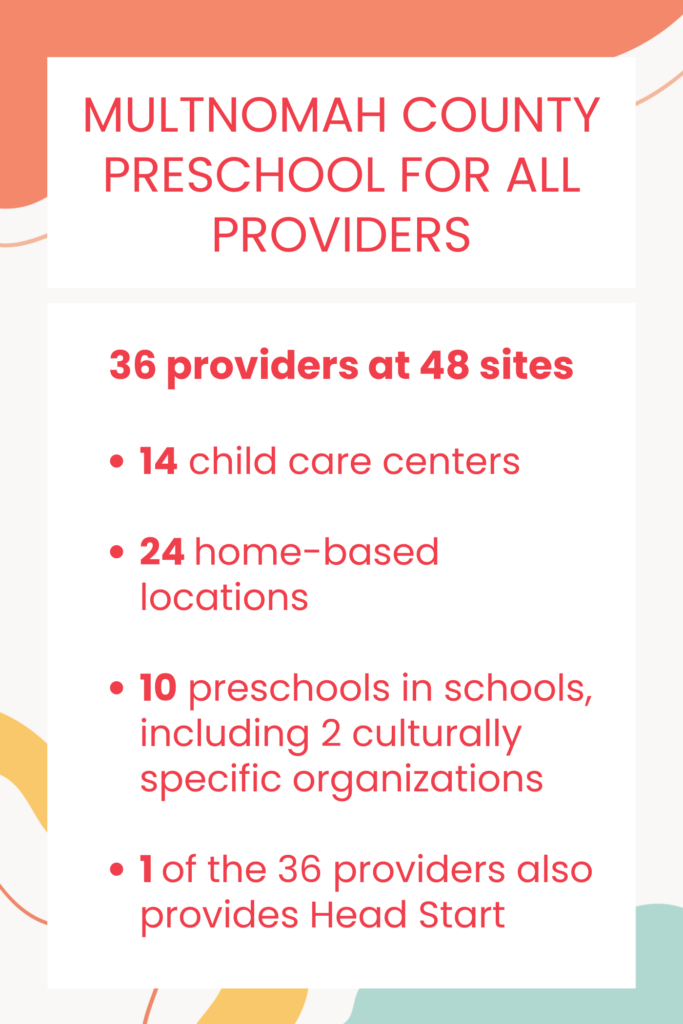
The program currently funds over 130 providers—many of them culturally specific or home-based—and will serve nearly 4,000 children in the 2025-2026 school year, an increase from 2,225 from the year before. 

At a time when the federal government is actively eliminating funding for early learning programs, Oregon lawmakers have a responsibility to protect the few investments that exist, especially community-driven solutions that expand access to preschool, and support the healthy development and long-term success of children and families.  

Tuesday’s gathering was a testament to the coordinated efforts among early childhood advocates, parents, and early learning and care providers who continue to show up for Oregon’s young children and speak up in support of community-designed solutions.  

“This is one of the best investments we can make in our current economy and in our future,” said Dr. Bahia Overton, Executive Director of Black Parent Initiative. “It’s a program created by the local community to better serve our entire community. We ask the Governor to honor the dreams and vision of Multnomah County voters.” 

Dr. Bahia Overton, executive director of Black Parent Initiative, speaks at a gathering of early childhood advocates, parents, and providers on Tuesday, June 24, 2025. Photo: Chris Hagan Photography.

Children’s Institute will continue to track this issue at the state level in the coming months, during the legislative interim and in the 2026 legislative short session.  

Organizations represented at Tuesday’s event included: Family Forward Oregon, Latino Network, Black Parent Initiative, APANO, Unite Oregon, Friends of Preschool for All, Children’s Institute, Oregon Food Bank, ILWU Local 5, Oregon Working Families Party, Portland DSA–Family Agenda Campaign, and Portland for All. 
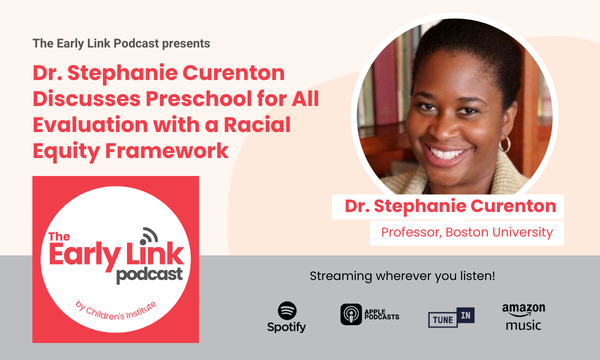
Dr. Stephanie Curenton Discusses Preschool for All Evaluation with a Racial Equity Framework

Dr. Stephanie Curenton Discusses Preschool for All Evaluation with a Racial Equity Framework

Summary

This episode of The Early Link Podcast features Dr. Stephanie Curenton, a professor at Boston University’s Wheelock College of Education and Human Development and the lead evaluator for Multnomah County’s Preschool for All program. Dr. Curenton brings her personal and professional expertise in early childhood development, emphasizing her passion for creating high-quality early learning experiences, influenced by her own time as a Head Start student.

Dr. Curenton outlines the objectives of the Preschool for All program, which is now in its third year, with a racial equity framework built into its design. The program, offering more than 2,000 preschool slots for the 2024-2025 school year, aims to create equitable access to early learning opportunities for families throughout Multnomah County. She highlights the intentional efforts to reach children from diverse racial, ethnic, linguistic, and socioeconomic backgrounds, emphasizing that equity must extend beyond race to include ability, gender identity, and financial considerations.

“What this mother said is nothing about us without us, and that was really this value of making sure that we center the voices of the children and families who are actually enrolled in this program and that they have a stake in this, and that they have access to all of this information to help learn and grow. I think for me, the responsibility as researchers that is placed upon us to make sure that we are sharing information and that we’re telling the stories of the community in a way that is respectful, a way that is really honoring who they are and the values that they place around this, and what the community has invested.”


More about The Early Link Podcast

The Early Link Podcast highlights national, regional, and local voices working in early childhood education and the nonprofit sector. The podcast is written, hosted, and produced by Rafael Otto, Children’s Institute’s director of communications.

Listen to more episodes of the Early Link Podcast here or stream on Spotify, Stitcher, Amazon Music, TuneIn, and Apple Podcasts.

What We’re Reading: Preschool for All

What We’re Reading: Preschool for All

What if there were a way to connect every 3- and 4-year-old in Multnomah County to free, inclusive, culturally responsive preschool experiences? This inspiring goal is coming to life through Preschool for All, a program built through long-term community engagement with parents, educators, policymakers, organizations and early childhood specialists. In just one year, Preschool for All has made the dream of preschool possible for more than 700 children at 47 sites in 16 zip codes across Multnomah County.

As one of the most expensive states in the nation for preschool, public funding for preschool in Oregon has been limited, reaching fewer than 20 percent of three- and four-year-olds in the county. Within this already severe lack of access, racial disparities intensify the impact of inequality in Oregon and across the country. According to the State of Preschool Annual Report (NIEER 2020), 59 percent of white three- and four-year-olds were enrolled in preschool, compared to 43 percent of Black children and 46 percent of Latinx children in the same age group. This imbalance only compounds the systemic disadvantages faced by BIPOC children and communities as they progress through the education system. Access to preschool makes a huge difference in supporting children and families early on and transforming unjust circumstances into opportunities where everyone can thrive.

Preschool improves life-long health, education, economic, and social outcomes for children and their families. But as research from Schools Skills and Synapses shows, it’s also a great investment for communities, where every dollar spent on high-quality preschool represents a return of $7–10.  Because of this exponentially positive benefit, Preschool for All receives its funding from a small personal income tax on those with the largest incomes in the county. This 2-3 percent tax allows individuals with the county’s highest earnings to support and improve the lives of those with less access to financial resources, all while boosting outcomes for their own communities.

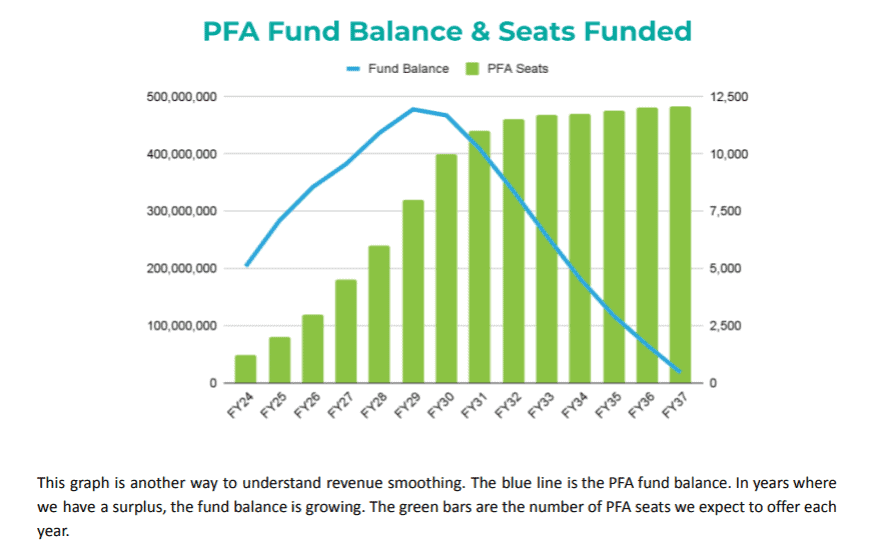
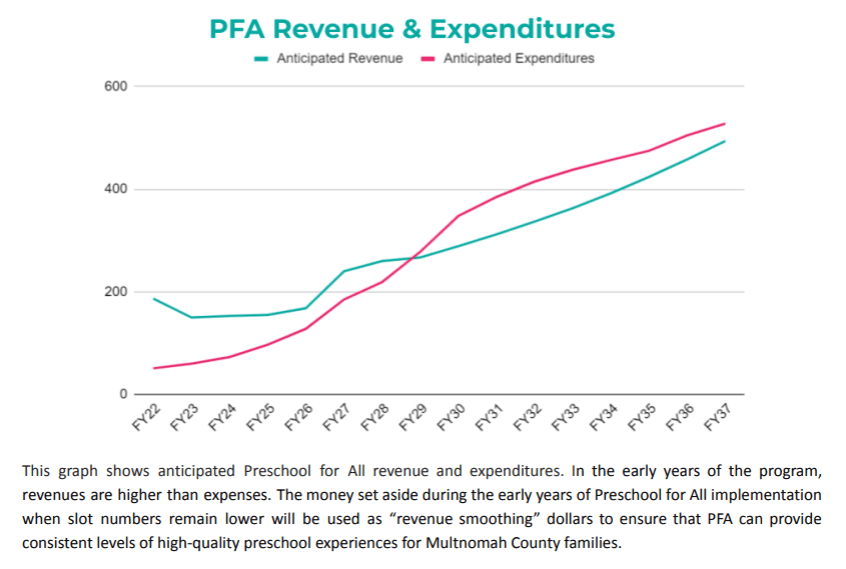
While tax revenue from personal income naturally varies from year to year, Preschool for All ensures a stable funding structure and level of service to families through three strategies: a reserve fund, a contingency fund, and revenue smoothing. This preparation allows for the ebbs and flows of every decade to be managed from a steady, long-term perspective of abundance.

A graph showing expenditures for PFA funding.

Building a new system that will not just survive but flourish requires intentionality and time.  Through consistent evaluation, accountability, and a willingness to innovate, Preschool for All is ready to keep growing as both a smart public investment and a commitment to supporting the next generation.

Want to learn more about how tuition-free preschool can help by making sure every child has access to high-quality, joyful early learning programming? Check out the Preschool for All 2023 Implementation update or learn about the funding and budget plan for PFA in the report below.

Preschool for All is Changing Lives and Transforming Early Learning in Multnomah County

Preschool for All is Changing Lives and Transforming Early Learning in Multnomah County

Shaquoya Richmond, Richmond Learning Academy

Shaquoya Richmond, Richmond Learning Academy

​Shaquoya Richmond began serving three children at her Portland in-home child care facility, but didn’t know what she’d do as her waitlist grew.

Though she wanted to expand her Southeast Portland facility, the small business owner didn’t have the resources to do it on her own.

“My limitation was in knowledge,” Richmond said. “It wasn’t that I didn’t have the space, it was just that I didn’t know.”

Enter Multnomah County, which provided Richmond with mentors to guide her in required training and certification and money to turn her basement into a fully functional preschool with more classroom space and an additional bathroom. The additions allowed her to transition her preschool from her kitchen and living room to the basement.

Today, the Richmond Learning Academy is one of Multnomah County’s 36 providers in the inaugural year of Preschool for All, a program offering preschool slots to over 700 children ages 3 and 4 with free, culturally responsive preschool. Preschool for All prioritizes children who have the least access to early learning. This includes children from lower income families, those experiencing homelessness or living in or at risk of placement in foster care, and kids with developmental delays and disabilities. The program also prioritizes children who speak languages other than English and children of color. 

Preschool for All first welcomed county children in fall 2022 after voters approved the November 2020 measure to expand early education to young children. The program is funded by a marginal personal income tax on the county’s highest income earners and has generated more than $187 million since its inception through June 2022.More than 1,100 families applied for the limited slots available in 2022. To meet the growing demand for the program, the county is applying a multipronged approach to support existing providers through mentorship, assist those who want to expand capacity, or bring entirely new providers online.
The county is also playing a role in growing the early childhood workforce. ECONorthwest, an economics consulting firm with offices in Portland, estimated the county will need 2,300 new teachers for Preschool for All and other preschool programs to reach universal preschool in Multnomah County.* The goal is for many of those teachers to have the cultural and linguistic backgrounds that match the families they’ll be serving. 

The county plans to add at least 400 slots to the 2023-24 school year to reach its goal of 1,100.

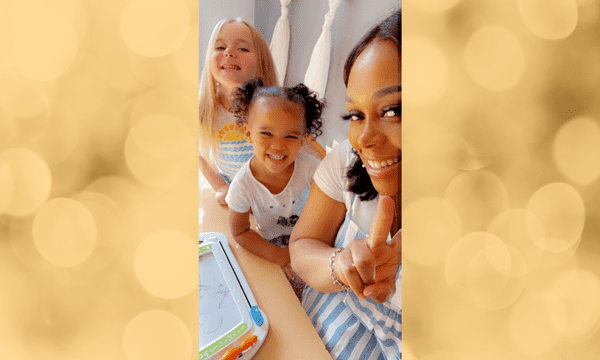
Christine Treadwell & her daughter, Ramona

Ramona

Life changing for families

Halfway into the school year, parents and providers say Preschool for All is working. Children are developing key social emotional and problem-solving skills, literacy skills, and beginning to learn key concepts they’ll need for kindergarten. Preschoolers who are on early childhood special education plans also receive services in group settings, rather than at home. And parents, who often bear the brunt of costly child care, have more flexibility in their budgets and lives.

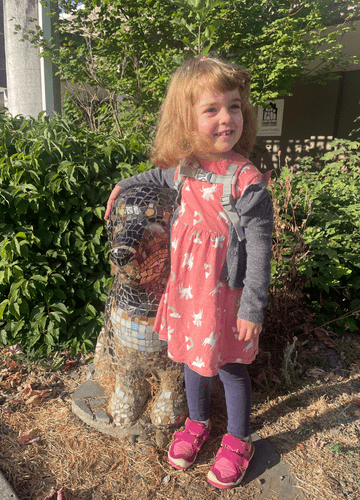
Parent Christine Treadwell learned of Preschool for All on a Facegroup group for free items. Once she learned how many slots were open, she didn’t think her 3-year-old daughter Ramona would be lucky enough to secure one. Months after she applied, she got the news she needed. 

“It was pretty life changing,” Treadwell said.

The single mom of two daughters lives on food stamps and said the only child care she could afford was through Portland Parks & Recreation, where she could enroll Ramona for three days a week for two and a half hours each day. She met income qualifications and would pay $75 per month. Still, the limited hours of care only gave her time to do laundry or grocery shop. It wasn’t enough time to find a job with more consistent hours.

Now that Ramona is in Preschool for All five days a week for six and a half hours per day, Treadwell works at a coffee shop while her girls are at school. She’s able to earn money and then spend quality time with her daughters when they come home. She said she’s hoping to land an administrative role soon.


Karen Huggins, Friendly House

Karen Huggins, Friendly House

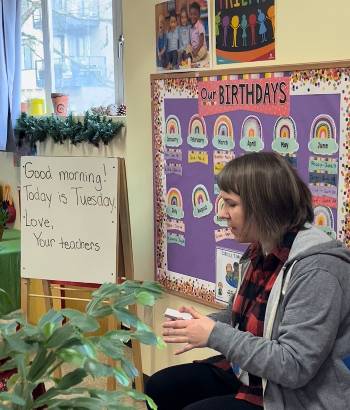
​Karen Huggins, a Preschool for All teacher at Friendly House in Northwest Portland, said one of the huge benefits to families is their savings in child care costs.

“Providing child care is a huge burden on families,” Huggins said. “If you have that one or two years of support where those kids have a safe place to go while they’re at work – it is important.”

A growing ecosystem

As the county stands up a new program, it will take time to support a burgeoning local early learning ecosystem, said Leslee Barnes, director of Multnomah County’s Preschool & Early Learning Division.

“Preschool and early childhood had been neglected for decades,” Barnes said. “We had to meet providers first where they were at.”

Some teachers and providers say they’re watching how the program unfolds and have questions now about curriculum, development of a substitute teacher pool, payroll systems, and increases to teacher pay.

Angie Garcia, program director at Escuela Viva Community School, which supports development of English and Spanish skills, said providers will need to speak up about what’s working and what isn’t to help make Preschool for All as successful as possible.

“There’s no way they won’t be able to do this without a steep learning curve, and we all need to be willing to pitch in to make this program a success,” said Garcia, who advocates for universal preschool to provide early learning opportunities to all children, not just those who were underserved.

“I think that people are cheering us on,” Garcia said. “Because if we’re successful they can emulate that model in their county or part of the state.”

Richmond, who spent 13 years in the medical field, before venturing into early education said the investments, mentorship, and coaching support she receives from the county helps her create the kind of high quality care she would want for her own children.

“The program is new and we’re all learning together,” Richmond said. “With Preschool for All, there will be more high quality care. It will take away the stigma that is in child care homes because of the expectations they have for us as providers.”

As the program evolves and grows, Huggins said she is hopeful the program continues to be funded and that it will hire more qualified teachers as the program expands. She also wants people to notice the program’s contributions to communities.

“I hope it’s something that stays in place for a long time,” Huggins said. “I’m excited to see as the program continues to develop and progress if we are going to see more alignment with the public schools, so we see that the work we’re doing is getting kids ready for kindergarten.

Richmond Learning Academy

Photo courtesy Richmond Learning Academy

A focus on social-emotional development

Since starting preschool in September, Treadwell already sees the changes in Ramona, who spent her toddler years during COVID in sparse contact with other children her age. Ramona spends more time talking and interacting with her diverse classmates, while also broadening her perspectives.

“When she went in, she was very quiet and didn’t know people’s names and played by herself,” Treadwell said. “Now, she’s giving hugs. Socially that’s awesome. She’s practicing talking more, and she’s coming home with fun science and animal behavior stuff and looking at the world with a different lens and perspective.”

Garcia said such social and emotional learning is a key component of preschool where a child develops emotional literacy. “They understand and can articulate when they are happy, sad, tired, hungry, frustrated.”

If we can raise this next generation of children to know their value as an individual and as part of a community….if they are able to articulate what they think and feel, and equally hold space for what other people think and feel…if they are able to find common ground with others, they will be free to grow and develop in all the other important ways,” Garcia said. “And I can imagine no greater gift to give to our children and to one another.”

Additional information

The 2023-24 application will open in spring 2023. Learn more about Preschool for All in Multnomah County

*This analysis was conducted in 2018 and was part of the Preschool for All Task Force Report released in 2019.

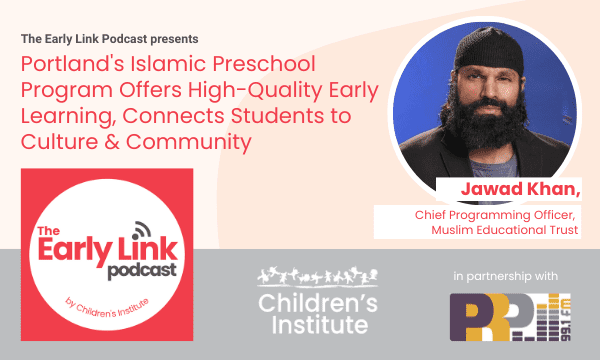
Portland’s Islamic Preschool Program Offers High-Quality Early Learning, Connects Students to Culture & Community

Portland’s Islamic Preschool Program Offers High-Quality Early Learning, Connects Students to Culture & Community

On this segment of The Early Link Podcast, host Rafael Otto talks with Jawad Khan, chief programming officer at Muslim Educational Trust and a member of the Trust’s board of directors.

Guest:

Jawad Khan has spent 22 years with Muslim Educational Trust as a teacher, college counselor, and administrator, and previously worked in the tech industry. Khan is based in Beaverton, Oregon and is an advocate for expanding preschool in Washington County.

Summary:

Khan shares about the Muslim Educational Trust, including how many students served, the importance of preschool in their focus, and Khan’s own personal experiences with the children he has worked with. He also talks about how the Trust acts as a cultural navigator, why a culturally-specific approach is effective in education, and addresses some of the challenges for students who are not in a culturally-specific setting. Tying into this, Khan brings up how the school addresses anti-immigrant/anti-Muslim sentiments with students. Khan also discusses his work to expand preschool in Washington County, detailing progress and what he hopes to accomplish.

Transcript

[00:00:00] Rafael Otto: Hello everyone. This is the Early Link Podcast. I’m Rafael Otto. You can catch us on 99.1 FM in the Portland Metro on Sundays at 4:30pm or tune in at your convenience, wherever you find your podcasts. That includes iTunes, Spotify, Stitcher, and Amazon Music and as always on our website at childinst.org, where you can subscribe to our podcasts and our newsletter and learn more about our work in Oregon.

My guest today is Jawad Khan the chief programming officer at the Muslim Educational Trust and a member of the Trust’s board of directors. He has spent 22 years with the Trust as a teacher, college counselor, and administrator, and previously worked in the high-tech industry. He’s based in Beaverton, Oregon, and is an advocate for expanding preschool in Washington county,

Jawad, it’s great to have you here today.

[00:00:50] Jawad Khan: Thank you so much, Rafael. It’s a real pleasure to be here and looking forward to the conversation.

[00:00:55] Rafael Otto: I am too. And I would love to just start with more about your background. I know that you worked in the high-tech industry. You worked in the startup environment for a while, founded a company, and now you’ve been in the education world for more than two decades. Tell us about that background and how you came to the trust.

[00:01:12] Jawad Khan: Well, you know, I think it’s a little bit of a serendipitous journey. I think I look at it that way at least. I didn’t intend to work in the nonprofit and educational world when I started out. My parents immigrated here from India in the early seventies. I lived across the United States in multiple cities. Texas, California, Ohio, Colorado, Washington, South Carolina. I think a couple others I’m missing right now.

[00:01:37] Rafael Otto: All over!

[00:01:38] Jawad Khan: All over, all over. So I got to see a lot of great places. And I came to Oregon in the early nineties and finished high school here and went to college. I was going to, and I did actually, go out and work in the high-tech industry for a bit and then I started my own startup, as you mentioned, and with my friends from college, and we wind up selling that. And I was going to go to business school maybe after that. But I received an email from the Muslim Educational Trust, asking if I would like to teach. And really something like this organization and it’s very unique and the way that it addresses holistically, a lot of the challenges that the immigrant refugee population faces in a new world. I would have loved to be part of such an organization or be part of such a school when I was growing up. So I decided to defer business school and go and teach and I’ve been here ever since. And it’s been a real pleasure and a real joy to be part of this, and has also given me that experience about how much difference education can make.

[00:02:43] Rafael Otto: Tell me more about the trust. You have preschool classrooms all the way through grade 12. How many students do you serve? Tell me more about what your school looks like.

Please download the full transcript below.