Echo Shaw Staff to Families: We’re Thinking of You and We Miss You

Echo Shaw Staff to Families: We’re Thinking of You and We Miss You

How is the COVID-19 pandemic affecting your corner of the early care and education world? Please email Ashley Walker at ashley@childinst.org if you or someone you know can help us to illustrate the on-the-ground reality for educators, families, small business owners, child health workers and others.
Dr. Perla Rodriguez, as told to Ashley Walker

Principal, Echo Shaw Elementary in Cornelius, OR

Echo Shaw Elementary School is an entirely dual-language program serving students from pre-k to eighth grade. In this piece, Rodriguez shares how her school and community are meeting new challenges posed by the COVID-19 pandemic.

On Technology 

As far as the transition to distance learning is going, our district as a whole has been one-to-one for a long time, with technology for every student. That’s Chromebooks for the older students, a mixture of iPads and Chromebooks for kindergarten and first grade, and iPads for pre-K. So we’ve been able to try different kinds of apps with students at different times. I can’t imagine what we’d be doing if we didn’t have that one-to-one tech availability. Some families don’t have WiFi, and the district is working on getting hot spots distributed to them.

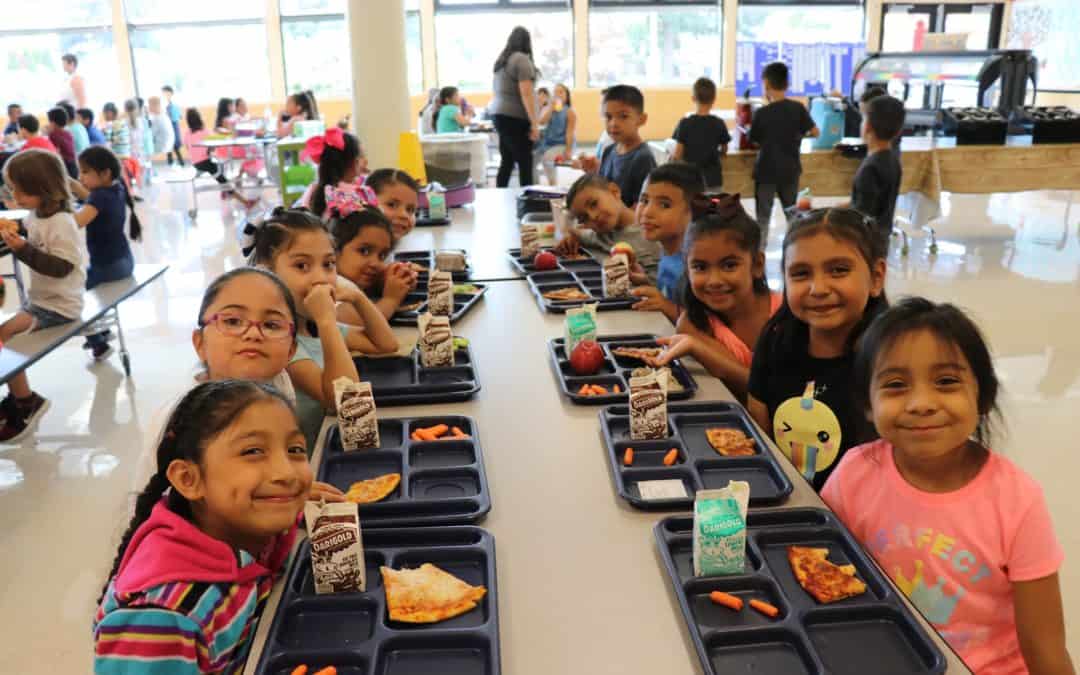
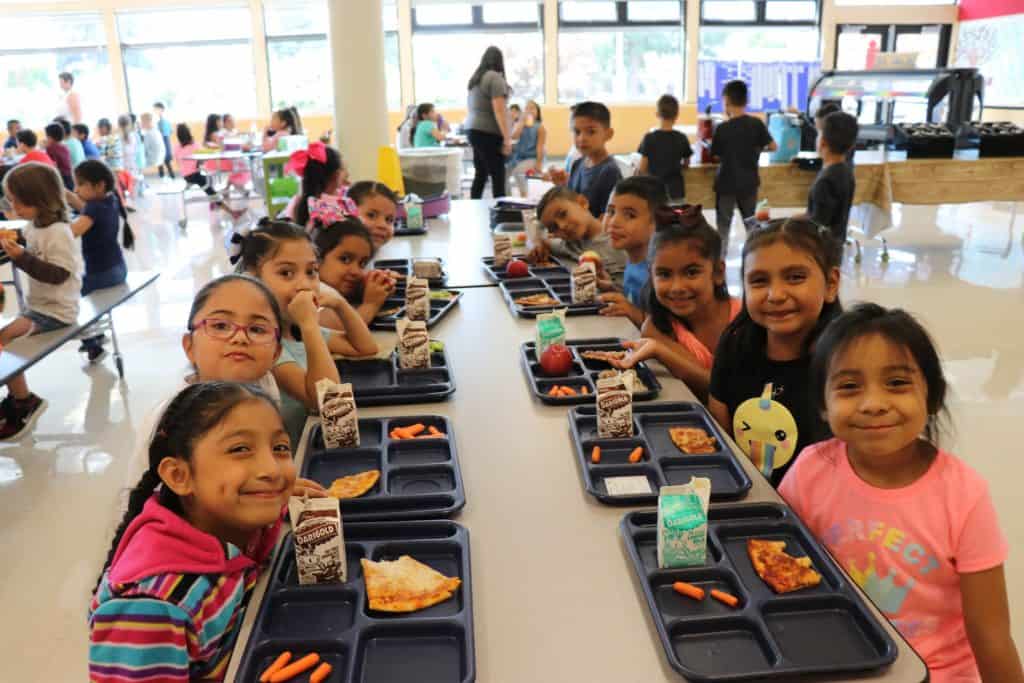
Students haven’t gathered in the cafeteria since mid-March. Photo courtesy of Echo Shaw Elementary.

Both of our pre-k teachers believe that screen time as a tool for learning can be important, but it hasn’t been a priority. But now that things have moved online, it’s becoming clear that an iPad is just a tool; you have to know how to use it. Pre-k, kindergarten, and first graders are just learning how to read and write. If you don’t know how to spell “Google Classroom,” everything is hard!

This is an opportunity for us to do some learning about appropriate doses of technology for the youngest children, and what to do with that time. Looking back, if we knew what was coming, we probably would have been doing technology as more than a center activity, more than another way to do math games, you know? I think it’s fair to say there would have been more direct instruction around how to really use the technology as a tool.

On Flexibility and the School/Home Connection 

More than ever before, we’re relying on that parent-teacher relationship, and we’re learning side-by-side with parents. We’re spending a lot of time right now walking parents through how to access all the tools online. It’s a balance between wanting to provide a lot of tools and support to parents, without making the technology feel like a requirement, or like somebody will be in trouble if kids aren’t doing it. We’re framing it as, “We want to give everybody as many learning resources as we can, and we know that you’re going to choose the ones that work for your family, and we’re okay with whatever you’re doing.”

This is going to pass, and when it does, we’ll have so much more work to do if by then, your kids hate school and hate learning and associate technology and their teachers with, you know, “My mom would yell at me because at nine o’clock I wasn’t doing my math work.” We do not want that!

We’re telling them, if nothing else, it would be great if the kids watched the lessons teachers post and joined the classroom meetings. Right now we’re organizing classroom Google Meets. Teachers are working up to 20 minutes every day, live. And then they are posting math and literacy activities. A pre-k teacher has created a website, she uploads videos on YouTube, and she has a Facebook page for the class, because it’s easiest for the parents that way.

I don’t know if we’re doing anything right. I just keep telling all the parents and all the teachers that we just have to trust our instincts and what our gut tells us, then change it if it isn’t working. We’re humbling ourselves. We don’t have to act like we have it all figured out; I don’t remember taking a class in global pandemic preparedness.

On Concerns for her Community

I’m worried about a lot of our families, especially a lot of our immigrant families who have lost their jobs, who don’t qualify for a stimulus check even though they’ve paid into the economy here. Families who, given their legal status, they’re afraid to use any community resources, even though it would be perfectly appropriate for them to do so. In this political climate, everything is scary. If you’re undocumented or even if you’re here legally, but as a resident and not a citizen.  You now see where one of the new regulations that they just started a couple of months ago is around families who are applying for citizenship. If they’ve ever taken advantage of any public help, then they wouldn’t qualify. It’s horrible. So I worry about our families, just their well-being. I worry if they’re eating, and if they’ll reach out about that.

Schools are figuring out the best ways to help families. The teachers here at Echo Shaw, we have what we call the “School Sunshine Fund,” and teachers donate at the beginning of the year, and we use those funds to celebrate different events, like staff appreciation week, or if someone has a baby, we can get them something from the whole staff. But we’ve decided to use that money this year on gift cards to Winco and Walmart, so if we hear of any needs, or if we just know our families, we can stick a card in the mail just to say, “We’re thinking of you, and we miss you.”

Financial Lifeline Urgently Needed to Prevent Mass Child Care Closures

Financial Lifeline Urgently Needed to Prevent Mass Child Care Closures

Note: The Small Business Administration announced Thursday morning that the $349 billion fund for the Paycheck Protection Program referenced in this post has run out. Talks are underway about adding more funding.

As financial assistance programs roll out to small businesses across the country in response to the COVID-19 pandemic, early care and education providers in Oregon are reporting long waits and sometimes confusing guidance as they attempt to save their programs from permanent closure.

In addition to federal aid like the Paycheck Protection Program, a range of city, state, and nonprofit loans and grants are being offered to small businesses, often with separate application processes and documentation requirements.

While help is welcome and urgently needed, early childhood care and education providers are anxious about delays in response and follow up on applications they rushed to file as the COVID-19 pandemic shuttered their programs with little warning. That’s similar to the experience businesses have had in many other industries.

But advocates and providers point out that the integral role that child care plays in supporting frontline workers now and in future economic recovery efforts should elevate their status in relief efforts.

Not Just Another Small Business

In an email, Sahra Alizadeh, owner of Sweet River Bamboo Preschool and Nursery in Northeast Portland wrote, “Child care should not be clumped with other small businesses. This industry needs its own line of support with direct liaisons to funding, information, and support. We need to be treated like the essential service that we are.”

Alizadeh also noted that smaller family and home-based programs are especially vulnerable, given their reduced administrative and resource capacity to gather required documentation or navigate varying application requirements and systems.

Even before the SBA funding ran out, many lenders were so overwhelmed by demand that they had already  stopped accepting new applications or were restricting them to existing customers with commercial accounts. One child care provider reported having to contact five different banks before she found one that would accept her Paycheck Protection Program application. Another reported that she was confused about whether applying for Prosper Portland’s relief fund  would violate another program’s rule against “double dipping.”

Weighing the Risks of Emergency Care

Oregon’s closure of schools and businesses included most child care and preschool programs, with the exception of those providing emergency care for children of essential workers and first responders. Adding to providers’ stress is weighing the financial and health risks for themselves and their staff if they answer the call to serve as emergency providers. To do so requires an additional application filing to Oregon’s Early Learning Division. Operating as an emergency care provider does not guarantee that enrollment will be high enough to cover operational costs, which may be higher due to additional health and safety measures in place.

Overall demand for child care cratered when Governor Kate Brown ordered non-essential businesses to close in March.  On Tuesday, the governor outlined a framework for lifting COVID-19 restrictions, but could not commit to a firm date for the state’s return to business as usual.

That leaves providers flying blind as they navigate through a cloud of economic uncertainty.

Kassie Krauciunas with students at Portland Preschool in Southeast Portland

“Everything is feeling like a huge gamble right now,” reported Kassandra Krauciunas, owner of Portland Preschool in Southeast Portland. “I need to decide to stick it out, or pull out before I lose more money.  I cannot afford my rent and utilities on my own without income.”

Growing Advocacy Efforts

Advocacy efforts for early care and education providers and workers have gained some traction. On Monday, Oregon Representative Suzanne Bonamici, Senator Jeff Merkley, and Senator Ron Wyden called for Congressional leaders to provide $50 billion for child care.

“Parents in Oregon can’t return to work without child care, but availability will be severely impacted if we can’t find a way to throw a lifeline to providers,” said Dana Hepper, Policy and Advocacy Director at Children’s Institute. “It makes sense to preserve the programs that are already in existence and not able to operate through no fault of their own.”

A survey of Oregon child care providers from the National Association for the Education of Young Children reported that one in four could not survive a closure of more than two weeks without financial support. One out of five reported that they could not survive a closure of any length.

For now, providers continue to wait and worry.


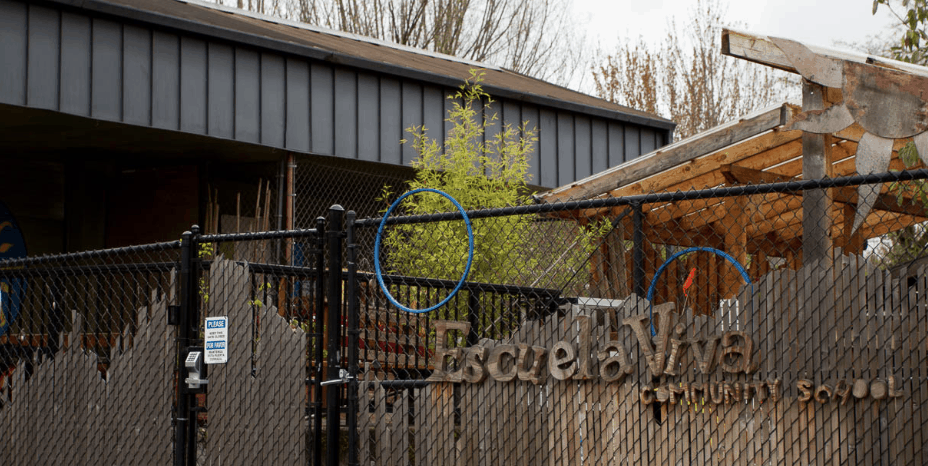
Escuela Viva has two locations, one in Southeast Portland and another in the Kenton neighborhood.

Angie Garcia, Program Director for Escuela Viva, shared concerns about her staff. “I am anxious to hire back all of my staff and get them back to work. They are worried and scared. Only a couple…have received a check from [unemployment insurance]. There are lots of barriers to staff getting the money they need to pay their bills.”

You can make an impact!

We know you care about young children and their families in Oregon. Turn your caring into action. Your tax deductible contribution allows us to continue our outreach to communities across Oregon impacted by the COVID-19 pandemic. Your generous donation makes a difference!

Podcast: Native Wellness in the Time of COVID-19

Podcast: Native Wellness in the Time of COVID-19


In this week’s episode, host Rafael Otto delves into the importance of focusing on Native American wellness and the impact of COVID-19 on Native communities.

Guests

Jillene Joseph is the executive director for the Native Wellness Institute and a partner with the Future Generations Collaborative.

Suzie Kuerschner is also a partner with the Future Generations Collaborative and serves as the education mode coordinator.

Background

The Future Generations Collaborative was formed by the Multnomah County Health Department and other community partners in 2011 to promote healthy pregnancies and cultural healing in the Native community, and to create a positive relationship between a government agency and the Native community.

The Native Wellness Institute is a nonprofit that exists because of the lasting effects of intergenerational trauma and how that contributes to the contemporary trauma that exists in Native American communities today. The institute focuses on providing opportunities for healing, growth, and development.

Transcript below has been edited for clarity and length

Rafael Otto: Welcome to the Early Link podcast. I’m your host Rafael Otto. Today we’re going to be talking about the impact of COVID-19 on native American communities, and I have the pleasure of speaking with Jillene Joseph, who is executive director for the Native Wellness Institute and a partner with the Future Generations Collaborative, and Suzie Kuerschner, who is also a partner with the Future Generations Collaborative and serves as the education mode coordinator.


Jillene and Suzie, welcome to the Early Link podcast.


Jillene Joseph: Thanks for having us!


Suzie Kuerschner: We appreciate the opportunity.


Rafael Otto: I wanted to start with the Future Generations Collaborative. If you could tell me about the work that’s happening with that group.


Suzie Kuerschner: Sure. Well, it has been my privilege for, I think. I’ve gone about 11 years now in terms of the point at which there was community and inspiration and responding thoughts about how we could kind of collaborate, come together and in particular be focused on generating, promoting, supporting the development of our families from a healthy perspective, a wellness perspective, [including recognition of] historic trauma. And that’s inclusive of boarding and residential schools and all of the things that have impacted our culture, our people, our health and welfare.


We recognized that fetal alcohol spectrum disorder… the use of substances during pregnancy—particularly alcohol, which produces the only lifelong disability from drugs and alcohol. We could look at it in a non-stigmatic way and really understand its presence. That it is an expression of the hurt and the pain and that its presence can carry with it shame, but rather an understanding of what is the opportunity, how can we address it?


In forming this, it was understood that we would not be an organization unto ourselves, but rather a collaborative and potential collective impact of everyone reciprocally, cooperatively, supportively, working together to create a non-stigmatic non-judgmental understanding of how fetal alcohol impacts all parts of life and all ages and stages.


How can we wrap around in a collaborative circle of care, a love and understanding of healing and understanding that is trauma informed, not only the environmental trauma that has happened within our indigenous community, but also the neurotrauma? That has come from that which we have needed to do, you know, to self-medicate. There is a prophecy that sort of guided us in the beginning and continues to. It was said that there was a time when there would be those who would come among us, who would be different and look different and in their differences, they would change the people. I’d really like to turn it over to Jillene to talk about how in so doing we recognized those folks who we identify as our elders and natural helpers who are really the community.


I’ve given you a bunch of gobbledygook around sort of expression of FASD. But really what’s important is … our community coming forward through groups and forums and listening sessions that guided the direction of the FGC and then carried that knowledge and continues to grow in its carrying of knowledge through our elders and natural helpers.


Rafael Otto: Well, Jilene, I’d love for you to talk a little bit about that as well, and if you could tell us more about the Native Wellness Institute.


Jillene Joseph: Yeah, sure. Thanks, Suzie. That was a great description. So the Future Generations Collaborative, we approach our work, we call it a four mode approach. We have the education mode that Suzie takes the lead on. We have an evaluation mode, we have a policy mode, and then we have a community engagement mode.


Myself and some of my colleagues at the Native Wellness Institute, we take the lead on the community engagement mode. We work with community members that we call elders and entry helpers. And they are the eyes and the ears of the community and they help us to do our engagement work by talking to people one-on-one, by helping to recruit people to attend our training and community outreach events. They help facilitate those events and community outreach. It’s a really unique, culturally specific model. We’re trying to provide services to our community members that might be impacted beyond the Fetal Alcohol Spectrum Disorder spectrum.


And then of course, we provide opportunities for healing as a way to prevent it as well. So the work that I do with my organization, the Native Wellness Institute, we’re based here in Oregon, Multnomah County, and we’re a national nonprofit. I like to say social profit because we’re benefiting society.


Rafael Otto: I like that shift.


Jillene Joseph: Yeah. This is our 20th anniversary, even though many of us that founded this organization have been doing this work for many, many decades, and we exist because of the lasting impacts of historical and intergenerational trauma and how that contributes to the contemporary trauma that we see in our communities today.


More importantly, we exist to provide opportunities for healing, and growth, and development. We provide training and technical assistance in a variety of areas. Our work has come to a screeching halt because of this pandemic. And so, like the solution-oriented people that we are, we turned it around.


We’re doing these daily, what we’re calling, Native Wellness Power Hours. Every day at noon Pacific time, we’re offering an hour of programming. Workshops, storytelling, comedy, concerts… All sorts of things. That’s been our response and contribution to the pandemic and just helping to bring uplifting messages and tools for people’s wellbeing and things like that.


Rafael Otto: What else are you hearing from communities about needs? What’s urgent right now related to COVID-19 and what’s happening across the state?


Suzie Kuerschner: A tremendous potential and opportunity… is to look at what can emerge as the strengths of nurturing families. In their bonding, their attachment… the joy of being with your child, the joy of playing and learning together.


One of the first things that we all saw as a potential takeaway was the ability to help grow that within families. But at the same time, recognize the tremendous anxiety, frustration, and just lack of, you know, predictability, etc, for families and how that can grow in a more challenging direction.


So how can we be in people’s lives, whether it’s through frequency of contact, through phone calls, but we’re all doing a lot and having some really nice responses on a daily contact base. We’ve been developing a toolkit that has activities, has specific COVID approaches, general and family supports from a developmental perspective.


Jillene Joseph: I think the Native community here, the two main Native-serving organizations, NAYA and NARA, have been outstanding in the things that they’ve done for the native community. And then within that, different programs, other agencies and the community have really stepped up to help reach the needs of the community.


So that’s just been beautiful. Online programming, culture nights, things like that. Everything went online. It has been really, really beautiful. I always say that we are trying to help our people realize that we are descendants of miracle survivors of genocide. We’ve been through pandemics before, and when we focus on and embrace that resiliency. That becomes a tool to help us get through this.


We’re an already traumatized community. And now here we are experiencing more trauma through this pandemic. So we’re very mindful of that and very mindful of just checking in on one another and providing opportunities for continued healing and continued opportunities for balance.


Beginning next week [are] some online support circles for women, for men, for two spirit, non-binary people, and for young people. This an opportunity for our community to come together online and just be together and share and offer encouragement or put a voice to what they might be experiencing.


Rafael Otto: In the collaborative. Could you say more about how widely it reaches? I know Multnomah County is involved, but how broad is the collaborative


Suzie Kuerschner: The Metro area is sort of its first circle. This wouldn’t have happened without Multnomah County Public Health department and their support in many ways, as an infrastructure.


The support that Multnomah County commissioners gave us from the beginning—we were able to develop and deliver a proclamation for the county-wide area so that it was really understood that it could, in fact, touch not only education, but housing and really importantly, justice­—community justice and then justice as a whole.


We are now a presence throughout Oregon. Yesterday, I was in a long conference meeting and then call with a variety of clients in both COOs and Douglas counties and shelter homes that we’re reaching.


So it seems to be growing… Looking at the stimulus package and what might be omitted, we are looking at the federal level…[how do] we make sure that those services are not waived or eliminated.


And there’s a federal bill that we’ll be looking not only support, but really help guide it’s deliverance and presence around fetal alcohol.


We have all of these concentric circle models, but there is this core, and at the heart of that core are the values and the commitments, the beliefs, the strengths in the beauties. Of our own indigenous Portland urban population, but in their generating of their good spirit and their good strengths of resilience, as Julian was talking about, those are radiating out through service systems for our county, metropolitan state, and then federal.


Rafael Otto: I did want to go back to what you were talking about Jillene with this, you know, the role of historical trauma and historical resilience, and Suzie, you brought it up again around indigenous values. And I wonder if you could just say more about that and how those intersect at this point in time.


Jillene Joseph: So historical trauma examples, you know, the boarding school, disease, massacres, all that sort of thing. What I always make sure that people understand is, yes, we have those examples of historical trauma that contributes to the intergenerational trauma that contributes to the contemporary trauma that we see and experience in our community today.


And then we also have the good stuff that was passed down. That’s that historical wisdom piece, or the historical resiliency piece. We have the cultural values, and we have the language. We have the songs and ceremonies, even if we don’t know what tribe we are, or we think that that hasn’t been passed down in our families, like it literally is within us, and our elders will call that blood memory.


So for example, my son, he’s an avid hunter and a rifle hunter. And a couple of years ago he wanted to learn how to bow hunt. So I had a colleague, a friend of mine who is an amazing bow hunter. He got to spend a week with him. And I had another friend, a good family friend, teach him as well, how to make his own bow as well as how to bow hunt.


During this pandemic, actually, he just finished his second traditional long bow. He would also jump on YouTube and look at YouTube and learn. What I told him was, you know, just close your eyes and rely on the knowledge that’s in your DNA and help that guide you as you’re making this bow.


So he would save the sinew from his elk and he would make his own string out of the sinew. And it’s just pretty amazing. And so that’s an example of that historical resiliency that we all have. And the interesting part about it is that one of the lasting impacts of trauma is chronic negativity. One of the lasting impacts of trauma is also almost like being addicted to chaos.


And this pandemic very much like feeds into both of those, right?


Rafael Otto: Sure.


Jillene Joseph: We can go down those negative rabbit holes or we can get into chaos. And next thing we know, we think we all have the virus. So being mindful of that and when we find ourselves spinning out in that negativity or spinning out in that chaos, like to allow that to be the trigger that makes us pause and to step back into the deep breathing.  Or reach out to our friend or get outside or have some movement, do something to turn that around. Through all these efforts that we’re doing with the Future Generations Collaborative, through my work at the Native Wellness Institute, we’re trying to be very mindful of that and to help our people focus on the positive and have that hope and have that sense of resiliency.


Rafael Otto: Suzie, did you have something to add to that?


Suzie Kuerschner: Well, I think that was beautifully said. We have at the core or the center of many of our traditional values, caring, sharing, and respect. And those values grow compassion and care and they are the strengths, as Jillene did so well at identifying.


Those are the things that move us forward. One of the things that I often find myself saying to people that my grandmother taught me is that when we have that actually joyous privilege of participating in people’s lives, we have the opportunity to hold up that mirror, that reflection of their beauty, because so many of our relatives, the hurt and the trauma—it maps the negative. Particularly when I work with families and with parents, you know, one of the first priority activities that I want to do is —yes, it’s good to hear what everyone’s challenges are—but let’s look at what each other’s beauties are. We need to really practice.


As any people who have had oppression or hurt need to do is—let’s look at what is right. What is that beauty? What is that goodness within ourselves that we can see? What can we tell each other? All this talking and doing community healing is… Let’s grow good gossip.


You know, we can say what we’re noticing each other doing wrong. Let’s just turn that well. Let’s particularly turn that for our children. So when we take these stories and we bring them forward, let’s hold up that mirror so that they can see their beauty. Let’s tell them in these frustrated times. And home. Let’s point out to them what they’re doing is beautiful and kind and let them see those opportunities. Whether it’s the older kids creating a poem or the younger children doing a drawing and sending it to an elder in the community that you know is lonely or a grandparent. There are so many ways that we can help our children and families really put forth those very ideals and traditions that our ancestors showed us we have. As Jillene says, those are the blocks of building those foundations that have created that resiliency.


And I think that’s really one of the great treasures to share—not only among ourselves right now—but with all peoples right now.  That ability to look out and to see that beauty and to bring it in and then to give it out as a gift to others.


Rafael Otto: I agree. I agree. That’s wonderful. I wanted to ask, I don’t know if there’s something that we should be aware of in terms of the tribal response to the pandemic in the context of how states and the federal government is handling things, and what does that dynamic look like right now?


Jillene Joseph: Well, I’ve been pleased to see, at least in the Pacific Northwest tribes, like weeks ago, we’re jumping on this and we’re using their sovereignty and closing their reservation borders as an example to help address this pandemic, you know, to keep their people safe. And there was a tribe up in Washington, the Lumbee tribe, who weeks ago started their own facility to deal with tribal members that could potentially become infected if their clinic couldn’t house them all. I think that response has been very proactive and because of social media, other tribes and other areas would see how other tribes are handling this.


Coming together and cooking for elders, putting food boxes together for elders and other families and delivering them, taking toilet paper to families that need them, and really, really stepping up. It’s just been beautiful.


And that really is an extension and a modeling of our traditional values, you know, that we care for one another. The traditional value of generosity. When we pause and just look at the responses. I mean, they are really based in our culture and it’s beautiful and it’s inspiring to see there’s other tribal communities that have high numbers of this virus already.


And so there again, when we look at communities that are already traumatized, when we look at the health disparities, and when we look at public health as a whole, traumatized communities are disproportionately represented with other diseases. This particular virus has great potential to cause much death and harm in our communities. We have to be super vigilant in protecting ourselves and protecting each other. And when we have close knit communities where maybe multi-generations are living together… close knit communities that may not have access to TVs, or radios, or social media, to even understand that we’re in a pandemic. We have to work extra hard to create the awareness and then create prevention opportunities too.


Rafael Otto: I wanted to ask you if you could tell us where people can find out about the Native Wellness Power Hour. You mentioned it earlier and it’s online. Is it through Facebook? How can people tune in?


Jillene Joseph: Yes, it’s on our Facebook page, Native Wellness Institute. We go live every day. If you miss it, you can go back to our Facebook page and watch it. Or you can also go to our website, nativewellness.com and we have all of the videos on there. We also have a YouTube channel under Native Wellness Institute, and you can go there to view them as well.


Rafael Otto: Suzie, earlier you mentioned the stay-at-home toolkit that’s going to be available for people.  If people are interested, how do they get that?


Suzie Kuerschner: We provide them a link that [offers] quite a packet. That sort of begins with an approach, especially from an indigenous perspective, but hopefully it will be relevant to others in terms of how are we looking at and talking with our children about this. And then we provide, as I mentioned before, developmental activities through the age range all the way through elderhood to be supportive to those multigenerational households—both activity and information based.


And hopefully it will be fun for families and children to use over time or however long we might be sequestered. And then people should feel very free with that link to make copies because we have multiple coloring books and activities, art activities, science activities, etc. that are in there.


Rafael Otto: All right. Well, thank you so much, Suzie, for joining me on the Early Link podcast today.


Suzie Kuerschner: Thank you. Thanks for the opportunity.


You can make an impact!

We know you care about young children and their families in Oregon. Turn your caring into action. Your tax deductible contribution allows us to continue our outreach to communities across Oregon impacted by the COVID-19 pandemic. Your generous donation makes a difference!

Home-Based Care Closes, Owner Struggles to Pay Rent

Home-Based Care Closes, Owner Struggles to Pay Rent

How is the COVID-19 pandemic affecting your corner of the early care and education world? Please email Ashley Walker at ashley@childinst.org if you or someone you know can help us to illustrate the on-the-ground reality for educators, families, small business owners, child health workers and others.

Shirley Hackett, as told to Ashley Walker

Owner, Shirley's Daycare in Clackamas County, OR

I’m the owner and operator of an in-home child care center that has had to shut down. When this all started, before schools officially closed, I had been mostly closed for a week already, because several of my kids had bad colds.

As that week went on, I lost one or two families, and as people started pulling out, the directions came from the state that schools should close. At that time, I was able to have one little boy whose parents still needed to work.

When information began to come out about becoming an emergency care provider for essential employees, I weighed it. It would just be me. And it’s already so stressful when just one new family starts, let alone a few all at once. I’m just a home. I’m not as set up for the transition to emergency care as a center might be. Ultimately, I decided not to apply. I felt guilty, but I’m not a young chicken, either!

Closing down is a financial hardship. I rent my home, and run the business out of it, so I had to call my landlords and tell them I couldn’t afford to pay full rent. And I’m self-employed, so it’s also tax time. 

The playroom at Shirley’s Daycare in Clackamas County sits empty. Photo courtesy of Shirley Hackett.

This last year, I made more, so I owe more. I don’t know if I need to get my taxes in right away to qualify for federal assistance to small businesses, or if I will start owing money as soon as I get them filed.

I’m getting a lot of my information from my existing community, Facebook and things. I live two blocks outside of Portland, so the city’s small business loans don’t apply to me. Clackamas County, where I am, may have something similar, but I can’t navigate the small business office there. Everyone is overloaded.

I’m not applying for unemployment, because two of my families are still paying, even though they can’t attend. Their wages aren’t affected because they’re essential workers, or able to work from home. One is a teacher. So I have that income, but it’s way less—a fourth of what it was.

My families have been affected too. In most cases, at least one out of two of the parents are still working. Sometimes remotely, or I have a grocery store person, and she’s essential now. But there are also hardships. And people still having to work, but their business is affected.

It’s been hard to be connected to resources. The Early Learning Division sends things out. I know they’re doing the best they can, but it takes some time. Everyone is overloaded. There’s no guidance on some things.

Laid off Educator Shares COVID-19 Impact on Life, Families

Laid off Educator Shares COVID-19 Impact on Life, Families

How is the COVID-19 pandemic affecting your corner of the early care and education world? Please email Ashley Walker at ashley@childinst.org if you or someone you know can help us to illustrate the on-the-ground reality for educators, families, small business owners, child health workers and others.

Caitlin Curtis

Early Educator and Advocate, Portland, OR

In this time of fast-paced transition and response, we spoke via email with Caitlin Curtis, a preschool teacher from Portland about the personal and professional impact of the COVID-19 pandemic.

As an early childhood educator, how is the pandemic affecting your work and your life?

Because of the pandemic, my school has closed. There was enough in reserve to pay teachers for one pay period, but we are a non-profit so we do not have the funds to stay open and continue paying employees. For the month of April, and possibly longer, we have been laid off, and the majority of us will be filing for unemployment.

As for my life, I’m social distancing in my apartment alone so it gets pretty lonely, especially going from a busy classroom to just me by myself at home. But I’ve been able to stay in contact with my friends, family and co-workers, so it’s all good.

And although we’ve been laid off, teachers at my school are  staying connected to our families. I hold virtual meetups on Zoom three times a week, we send out emails with resources and supports once or twice a week to our families. I record myself reading stories and send them to my families. We also have a google photo album the parents can upload pictures to and we are organizing a pen pal situation.

How is the pandemic affecting the families you serve?

Well, they currently have no child care, so they are tasked with caring for their children and, for most of them, working from home. We do have some families who are essential workers and one parent in particular who had to send their child to stay with family in order to keep them healthy, which I’m sure is very hard. Many parents are juggling working from home and also caring for their children full time and trying to keep them occupied and engaged, which is probably a challenge.

How have you been staying connected and informed?

I listen to the news on the radio, OPB to be exact. I receive updates from the Oregon legislature, my local representatives, and I follow media around what’s happening in Oregon. I do limit the amount of information I take in, in order to not panic. It’s a fine balance between staying informed and feeling overwhelmed.

I’ve been reaching out to my legislators to share my experience in child care during this pandemic, watching webinars on how child care is affected and what we can do, and signing petitions by different advocacy organizations to get more funding for childcare in the relief packages. I’ve been sharing ways to do this with other child care workers at my school and other centers, as well as with our families, so they can advocate as well. I think many people don’t realize their voice is so important during this time and that you can advocate while social distancing! We’ve also been sharing the information on getting emergency care with our families so they can apply if they qualify.

Thank you, Caitlin, for sharing your story with us, and for the work you continue to do for Oregon’s young children.