A Letter From Swati Adarkar

A Letter From Swati Adarkar

“The future depends on what we do today.”

- Mahatma Gandhi

Dear CI Friends,

What we are experiencing with COVID-19 is unlike anything any of us have known in our lifetime. The ways in which our individual and societal health and well-being are interconnected is finally becoming more broadly understood. It’s unfortunate that it takes a crisis for us to gain this clarity. Right now, we are witnessing the adverse consequences of decades of disinvestment in our public health and government agencies at the federal, state, and local levels. Low-income communities have been experiencing the brunt of this disinvestment disproportionately for years and now the broader public is slowly waking up.

We must be clear eyed about the consequences of our past short-sighted decisions and shift how we act collectively, now and down the road, knowing that building and preparing takes decades and consistency. Children’s Institute has always focused on prevention, and we believe it’s important to respond to the crisis swiftly while not creating more downstream problems by neglecting current urgent health and community needs.

We are doing all we can to support our partners and stay connected during this crisis. We are providing access to current information regarding protocols and guidance for early care and education providers and ensuring child care gets elevated as an urgent investment priority. We are staying connected to school leaders to help them support early learning and family engagement. We are also working with our partners in the Early Childhood Coalition to stay connected to national conversations and communicate in one clear voice to state and federal officials about what families and providers need. As information and supports start flowing from Salem and Washington D.C., we will continue to monitor, distribute, and translate relevant information while finding ways to center families and reach communities with diverse linguistic needs.

We know that the challenges for parents, families, and communities are mounting and changing day by day. The economic reality for many currently is stark, and the rapidly increasing loss of life is heartbreaking. Parents are juggling work and family with kids home from child care and school. But we are seeing many bright spots and cause for hope. People are pulling together in new, collaborative, and creative ways. More online learning options are available for teachers and families. Telehealth options are increasingly becoming available so that young children and families can remain connected with their pediatricians and primary care providers.

Even though our team is all working remotely we are more unified than ever in our shared commitment to support Oregon’s young children and families. And we are eager to work with all of you to pay close attention to immediate needs and not take our eye off our future—our children.

We also have the deepest appreciation and gratitude for the front line workers who are daily risking their lives to keep us safe and healthy.

Sending you and yours wishes of good health as we all look on the horizon for better times ahead.

With appreciation,

Swati

You can make an impact!

We know you care about young children and their families in Oregon. Turn your caring into action. Your tax deductible contribution allows us to continue our outreach to communities across Oregon impacted by the COVID-19 pandemic. Your generous donation makes a difference!

Advocates Push for Child Care Relief

Advocates Push for Child Care Relief

Today, CI sent a letter to Governor Kate Brown, Oregon’s Joint Committee on Coronavirus Response, and Oregon’s Congressional Delegation to advocate for swift, bold relief efforts for Oregon’s child care providers.   

Date: March 27, 2020

To: Governor Kate Brown; Oregon’s Joint Special Committee on Coronavirus Response; Oregon’s Congressional Delegation

CC: Oregon State Legislators; Miriam Calderon,Early Learning Systems Director; Fariborz Pakseresht, Department of Human Services Director; Dan Haun, Self-Sufficiency Programs Director; Alyssa Chatterjee, Deputy Education Policy Advisor to the Governor

Re: Child Care Relief Efforts

The COVID-19 pandemic has exacerbated Oregon’s child care crisis and highlighted the acute needs of families, the workforce, and providers. As the coronavirus threatens our health, safety, and economic stability, it is also threatening the vulnerable child care industry. Child care providers are at risk of permanent closure, undermining the ability of our workforce to return to work and for businesses to rebound once the threat from COVID-19 subsides. The economic impact will most adversely affect Black, Indigenous, People of Color (BIPOC) women, who more commonly work as child care providers and who are already most economically vulnerable.

Child care providers are especially vulnerable because, unlike public education, 70 percent of child care revenues are funded privately by families.[1] Therefore, recent actions to continue payments for Employment Related Day Care and Head Start/Oregon Pre-kindergarten will not prevent a majority of child care programs from closing. Child care providers serving families of all income levels typically operate on very tight budgets with a constant degree of uncertainty. Without immediate public investment, most providers will not survive the COVID-19 crisis.

Findings from a national survey[2] of child care providers conducted last week show:

  • Nearly 50 percent of providers report that the loss of two weeks or less of tuition will cause them to close their doors permanently.
  • Another 16 percent said they could not sustain closure for a month.
  • Some 25 percent were unclear how long they could sustain unopened.
  • Only 11 percent of child care providers reported they could weather the storm for an indeterminate period.

Child care is the unrecognized backbone of our economy. Child care and education providers allow parents to work while also supporting the health, safety, and development of children. Child care infrastructure allows many of our state industries to function. Prior to COVID-19, businesses across the state reported absenteeism, turnover, and staff shortages due to the lack of available child care in their region.[3] Child care closures resulting from the COVID-19 emergency will undermine the eventual economic recovery of the state. Strategic and substantial government intervention can strengthen the state’s child care infrastructure and establish a foundation for a strong recovery.

Oregon and the federal government need to invest boldly and quickly to protect the child care supply. Right now, we need child care providers on the front lines to provide care that is safe, reliable, and nurturing for children of essential workers.

In order to meet these immediate and mid-term needs, we need an investment of state and federal funds. Below are the policy and budget recommendations our organizations support.

First, include child care in your planning and use an equity lens in your process:

  1. Ensure an equity lens is applied to all investments so they reach all providers with targeted support for BIPOC providers. Child care information and directives should be available in a variety of languages and accessible for this very diverse workforce[4] and population served.
  2. Include child care providers in emergency planning. At least two child care providers should be included in advisory groups for emergency management agencies in order to provide input on how best to respond to changing circumstances and environments. Ensure BIPOC provider representation.

Second, establish an emergency child care system utilizing all provider types:

  1. Provide “Hazard Pay” to child care providers to cover the increased cost of care for essential workers due to COVID-19. Funds will ensure they are able to increase staff wages, pay substitutes, provide 24-hour coverage, and get access to supplies and resources needed to keep the environment safe and healthy. Provide immediate support for child care and education providers to meet the child care need for essential workers in a way that is safe and nurturing through this public health emergency. [Estimated at $4.7 million, 30 days for 5,000 kids]
  2. Cover child care expenses for “essential workers” who need child care. Many “essential workers” are using new providers and face costs that they would not typically incur due to increased hours and school closures. For “essential workers” eligible for federal child care subsidy (below 85 percent State Median Income), cover all child care costs without any parent co-pay. For “essential workers” who are not eligible for child care subsidy (above 85 percent State Median Income), cover all COVID-19 related child care costs (i.e. child care costs for school age children, extended hours/days, more expensive care for smaller groups and higher pay for providers, costs above typical pre-COVID-19 child care costs).
  3. Retain critical licensing standards for the health and safety of children and providers. Explore whether to increase standards to ensure safety for children and providers such as reduced child/staff ratios, group size, and sanitation. Ensure “red tape” doesn’t inhibit availability of care. Provide flexibility on timelines for standards such as trainings, in-person licensure visits, and food program monitoring visits.

Third, provide specific support for child care and education providers that close so they remain ready to re-open when the immediate crisis ends to support parents’ return to work and ongoing child development:

  1. Pay all subsidy child care providers the tuition and public subsidy (i.e. ERDC) they would receive if they were open. This would fund fixed costs and help retain staff. Support licensed and regulated providers with sustained relief throughout the COVID-19 crisis period.
  2. Pay non-subsidy child care providers for loss of income and compensate staff during closure, across all care settings, just as the state is doing for the K–12 education system. Pay for fixed costs and staff wages during closures to ensure enough workforce and facilities when the emergency ends. Create a fund to help offset lost tuition. [$85 million for 60 days]
  3. Enroll all child care providers in fixed cost relief efforts. This includes mortgage forbearance, deferral of rents, and support for utilities and insurance for a minimum of three months and up to six months.
  4. Ensure early care and education providers have access to variety of benefits. These include:
  • Small business relief
  • Unemployment Insurance, including self-employed providers
  • Paid Family Leave and Paid Sick Leave

This emergency underscores the need to provide consistent public funding for child care and to ensure a sustainable system that is available and accessible to all that need it. An emergency like this highlights the weakness in our current private funding model for this essential service. Swift action now will set Oregon up for a strong economic recovery and build an environment of care and education that supports our children, families, and businesses, and our nation’s safety, security, and economy.

Signed,
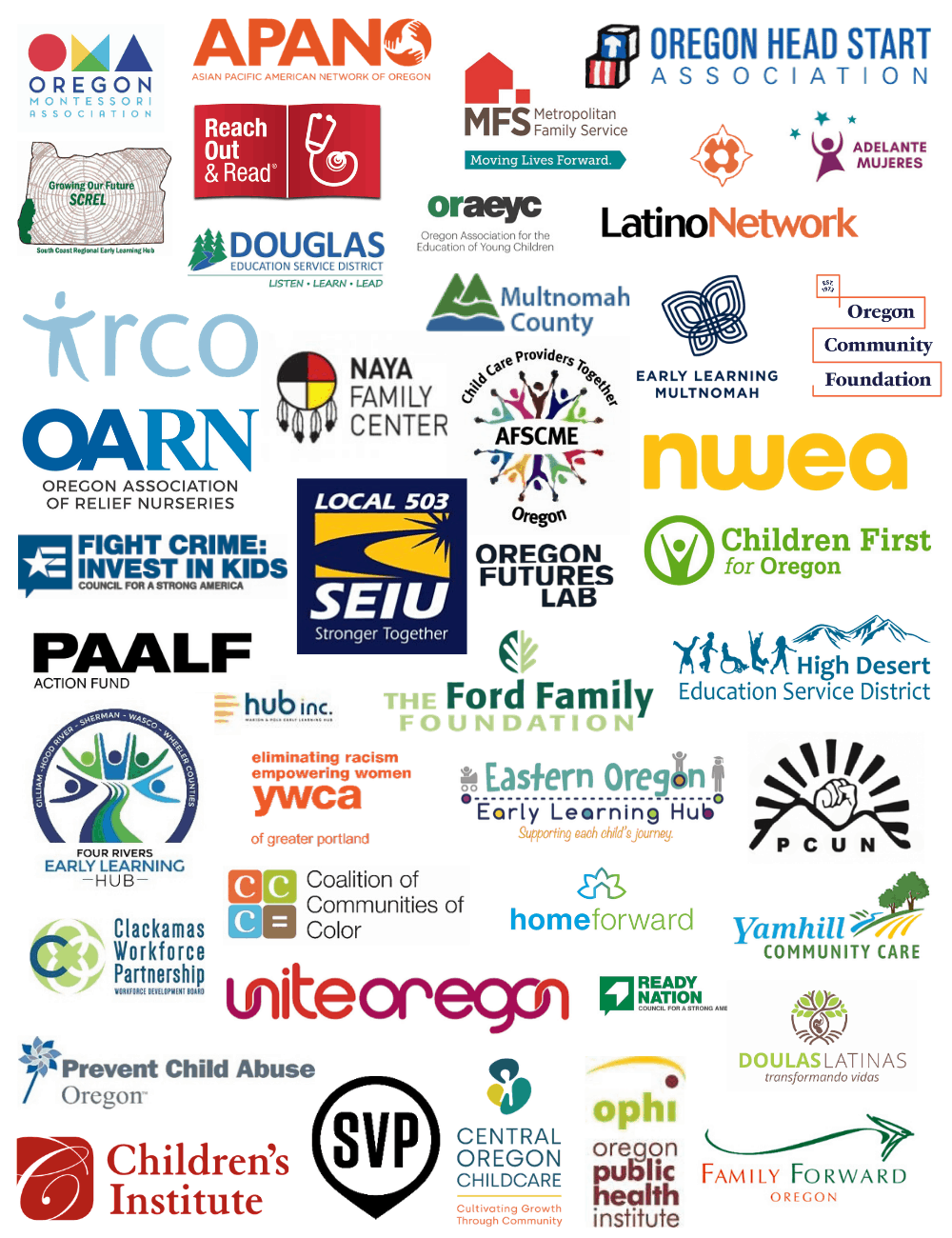
Child Care Relief Advocates


[1] https://health.oregonstate.edu/sites/health.oregonstate.edu/files/early-learners/pdf/childcareeducationoregon_statewide_20170326.pdf

[2] https://www.naeyc.org/sites/default/files/globally-shared/downloads/PDFs/our-work/public-policy-advocacy/effects_of_coronavirus_on_child_care.final.pdf

[3] https://www.uschamberfoundation.org/early-childhood-education/the-business-case; https://health.oregonstate.edu/sites/health.oregonstate.edu/files/early-learners/pdf/oregon-child-care-deserts-01-29-2019.pdf

[4] https://cscce.berkeley.edu/racial-wage-gaps-in-early-education-employment/

Dr. Carlos Crespo on COVID-19 and Community Impact

Dr. Carlos Crespo on COVID-19 and Community Impact

In this week’s episode, host Rafael Otto talks with Dr. Carlos Crespo about COVID-19 and the impact on families and communities.

Note: This is a developing story and some things may have changed since the date of recording. Check the CDC’s website for updates and best practices on how to stay healthy.

Dr. Carlos Crespo is a community health professor at the OHSU-PSU School of Public Health. His main area of research involves the epidemiology of physical activity in the prevention of chronic diseases and research on minority health issues.

Layoffs, Uncertainty Ahead for Preschool Owner and Staff

Layoffs, Uncertainty Ahead for Preschool Owner and Staff

How is the COVID-19 pandemic affecting your corner of the early care and education world? Please email Helen Shum at helen@childinst.org if you or someone you know can help us to illustrate the on-the-ground reality for educators, families, small business owners, child health workers and others.

Allison Morton

Owner and Executive Director, Small Wonders Preschool

We are one of the first child cares in Oregon to acquire a five star quality rating. It is a point of pride that we offer high-quality early childhood education and care across two sites.

Last week was fraught with grief. I saw on our teachers’ faces their worry­—about their health, job security, and many looming unknowns.

I knew I could not ask them to return to work and so they were told to remain home for the remainder of the week with pay. This week is a previously scheduled (paid) spring break closure.

Last Tuesday, the administrative staff and I extended our services to any family in need. Of our 200-plus client families, just 22 children were present.

A classroom at Small Wonders in the Grant Park neighborhood of NE Portland. Photo courtesy of Small Wonders.
Ultimately, we found we could not balance the childcare with the health concerns of our teachers and our community. Few teachers could be reasonably expected to show up for work, we would not be mitigating exposure as deemed our social duty, and many of our client families are now facing their own immediate hardships, making it near impossible to claim April tuition payments.

That means we have to lay off our teaching teams at both of our sites in Northeast Portland—dozens of professionals who were paid well under their worth, but above industry standard. We are looking hopefully towards a May 1 date for resumption of services, but cannot say for sure. We have other obligations beyond payroll and should this crisis and closure extend beyond this time frame, the longer-term forecast looks grim.

My team and I are exhausted. I want to teach. I have supplies in a corner next to April lesson plans. I stepped back into the classroom this year, leaving the daily administrative duties to my strong and loyal team. I want to laugh and comfort my kids, but I knew that we could not sustain ourselves providing only emergency care. We want to offer consistency and routine, but the current climate does not allow for this. Our programming is fully compromised.

CI Calls for Workforce Support, Emergency Aid in Coronavirus Response

CI Calls for Workforce Support, Emergency Aid in Coronavirus Response

This morning, CI sent a letter to Oregon’s Joint Committee on Coronavirus Response to advocate for those who work for and depend on early care and education programs. We appreciate your partnership and support as we work through the unprecedented challenges related to COVID-19. 

To: Joint Special Committee on Coronavirus Response 

From: Dana Hepper, Director of Policy & Advocacy, Children’s Institute  

Date: March 18, 2020  

Re: Early care and education program actions in response to Coronavirus 

Distinguished Legislators, 

Thank you for stepping up to play a leadership role during this critical time in our world. We are writing to say we are with you and ready to provide what you need to best respond in this rapidly evolving situation. We are closely tracking actions in other states and monitoring recommendations from national partners on COVID-19 regarding early care and education (ECE) programs to inform a path forward in Oregon.  

Now more than ever, we are reminded that early care and education programs are essential components of community infrastructure. They support the immediate safety and health of children while supporting children’s development. They employ a necessary workforce of early care and education teachers and staff. And they support the economy by helping parents across our state remain in the workforce, an absolute necessity at this time for essential workers, especially in health care.    

Despite the crucial role of early care and education programs for children, families, communities and our broader society, the ECE workforce is among the lowest paid and most vulnerable during times of economic insecurity. Many ECE providers make minimum wage with few or no benefits, and the average child care provider makes less than the average dog walker. Other providers are small-business owners operating with thin or no margins. The majority of the workforce is comprised of women and includes a high percentage of people of color. They have incredible value that warrants recognition and support. 

Today we are sharing immediate actions you can take to support the early care and education workforce and capacity to provide child care for essential workers. We ask that you advocate for congressional action and take state action to:  

  • Continue federal funding for early care and education programs during this crisis, regardless of whether they are open or closed and whether children are absent; 
  • Provide emergency funding for early care and education programs (small businesses, nonprofits) who rely largely on tuition during this time; and 
  • Include the child care workforce in those eligible for extended unemployment insurance and other wage replacement strategies during program closures or providers who can’t work because they are sick with, test positive for, have been exposed to, or are at high risk for COVID-19.  
  • Ensure essential workers have access to the safest child care settings possible. Provide support requested from the Early Learning Division and Department of Human Services to help sustain child care providers and create additional capacity.  
  • Grant emergency child care assistance to parents and caregivers who are required to work during the COVID-19 pandemic. Ensure any actions to support workers include the ECE workforce whether they work fulltime, parttime, are self-employed, or are small business owners. Debt relief options may be necessary for providers that close or experience reduced revenue during this time.  
  • Provide child care vouchers to parents who must continue to work while children are kept home from school. Support the financial stability of child care providers by adjusting subsidy policies so as not to cause financial harm. 
  • Invest in tools for essential workerspossibly through 211 and Western Oregon University—that support access to resources. Explore options for tapping into the ECE network of providers who are out of work but could provide care to smaller groups of children in settings such as in-home care. 

Beyond these immediate actions, we are ready and eager to help you answer other questions that emerge. When this crisis ends, we’ll be ready to work with you to rebuild a stronger and more stable early care and education system that Oregon desperately needs.