Q&A: A Preschool Teacher in Yoncalla, in Her Own Words

Q&A: A Preschool Teacher in Yoncalla, in Her Own Words
Q&A: Preschool Teacher in Yoncalla
This summer Children’s Institute is highlighting the important work of early childhood educators teaching preschool through third grade. In this series of profiles, teachers from across the state tell us why they teach young children, what they wish people knew about their work, and what they’ve learned in their jobs.

Megan Barber Shares Her Work Creating a Playful, Safe, and Loving Preschool Classroom
Megan Barber is the lead teacher and director of the preschool program at Yoncalla Elementary School. Yoncalla is a town of just over a thousand people in rural Douglas County, Oregon. The program is a Preschool Promise site offering publicly funded preschool to children in low-income families living in the district. Yoncalla Elementary School is also part of the Early Works initiative, a prenatal through third grade learning lab demonstrating a new approach to education and healthy development for young children and their families.

Why do you teach preschool?
Most things that have happened in my life have not been planned out but have been more like tripping over buried treasure. I chose my professional path for my undergraduate work by chance, I got involved in preschool work at the Family Relief Nursery (a child abuse prevention agency) by chance, and even finding a home within the community I now work in was not necessarily a part of the plan. Since preschool is not actually part of the elementary school system in Oregon, I never looked at it as a viable career path. However, when a part-time preschool teaching position came up at the Relief Nursery (something I found out by chance when my dad was doing a water damage job at the facility), I said, “why not?” and applied for the job—not thinking much would come from it. My life forever changed when I took that position. Through this work, I got to take a close examination of the families within my community, developing a love and empathy for their unique situations and challenges. I quickly realized that these marginalized families were invisible within the community and lacked any voice or ability to advocate for the needs of their children. I decided from that moment on that no matter what future teaching position I took, the families (especially the invisible families) would come first. I love preschool because I have the opportunity to be the first educational experience for the family as a whole within the community and I will do everything in my power to help it be positive and welcoming—starting parents on their first steps towards being leaders in the school and advocates for their children.
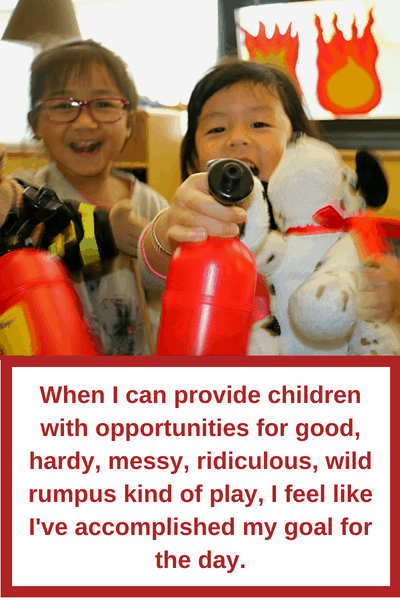
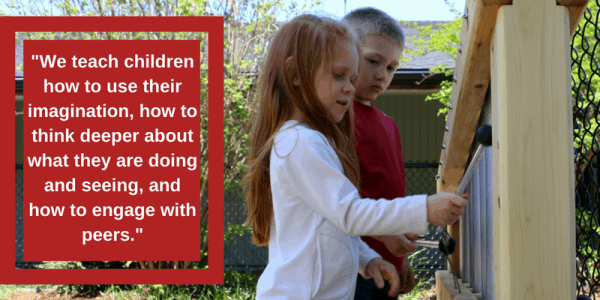
Q&A: Teachers in Their Own WordsI will also admit, I’m deeply in love with preschool because I get to play. It was shocking to me that I had forgotten how to play—silly, crazy play—like children do. Learning real play again became a study of mine, something I practice and invest in. You see, play is where the magic is. Anything can happen for children in play! And when I can help provide children with opportunities for good, hardy, messy, ridiculous, wild rumpus kind of play, I feel like I’ve accomplished my goal for the day. What was so strange to me was realizing that some of the children coming into the classroom forgot how to play. That is all the more reason why play is an absolute necessity, because it creates a space where children bloom and come into their own. We teach children how to use their imagination, how to think deeper about what they are doing and seeing, and how to engage with peers to make their experience more fun.

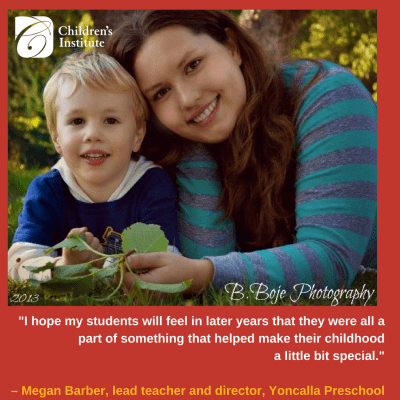
The other thing I love about children at this age is that they really don’t remember anything about preschool. When children grow up, they cannot recall the letters they learned, the numbers they wrote, and they may not even be able to clearly remember the faces of the teachers they had. What is left behind is this feeling, whether it was a great feeling or a not so great one. I hope my students will feel in later years that they were all a part of something that helped make their childhood a little bit special. Maybe we can all walk away with the feeling of being touched by a little pixie dust.

What is one thing about your job that you wish other people knew?
I wish people could really see the work that my staff and I do together. Not only do we train together, purposefully build our skills and philosophy together, and communicate frequently—we work like a well-oiled machine. Rarely needing to actually say a word about what is needed, we can pretty much read each other’s minds in order to be where we need to be, identify a need of a student, assess what is to be done when a situation arises, or how to be flexible or change plans on the fly. My three teacher aides are what makes the program work as it does. They invest in the mission just as I do, they see it work, they are honest about what needs to change, and they give everything they’ve got. For us, this is not a job—it is something we are called to do. And when you have a group of people who are dedicated to children and families, I just don’t think that there is anything we can’t do!

On the same note, I think it is only logical to state that we work so well and push so hard to do our best because teaching preschool is much harder than many think it is. Yes, we get to play—but play is actually hard work. We are right alongside the children, helping them plan, problem solve, engage, be responsive; we are scaffolding, observing, and assessing. When children come in, they have their own anxiety and stress that they bring through the door and we work so hard to download our calm, to make their burdens light. Our days feel long sometimes, our feet are tired, and we are probably pretty gross when all is said and done. Working in preschool is not for everyone because it is some intense, powerful work when done right. In other words, we should all give props to the preschools and their staff. The work is hard but rewarding.

“Teaching preschool is much harder than many think it is. Yes, we get to play- but play is actually hard work.”

Can you describe a learning experience you’ve had that has impacted your teaching?

I have been very fortunate to work in the field of trauma, which has opened my mind to better understanding my community and the children I serve. Through my education, I have learned so much about best practices, how to refine my work to best meet the needs of all students, and how to provide an inclusive environment. It feels like everything I learned was tied together last summer, when I took a week-long training in Arkansas to learn about Dr. Becky Baily’s work in Conscious Discipline. (She is now my personal hero.) I knew that her work in social and emotional development was the key that had been missing in my practice. Even though I had the education behind me regarding trauma, special needs, best practice, therapeutic language, brain development, etc., I had been missing the practical application of this knowledge in a way that works best for children. Though there’s still so much more for me to learn, I couldn’t help but dive in the moment school started. I designed a safe space within my classroom that was a purposeful place for me to talk with students about our emotions and how they can co-regulate. I trained my staff on what this looks like, so we can all engage with children in a way that is nurturing rather than punitive. I made sure that each child has a choice in how they want to be greeted and engage in “I love you” rituals for children walking into the classroom with anxiety, stress, fear, or sadness. We bond each morning with a unity song that emphasizes how we love and care about each person in our school family and how we will keep it safe for each other. The students now know how to show empathy for each other, leading their own “Wishing Well” experience for children who are upset or needing help. The students themselves have become the nurturers for each other and have truly embraced the idea of family. I love the concept of creating this family and unit within the school because it fills in the gaps that children experience within their home life—fully meeting the needs of each child.

What I especially love about Conscious Discipline is how appropriate it is for all children (heavens, it meets our needs as adults, too). Many autistic children learn specific facial expressions so that they can better identify what another person’s experiencing emotionally. Children with behavioral issues (who are frequently kicked out of preschool programs) learn how to be able to calm, use their words to express their needs, and have “loving eyes” for others so that they see from their perspective. Children who have experienced trauma (which is more of the norm than the exception in my classroom) can have their fragile hearts addressed and cared for and are provided the safety of being able to express themselves in a way that is safe but also meets the needs of the child and the family. Conscious Discipline also engages parents to take part in the school family and practice the language and purpose of the method to benefit children when at home. It is a healing experience for families. There is no way to experience the practice and not walk away unchanged. Conscious Discipline is a heart thing. It is a love thing. This is how we raise children to change the world.
Q&A: Teachers in Their Own Words

Highlights from the South Coast: Working Together for Kids and Families

Highlights from the South Coast: Working Together for Kids and Families

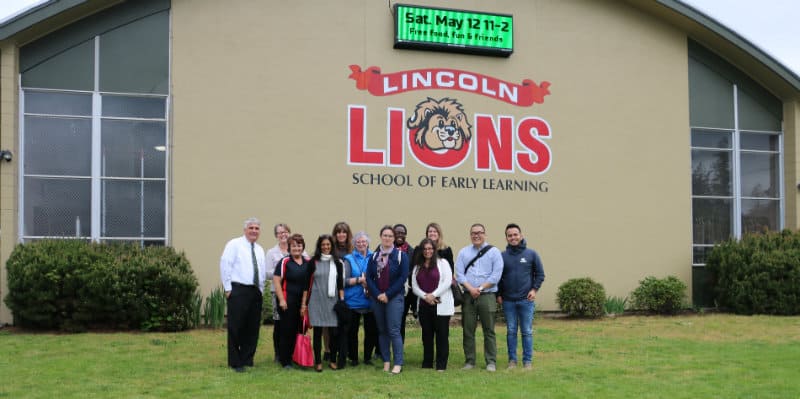
Highlights from the South Coast: Working Together for Kids and FamiliesCI staff and others visit the Lincoln School of Early Learning in Coquille, Oregon. 
 

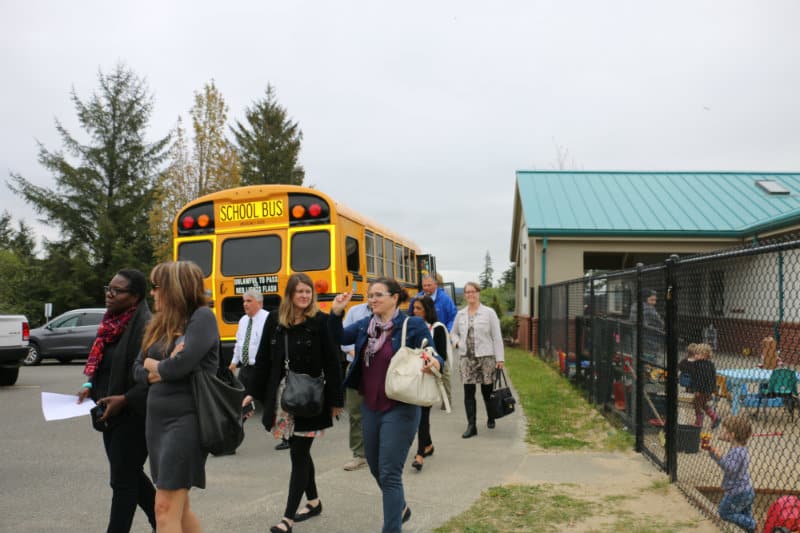
On May 3 and 4, Miriam Calderon (director, Oregon Early Learning System), Martha Richards (executive director, James F. and Marion L. Miller Foundation), and Ericka Guynes (principal, Earl Boyles Elementary School) joined Children’s Institute staff to visit early learning sites in Coos Bay and Coquille.

Our first stop, the Southwestern Oregon Community College (SWOCC) Family Center operates a preschool and serves as an incubator for regional early childhood programs and services. According to professor Maidie Rosengarden, “The SOCC Family Center is a rare place. There aren’t any other community colleges that operate a preschool, train teachers on-site, and offer distance learning with mentorship from master teachers for early childhood educators.” In addition to providing early childhood education and training early childhood educators, the Family Center has also become a resource network for childcare providers. Danaye Gonzalez, Program Manager for CARE Connections Child Care Resource and Referral, told us about the Inclusive Child Care Program: “We brought together parents and providers to make sure children with disabilities and delays were meaningfully included in early education and childcare. Highlights from the South Coast: Working Together for Kids and FamiliesParents talked about their children and their experiences, and providers listened to better understand the needs of developmentally disabled young children and their families.” This training is necessary everywhere but is extremely important in a region experiencing a severe childcare crisis.
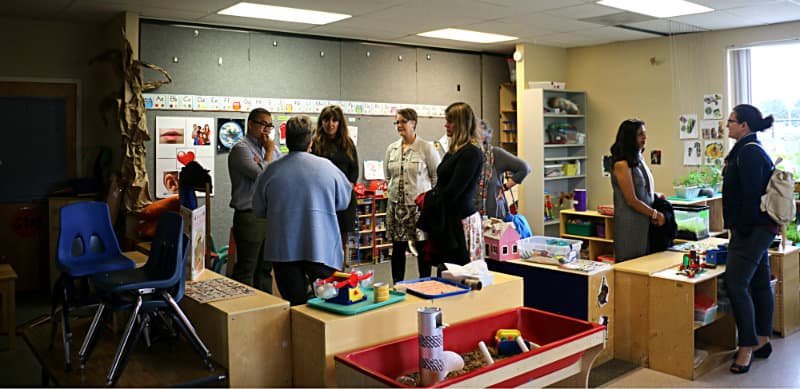
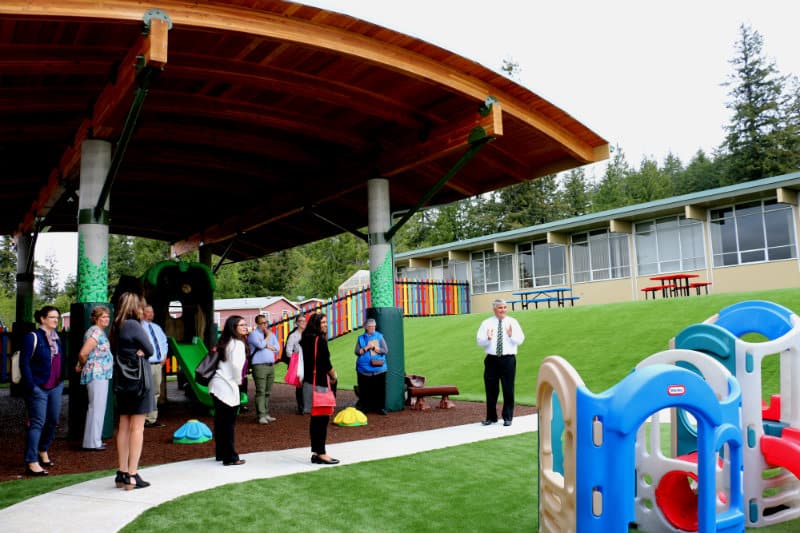
The South Coast, like many other parts of Oregon, is experiencing a critical shortage of preschool and childcare options for young children. The level of crisis has been a motivator for innovative thinking. In Coquille, Superintendent Tim Sweeney and his team made preschool a priority and created an early learning program in the district. Sweeney and Principal Sharon Nelson took us on a tour of the Lincoln Early Learning Center which houses four full-day kindergartens serving 80 students, two-half day preschool classes enrolling 50 3- and 4-year olds, and a Head Start class with 20 children. “If we give young kids meaningful opportunities to learn and grow, we’re setting them up for success throughout their lives,” Tim Sweeney says.

After visiting Lincoln, we met with 20 early childhood providers and partners from around the South Coast to learn about early childhood concerns in their communities. They told us about the key issues that could use more attention and what they were excited about. The group highlighted the severe lack of childcare for infants and toddlers, the need for better wages for childcare and early education providers, and the housing crisis gripping their communities as concerns that need to be addressed so young children and their families can have stability. For South Coast Early Learning Hub Director Heather Baumer, the challenges have driven the region to be more strategic. “The silos are starting to come down and we all have a ‘can do’ attitude. We’re seeing more collaboration between early childhood and K–12; people are starting to see the connections. It’s exciting,” she said.

All over the state, families are grappling with the lack of safe and affordable childcare, few high-quality preschool options, and rising housing costs. These factors are exacerbated in rural Oregon where public transportation can be inconsistent and incomes stagnant. With 47 percent of children born in Oregon relying on Medicaid for healthcare coverage and nearly 129,000 kids ages birth to 5 living at 200 percent or below of the Federal Poverty (FPL), Oregon needs an early care and education system that fosters healthy parent-child relationships, supports access to affordable, quality childcare, and provides high-quality early learning experiences.Highlights from the South Coast: Working Together for Kids and Families

Oregon’s young children need to be a priority. The families, teachers, and providers of the South Coast know there is no time to waste.

Federal Budget Increases Spending for Child Care and Early Learning

Federal Budget Increases Spending for Child Care and Early Learning

Early childhood advocates around the country are celebrating the 2018 Omnibus spending bill recently passed by Congress and signed by President Trump. The bill contains a $2.37 billion increase for the Child Care and Development Block Grant (CCDBG), the largest increase in history. Doubling discretionary funding for CCDBG in FY2018 will expand child care assistance in all 50 states and serve approximately 230,000 more children.

The CCDBG program, which provides child care subsidies for low-income families along with funds for improving child care quality, was reauthorized in 2014 and brought changes to care continuity for children and families and improvements to safety and quality. The 2018 funding increase will allow for full implementation of the 2014 reauthorization, including increases in reimbursement rates for providers.

The spending bill also contains increases for other early learning programs, including:

  • $610 million for Head Start with $115 million of that for Early Head Start expansion and growth of child care partnerships to improve care quality
  • $250 million for Preschool Development Grants designed to help states build or enhance preschool programs or expand high-quality programs
  • $35 million for the Child Care Access Means Parents in School (CCAMPIS) program which supports low-income parents attending institutions of higher education
  • $24 million for the Individuals with Disabilities Act (IDEA) to support early intervention and services for preschool children with disabilities
  • $20 million for 21st Century Community Learning Centers which strengthens after school programs in high-poverty and low-performing schools
  • $5 million for infant and early childhood mental health intervention and treatment through the 21st Century Cures Act

Total increases amount to more than $3 billion for early learning and child care nationwide and draw attention to needed improvements in child care quality. Looking ahead, states will have to grapple with using new funds to expand the number of child care slots in the existing system and increase funding per child for existing slots to bolster quality.

High-quality child care providers in this context can be expected to offer rich and diverse learning materials, have cultural and linguistic knowledge to meet the needs of kids and families they serve, have access to ongoing professional learning, and are supported with living wages.

In Oregon, only 16 percent of eligible families receive the subsidy, and when they do receive it the amount per child does not often purchase high-quality child care that supports age appropriate early learning and healthy development. While the Center for Law and Social Policy (CLASP) estimates that CCDBG funds could reach an additional 2,480 kids in Oregon, the approximately $28 million should be used to increase per child spending in order to increase access as well as improve quality, child outcomes, and school readiness.

Echo Shaw Prepares Children for Kindergarten in Two Languages

Echo Shaw Prepares Children for Kindergarten in Two Languages

Echo Shaw Prepares Children for Kindergarten in Two Languages 

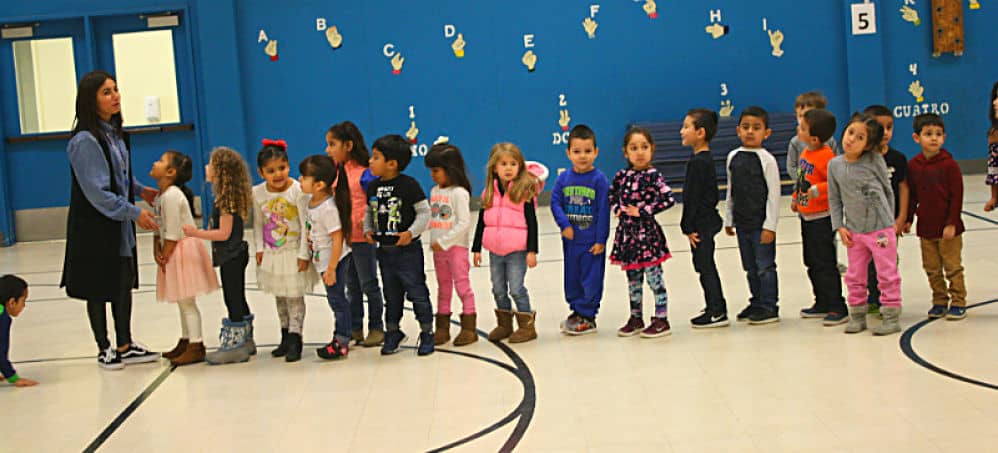
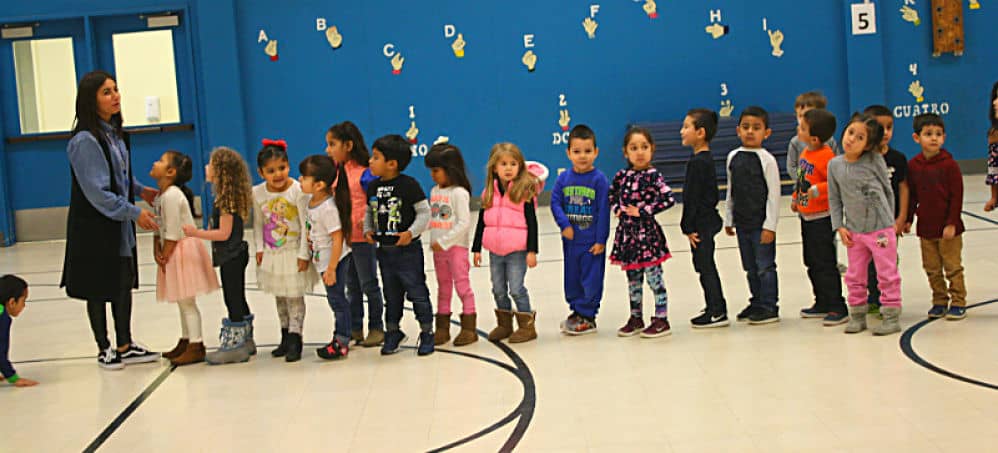
 Echo Shaw’s full-day preschool teacher, Cesiah Vega Lopez, gets her students organized in the gym.

Five years ago, educators at Echo Shaw Elementary School, 24 miles west of Portland, worried their students would be overwhelmed by the state’s new, more intellectually challenging academic standards.

The Common Core standards would expect children to write more and master advanced vocabulary, multiplication, fractions, and linear formulas at a younger age. Kindergarteners used to learn about sides and corners of shapes, but now they’d be talking about vertices and angles.

Nine in ten of Echo Shaw’s students, nearly all Latino, lived in low-income households, and two-thirds of them were learning English as their second language. Most showed up in kindergarten already behind.

“At some point you get exhausted trying to fill these (achievement) gaps at third and fourth grade,” says Perla Rodriguez, Echo Shaw’s principal since 2012. “This wasn’t working for us.”

So Rodriguez and her staff gave their students one big advantage—an earlier start. They launched a half-day preschool class.

Today, Echo Shaw serves 37 4-year-olds in half-day and full-day Preschool Promise classes, a state program for students from low-income homes. Most of them will enter kindergarten on the cusp of reading or actually reading, says Rodriguez. And because Echo Shaw is a dual language school, teaching 430 students up through grade eight in both English and Spanish, its preschoolers show up in kindergarten speaking two languages.

Echo Shaw, which sits on the edge of the small town of Cornelius, ranks among a small, but growing number of Oregon public schools—many of them serving high proportions of children from low-income families—who have found innovative ways to offer preschool. The Children’s Institute has helped two elementary schools—Earl Boyles in East Portland and Yoncalla in the hills south of Eugene—launch early learning programs over the last seven years through its Early Works program. Six years ago, the Coquille School District on Oregon’s coast opened its Lincoln Early Learning Center, which now includes two half-day preschool classes, a Head Start class, and an Early Head Start class for 2- and 3-year-olds.

Leaders in all of these schools know early education better prepares children for kindergarten and school success and can prevent the achievement gap that so often leaves kids from low-income families behind. What’s more, investing early in education can reduce the costs of remediation and school failure.

State readiness tests show Echo Shaw’s students on average are better prepared for kindergarten than children elsewhere in the district and state, says John O’Neill, interim superintendent of the 6,000-student Forest Grove School District, which encompasses 10 schools, including Echo Shaw.

“This speaks to not only knowing the academic skills, but also the social emotional skills that set them up for school success day one of kindergarten,” he says. In addition, he says, offering preschool in a school district “begins a partnership earlier in a child’s career between the home and the school.”

Echo Shaw Prepares Children for Kindergarten in Two LanguagesEcho Shaw parents say the preschool has given their children social and academic skills they are hard-pressed to teach at home with demands of work and family. Jesus Narnajo Gallardo, 32, volunteers in the class and sees his son, Daniel, thriving under the structure. Without this class, the father says, “it would be either a cell phone or the TV that would be teaching him.”
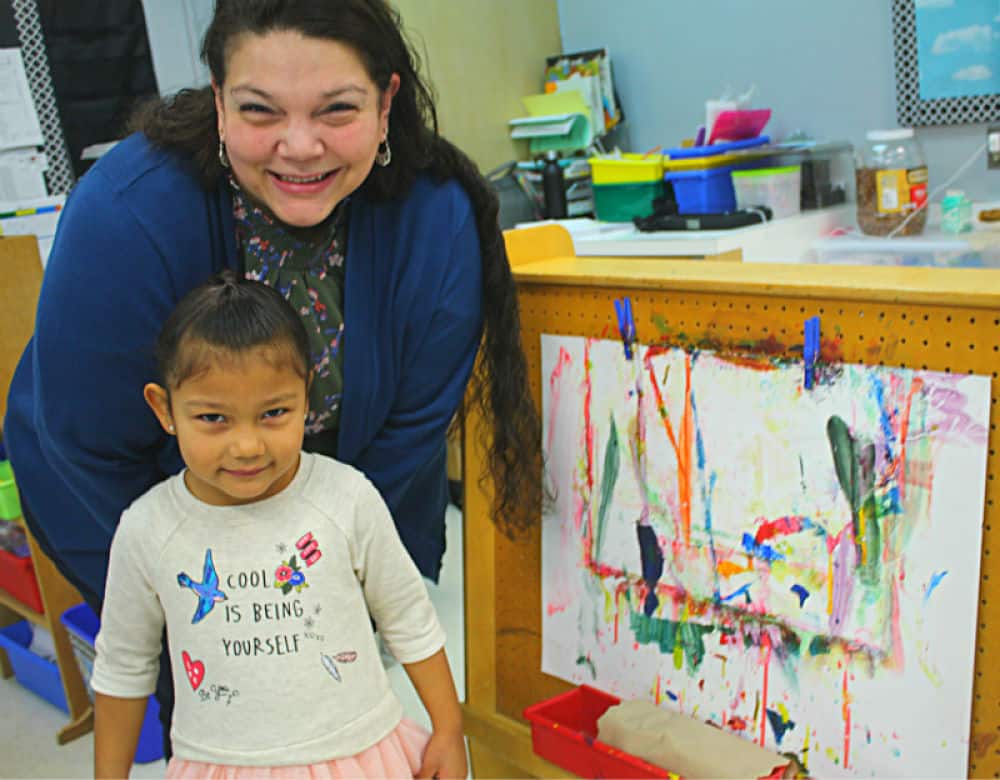

Veronica Rodriguez Jimenez, 39, says her son, Jacob, is learning to share. “He is more social,” she says. “He tries to interact with the Jesus Narnajo Gallardo and his son Daniel others.” He’s learned English well enough to help other immigrants with translating, she says.

Scherise Hernandez, 39, says her 4-year-old daughter, Sady, can write her name, tie her shoes, and “she helps other children.” Sady Echo Shaw Prepares Children for Kindergarten in Two Languagesspeaks Spanish at home, says Hernandez, but she “actually gets a lot of English” at school, and she’s speaking it. Without the preschool, says the mother, Sady would probably be spending her time in daycare.

Echo Shaw’s full-day Preschool Promise teacher, Cesiah Vega Lopez, says she sees herself as a facilitator. During “choice time” one January morning, for example, her students spread across the classroom to explore activities they pick—activities designed to develop their small motor skills while exposing them to letters, words, and color, shape, and number concepts. The room has the quiet hum of a busy office as children explore their interests. Dressed in a lacy pink skirt and a   white shirt bearing the words “Cool is being yourself,”               

Four-year-old Sady speaks Spanish and English. Sady stands with several classmates around a table sorting through photographs of themselves. Four children sit at another table stringing beads over pipe cleaners. Nearby, four boys fit colorful plastic cubes together into beams and girders. A brown-haired girl alone at a third table copies the name Peyton on a white board with a black marker.

Student art and posters cover the walls. Books, toys, supplies, and bins of art fill shelves and cabinets. Everywhere there are words in English and Spanish. The light switch is tagged both with its English name and “el interruptor de luz.” The foyer portrays the school’s mascot with the words, “Home of the Eagles,” and “El hogar de las aguilas.” The phrases “We are safe” and “Somos cuidadosos,” stretch over one gym wall.

Echo Shaw Prepares Children for Kindergarten in Two Languages

Everywhere at the dual language school are words in Spanish and English.

Vega Lopez, 30, a licensed teacher now in her second year at Echo Shaw, knows the challenges many of her children face; she was born in Mexico, grew up in Forest Grove and learned English during her middle school years. About half her students speak Spanish at home. She teaches primarily in Spanish on Monday, Tuesday, and Wednesday and in English on Thursday and Friday. She teaches math in English, but science and social studies in Spanish. Her children are learning letter sounds, number concepts, and how to follow directions, express their feelings and self-regulate. She knows well what they must learn for kindergarten.

“I have the luxury of being able to visit the kindergarten teacher right next door to me,” she says.

Oregon Department of Education test results last year showed Echo Shaw children in grades three through eight performing nearly at state average in math and English. About 40 percent of them exceeded standards compared to about half that many in Oregon schools with similar proportions of minority and economically disadvantaged children. The benefits of preschool have yet to be measured as Echo Shaw’s first preschool graduates just reached third grade this year. But every grade at Echo Shaw is raising expectations for the better prepared students coming up from its preschool, say school leaders.

The dual language program has been so successful that a large number of seventh-graders are ready to take the college-level Advanced Placement Spanish course, says Superintendent O’Neill. “With a strong preschool foundation to work from,” he says, “student outcomes will only be enhanced.”

Rodriguez, the principal, personally knows the power of preschool because it helped shape her and her entire family. She grew up in Ontario, Ore., with parents who migrated from Mexico unable to speak English. She and her brother attended a federally-funded migrant Head Start program, which offered her mother wrap-around services, including driving lessons and a citizenship class. In time, her mother became a Head Start teacher and then director of a Head Start center. Rodriguez went on to earn her bachelor’s degree in bilingual education at Boise State University, her master’s in school administration at Concordia University in Portland, and her doctorate in education leadership at George Fox University in Newberg.

The principal has tapped a variety of funding sources to offer preschool at Echo Shaw. The school used federal migrant student support to pay for its first half-day preschool five years ago, which it expanded to three-quarters of a day in the following year. That meant, though, it could only serve migrant students in its preschool. In the third year, it was able to use both migrant and federal Title I money to offer two half-day preschool classes for all 4-year-olds. For this year and last, the school has used Title I money and support from Preschool Promise to offer a full-day and a half-day class. Last year, nearby Cornelius Elementary also started offering preschool with the help of a Preschool Promise grant. District leaders are exploring how to expand preschool district wide, O’Neill says. “There is definite support to do this,” he says, “but funding is a barrier.”

Rodriguez says she will continue foraging for every funding source she can find to keep her preschool thriving, and she hopes, expanding.

“It is not a silver bullet,” she says, “but I believe the kindergarten readiness we see in our preK students is worth every penny that we have put into it.”

Additional Resources on Preschool Promise
Toward Equitable Achievement in Oregon with Abdikadir Bashir Mohamud

Early Learning Multnomah

Preschool Promise to Help Hundreds, Statesman Journal


Making the Case for Early Education

Making the Case for Early Education

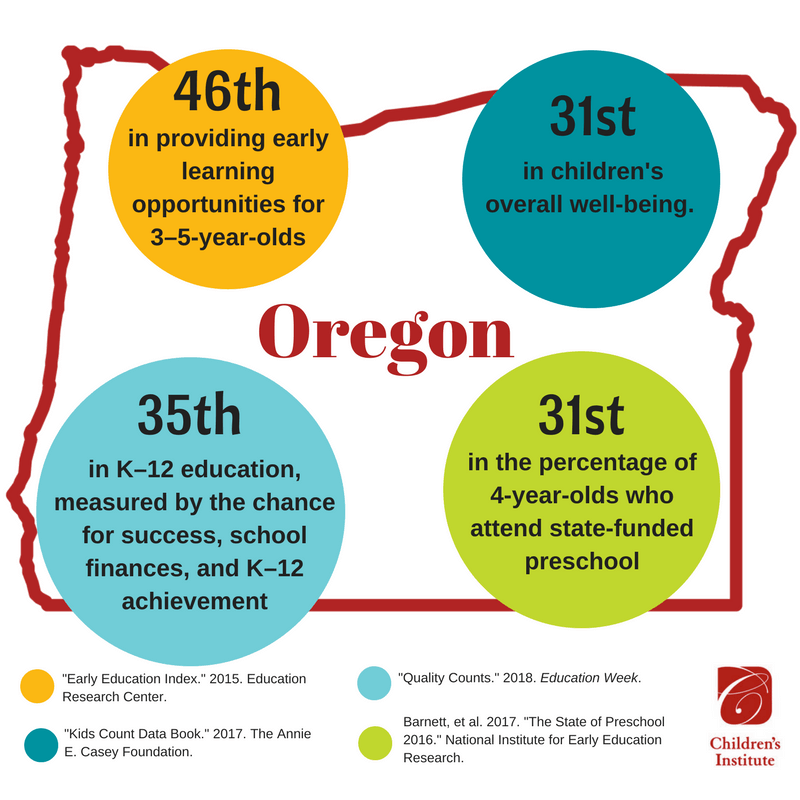
Making the Case for Early Education Only 42 percent of 3- and 4-year-olds in Oregon are enrolled in early education. If you’re unaware of the benefits of high-quality early education, you might be inclined to believe that the remaining 58 percent of children in our state, who don’t begin attending school until kindergarten, will catch up with their peers quickly. You might be inclined to believe that early education doesn’t matter in the long run.

The research tells us otherwise. We are advocating for increased investments in early education to expand early learning opportunities to more children across the state because we know that it will make a difference over the course of their lives.

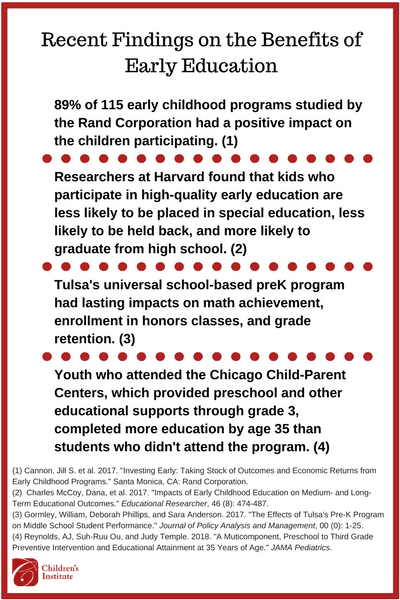
What are the benefits of high-quality preschool, and how do we know that they impact a child’s future success? Four recent studies shed some light on the lasting impacts of high-quality early education.

Investing Early: Taking Stock of Outcomes and Economic Returns from Early Childhood Programs
A team of researchers at the Rand Corporation has been studying early childhood for 20 years. Their latest report, released in November of 2017, compiles research on 115 early childhood intervention programs. The outcomes examined were varied, including behavior, test scores, health, and happiness. Eighty-nine percent of the programs—102 of them—had a positive impact on at least one outcome being examined by the researchers. The study found that many of the social and economic benefits of the programs continue to pay dividends as the children who attended become adults. The Rand Review provides a thorough discussion of the study.

Impacts of Early Childhood Education on Medium- and Long-Term Educational Outcomes
Researchers at Harvard considered 22 studies on early education published over 56 years, finding that kids in high-quality early education programs are less likely to be placed in special education, less likely to be held back in school, and more likely to graduate from high school. An editorial in the Dallas News provides a detailed overview of these findings.

Making the Case for Early Education The Effects of Tulsa’s Pre-K Program on Middle School Student Performance
Discussed in both The New York Times and New America, this study conducted by researchers at Georgetown examined the impact of Tulsa’s universal school-based preK program that was launched almost 20 years ago. The study found the preschool program had enduring effects on math achievement, enrollment in honors classes, and grade retention. The benefits of the program were visible as late as middle school.

A Multicomponent, Preschool to Third Grade Preventive Intervention and Educational Attainment at 35 Years of Age
Examining data on 1,539 minority youth in high-poverty neighborhoods in Chicago, researchers found that children who attended the Chicago Child-Parent Centers completed more education by age 35 than children who hadn’t participated. The CPC program was school-based and offered preschool, professional development for teachers and principals, and curriculum alignment from preK through third grade. Education Week discusses the results of the study and compares the study to other long-term early childhood studies.