Preschool Promise Update: Mixed Delivery Reaches 1,300 Children
 Preschool Promise, enacted by Oregon’s State Legislature in 2015, began serving approximately 1,300 children across the state in September. In its inaugural year, the program is designed to deliver high-quality early learning opportunities to families with incomes up to 200 percent of the Federal poverty threshold.
The goal of Preschool Promise is to reach all low-income children with high-quality preschool programs to close the achievement gap and improve school and life outcomes. When children are prepared for kindergarten with high-quality early education, they are more likely to be able to read at grade level at the end of third grade. Reading proficiency at the end of third grade is a key predictor of high school graduation.
When the Preschool Promise model was developed, Children’s Institute collaborated with a range of advocates to build a program based on national research, lessons learned from other states, and several quality indicators. These partners included the Oregon Head Start Association and the Oregon Early Learning Division. Today, Preschool Promise is an ambitious preschool model that gives Oregon a strong framework to build and deliver quality early learning that will change academic outcomes and close achievement gaps.
As the program launches, many questions remain about implementation, developing and sustaining quality, the role of mixed delivery, the role of the bachelor’s degree for lead teachers, and continued funding. Challenges in the first year of Preschool Promise are to be expected. But as Oregon pushes its early learning system to excel and reach more children and families, it can continue to learn from other states and its own communities about how to build and sustain a high-quality preschool system with an eye on tangible results.
 Children’s Institute is closely tracking Preschool Promise implementation and will explore a range of issues related to building high-quality preschool programs in Oregon. Over the coming months, stay tuned for articles examining pay equity for the preschool workforce, strengthening workforce diversity, implementation through mixed delivery, and the impact on families and communities.
Related Content
Preschool Promise update from the Early Learning Division
The Early Link Podcast: Discussing Oregon’s Preschool Landscape with Swati Adarkar
Yoncalla Elementary Offers High-Quality Preschool for 20 Children
Preschool Promise: High-Quality Preschool for More Kids in Oregon
Suggestions, comments, or questions? Email communications@childinst.org


 Preschool Promise is part of an effort to help Oregon change the trajectory for vulnerable children and families by offering free, full-day, high-quality preschool to families at or below 200 percent of the federal poverty threshold. Programs just came online last month, and Oregon now has 93 sites serving 1,300 children in 14 counties.
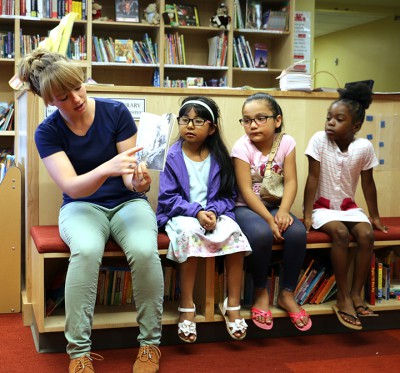 Access to books and time to read are essential for kids who want to explore, learn, and build their literacy skills. That’s why the
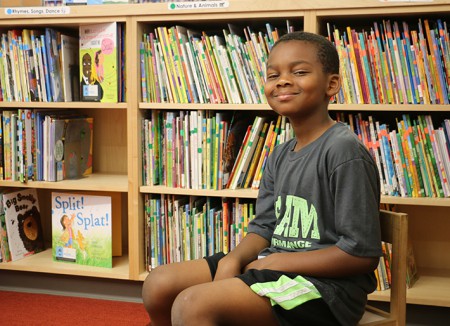 “This kind of effort is more than providing access to books, it’s about what can happen with access,” says Katie O’Dell, the youth services director at Multnomah County Library. “Improving knowledge about school, culture, and health, building literacy and creativity, establishing relationships with trusted teachers… these are all results of immersing kids with lots of quality books.”
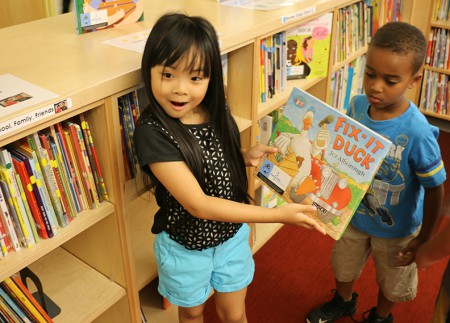 Students and families can take books home whenever they wish; no library card is needed and there is no due date. The collection is well-used and continues to grow, thanks to ongoing support from the Library Foundation and MCL’s supply of books that exit the library system.